Sensory-Friendly Calming Corner with a Study Carrel
Founder & Workspace Ergonomics Specialist at Desktop Carrel · Certified Professional Ergonomist (CPE), WELL Accredited Professional (WELL AP) · 13+ years testing acoustic privacy panels, modular carrels, and productivity workspace ergonomics
Sensory overload doesn't politely wait for a quiet room. It hits in the middle of a classroom, a homeschool afternoon, or a meltdown at bedtime, and most families and teachers are left improvising with a cushion and a dim lamp. That's exactly why learning how to create a sensory friendly calming corner using a study carrel is such a practical skill.
A carrel gives you walls, a defined footprint, and a privacy pocket you can build out in an afternoon.
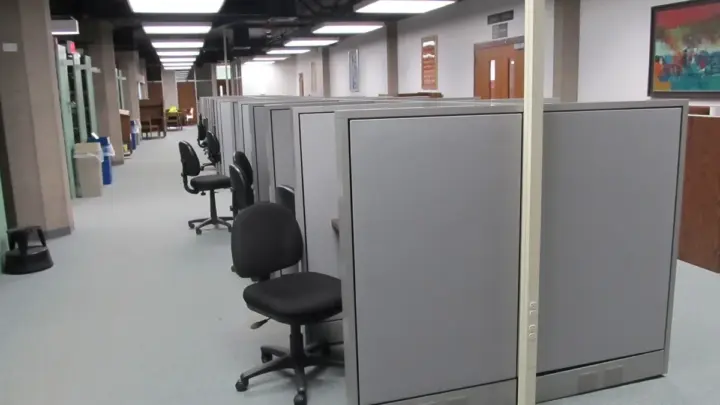
The research backs the approach. Occupational therapy guidance from the American Occupational Therapy Association (AOTA) frames sensory supports as environmental tools, not rewards or punishments. Manufacturer specs for desktop carrels typically list panel heights of 30 to 48 inches, which is enough to block peripheral visual noise without boxing a child in.
Get the next five decisions right, and the rest of the build falls into place.
how to create a sensory friendly calming corner using a study carrel
Choose a carrel with solid side panels and an open top, place it in a low-traffic corner, then layer in sound dampening, warm dimmable light, and a floor cushion. Add one weighted lap pad and one fidget tool. Teach a short transition ritual so the space gets used before a meltdown starts.
Why a Study Carrel Works as a Calming Corner (And When It Doesn't)
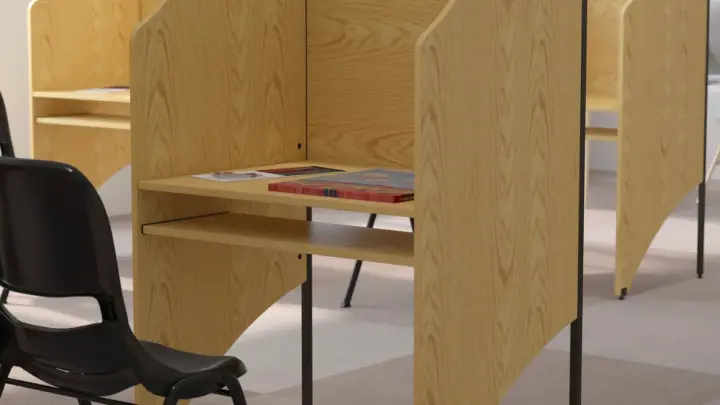
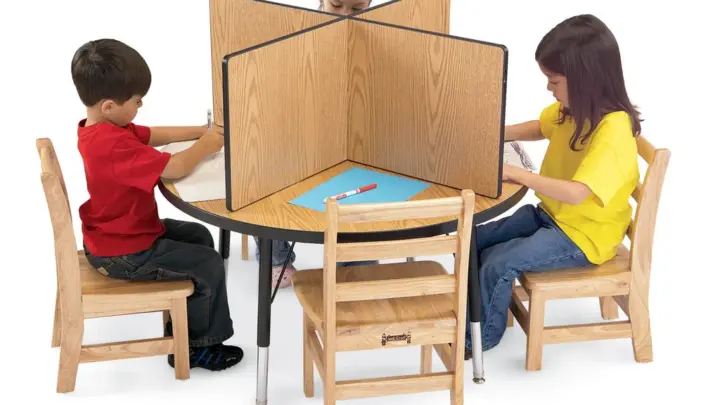
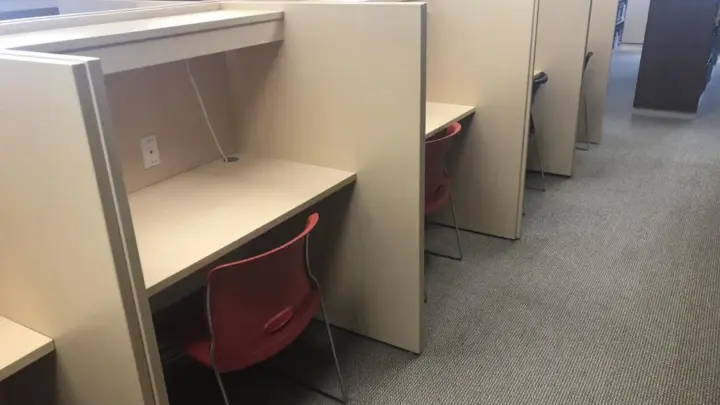
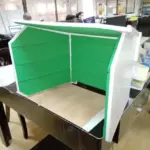
A study carrel works because it does two jobs at once. The side panels cut peripheral visual input, which is one of the biggest drivers of overload in shared spaces. The enclosed footprint also creates a predictable, repeatable pocket the user can learn to associate with calm.
Occupational therapists call this reducing competing sensory input. When you strip away visual chaos, the nervous system has fewer signals to process. That leaves room for the calming input you deliberately add, like deep pressure or a quiet hum.
Image source: Bing (Web (fair-use with source credit))
When a Carrel Is the Wrong Tool
A carrel is the wrong choice if the user is claustrophobic, needs full-body movement to regulate, or requires wheelchair access that the carrel's footprint blocks. In those cases, a pop-up sensory tent or an open floor cushion setup often works better. It's also a poor fit if the only available spot sits next to a door, a printer, or a loud HVAC vent.
Noise and foot traffic will undo everything you build inside.
What a Carrel Gives You That a Corner Doesn't
A bare room corner offers no boundaries and no visual shield. A carrel gives you:
- Defined edges the user can see and predict
- Hard surfaces you can line with felt or acoustic panels
- A small enough footprint to fit in a classroom or bedroom
- A modular structure you can move, fold, or repurpose later
That combination is why carrels show up so often in sensory-friendly classroom design. They're cheap, sturdy, and adaptable.
The Five Decisions That Shape Your Build
Five choices drive every other decision. Work through them in order before you buy or assemble anything. If you skip a step, you'll end up rebuilding later.
Decision 1: Calming or Alerting?
Calming input down-regulates an overstimulated user. Alerting input wakes up an understimulated one. They are opposite designs, and mixing them defeats the purpose.
Calming setups lean on deep pressure, warm low light, slow rhythm, and low sound. Think weighted lap pads, 2200K to 3000K bulbs, a slow rocking chair, and a white noise machine. Alerting setups use bright cool light, upbeat music, and active movement tools.
If the user melts down after school, go calming. If they slump and can't start homework, go alerting. Get this wrong and the corner will feel either boring or overwhelming.
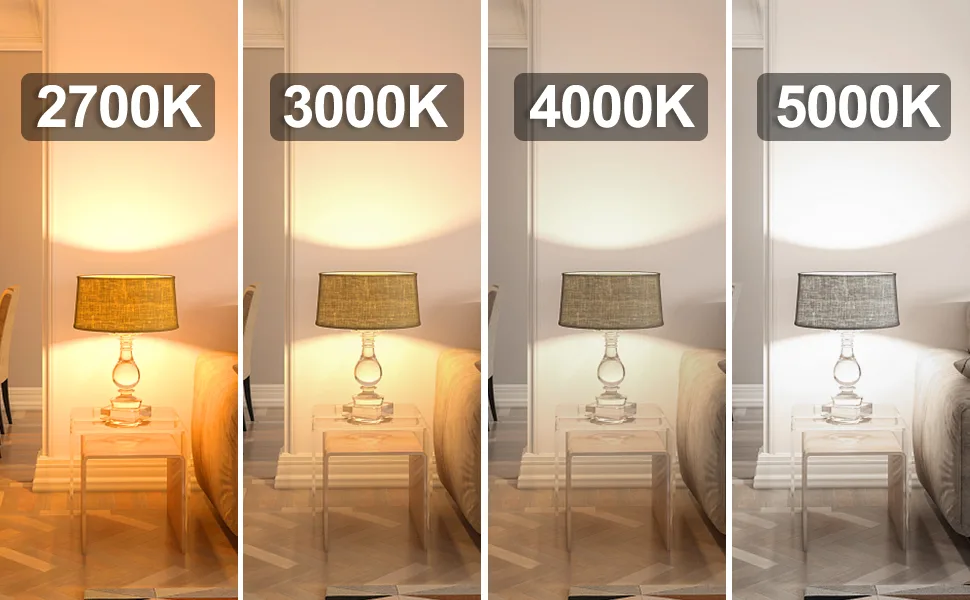
Image source: Bing (Web (fair-use with source credit))
Decision 2: Open-Top, Enclosed, or Hybrid?
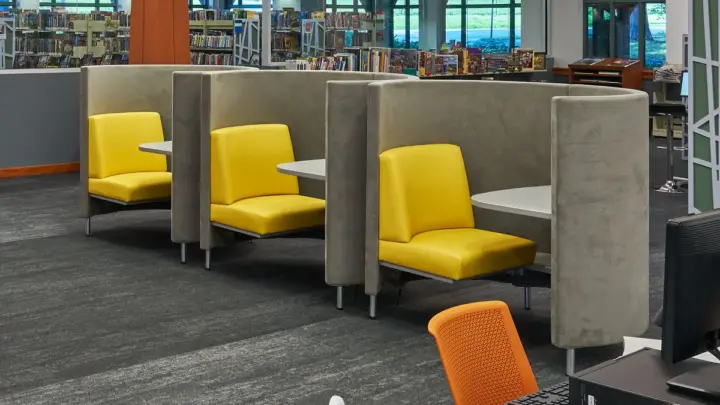
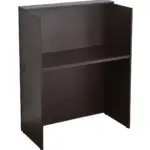
Open-top carrels block peripheral vision while keeping airflow and a clear escape sightline. Enclosed carrels add a roof and more privacy, but they trap heat and sound, and they can feel like a box. Hybrid designs use solid sides with a mesh or open back panel.
Here's a quick comparison:
| Carrel type | Best for | Watch out for |
|---|---|---|
| Open-top | Most kids, classrooms, warm rooms | Less acoustic isolation |
| Enclosed | Deep privacy, older teens, quiet rooms | Heat buildup, claustrophobia risk |
| Hybrid | Sensory-sensitive but social users | Slightly higher cost |
If in doubt, choose open-top. You can always add a felt canopy later for extra enclosure without sealing the space.
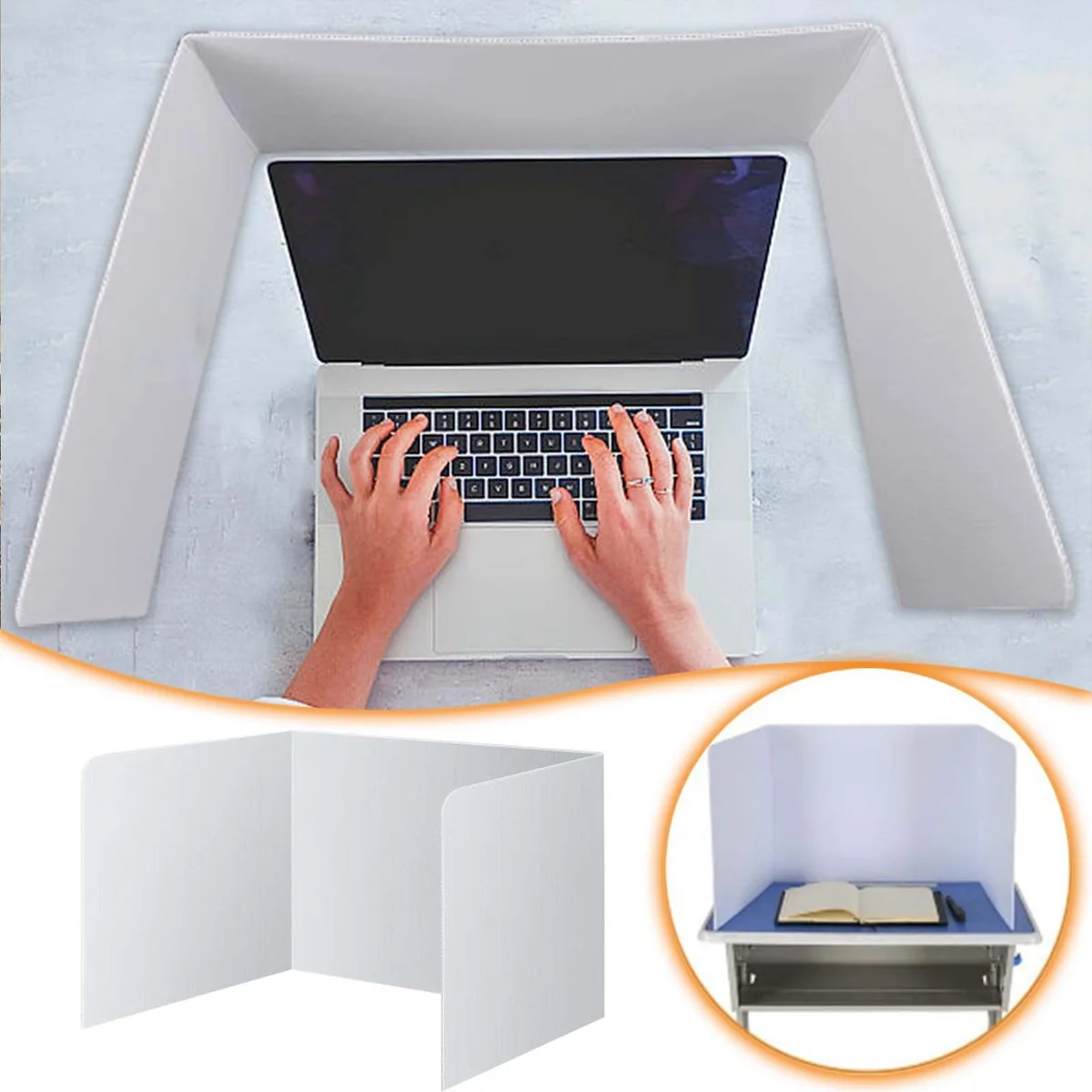
Image source: Bing (Web (fair-use with source credit))
Decision 3: Age, Mobility, and Escape Sightlines
The user must be able to see out and walk out without help. If they can't, the space fails the first safety test.
For kids under 6, keep panels low enough that they can see over the top when seated. For wheelchair users, measure the turning radius first. A standard manual wheelchair needs roughly 60 inches to turn 180 degrees, so the carrel must leave that clear.
For teens and adults, eye-level panels around 48 inches work well.
Never lock a carrel. Never place it where it blocks an exit. That's non-negotiable in any school or public building.
Decision 4: Location and Foot Traffic
Location makes or breaks the build. A perfect setup in a bad spot stays unused.
Aim for a low-traffic corner away from doors, windows facing playgrounds, printers, and HVAC vents. Ambient noise in a good calm corner sits under 40 dB, which is roughly a quiet library. If you can hear hallway chatter, you've already lost half the benefit.
In classrooms, corner nooks beside bookshelves work well. At home, a bedroom corner beats a busy living room every time.
Decision 5: Budget and Durability
DIY builds land between $80 and $250, depending on the carrel and inserts. Pre-built carrels run $150 to $600. Full sensory rooms jump to $3,000 and up, which is why carrel-based corners are so popular.
Spend more on the carrel itself and less on decor. A wobbly divider that tips when someone fidgets ruins the whole point. Look for wipeable laminate or MDF panels and a footprint that won't shift.
As of 2026, folding and modular carrels have gotten cheaper and sturdier, so you have more budget-friendly options than a few years ago.
Step-by-Step: Building the Corner in the Right Order
Order matters. If you decorate before you dampen sound, you'll be pulling things apart later. Follow this sequence.
Sound, Light, Seating, Then Tools
- Assemble the carrel and place it in your chosen corner. Test the footprint with the intended user seated inside.
- Dampen sound by lining the interior side panels with acoustic felt or PET panels. These typically carry an NRC rating of 0.30 to 0.55, meaning they absorb a meaningful share of reflected noise.
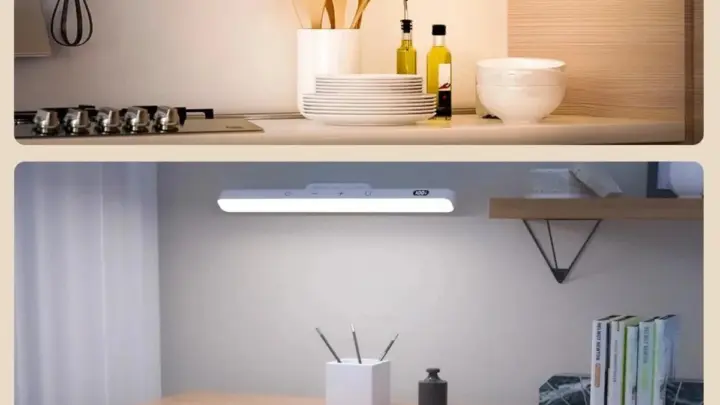
- Control light. Add a dimmable warm LED strip or lamp between 2200K and 3000K. Aim for 100 to 300 lux, dimmable well below 10% for low-light sessions. Avoid overhead fluorescents.
- Add seating. A floor cushion, beanbag, or supportive chair. Match the seating to the sensory goal: a rocker for vestibular input, a beanbag for deep pressure.
- Layer in tools last. One weighted lap pad, one fidget, one breathing card. Start minimal. You can add more once you know what works.
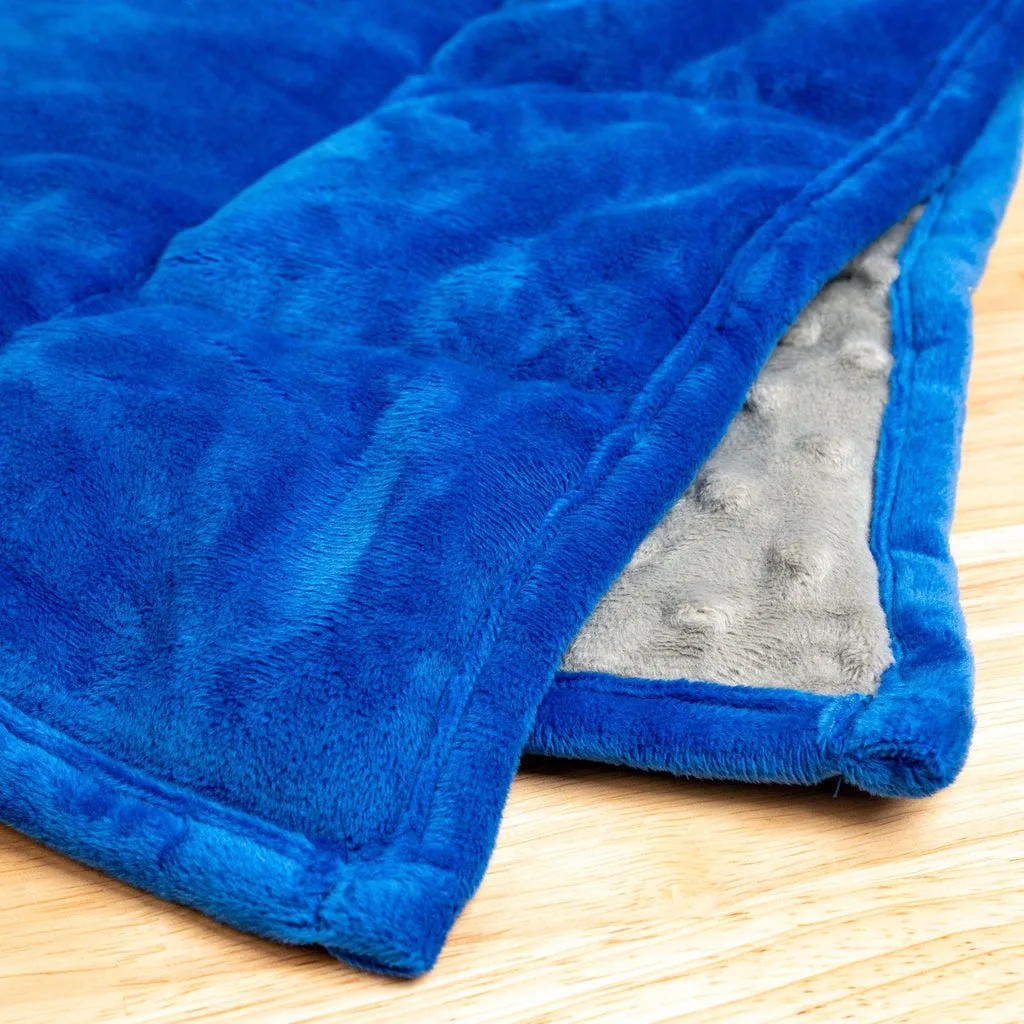
Image source: Bing (Web (fair-use with source credit))
The Transition Ritual That Makes It Actually Work
A calm corner without a routine just becomes a room. The transition ritual is what turns it into a regulation tool.
Give a warning before the break. Use a short phrase like "two more minutes, then a reset." Walk with the user, don't send them. Let them choose one tool inside.
Set a soft timer for 5 to 20 minutes depending on age. When the timer ends, exit calmly and return to the task.
Rehearse this when everyone is calm, not during a meltdown. Practice three or four times in a low-stakes moment. That's how the space becomes automatic.
Mistakes That Turn a Calm Corner Into a Stress Corner
The biggest mistake is treating the corner as punishment. If a child only goes there after misbehaving, they'll associate it with shame. Use it predictably, including during good moments, so it reads as support rather than a sentence.
Over-decorating runs a close second. Fairy lights, bright posters, and a dozen plush toys all add visual input. For a user who's already overloaded, that's the opposite of calming.
Keep the palette muted and the surfaces clean.
The Quiet Errors That Undo Your Work
- Ignoring ventilation. Enclosed carrels get stuffy fast. Add a mesh panel or a small fan, or leave the top open.
- Skipping the escape sightline. If the user can't see out or step out freely, the space feels like a trap.
- Trapping sound. Bare hard walls reflect noise. Line them or the corner gets louder, not quieter.
- Blocking exits. In any classroom or public building, the carrel must never sit in front of a door, sprinkler, or alarm.
- Going heavy on weight. A weighted lap pad should be about 10% of the user's body weight, capped around 5 lbs for kids. Never use a weighted blanket for a child under 2 or anyone who can't remove it alone.
- Making it the only strategy. A corner teaches regulation. It doesn't replace movement breaks, co-regulation, or professional support.
If the user can't calm down, gets more agitated inside, or needs the corner for hours at a time, that's a signal to loop in an occupational therapist. A corner is a tool, not a treatment plan.
Costs, Safety, and Cleaning: The Practical Checklist
Budget breaks down simply. The carrel is your biggest line item, the sensory inserts are next, and the tools are the cheapest part. Here's a realistic range.
| Item | Typical cost | Notes |
|---|---|---|
| Study carrel | $80 to $600 | DIY on the low end, pre-built higher |
| Acoustic felt or PET panels | $20 to $60 | Look for NRC 0.30 to 0.55 |
| Dimmable warm LED + lamp | $15 to $40 | Flicker-free, 2200K to 3000K |
| Floor cushion or beanbag | $25 to $80 | Wipeable covers preferred |
| Weighted lap pad | $20 to $45 | Roughly 10% of body weight |
| Fidget and calm cards | $10 to $30 | Start with one or two |
Safety and Compliance Points
- Fire code. The carrel must not block exits, sprinklers, or alarms in any school or public building.
- ADA. In public spaces, keep the turning radius clear. A manual wheelchair needs about 60 inches to turn 180 degrees.
- IDEA and 504. Sensory supports can be written into a student's plan, which gives the corner legal footing.
- Toy safety. Any fidget or plush item should meet ASTM F963, the standard toy safety spec.
- Low-VOC materials. Enclosed carrels trap fumes. Choose low-off-gassing panels and wipeable surfaces.
- Electrical safety. Use UL-listed LED strips and adapters only.
Maintenance That Keeps It Working
Wipe hard surfaces weekly with a fragrance-free cleaner. Wash fabric covers every couple of weeks, more often in flu season. Check batteries in any light or sound device monthly.
Replace felt if it compresses and stops absorbing sound.
Review the setup every few months. Remove anything the user consistently avoids. A tool that never gets chosen is just clutter taking up calm-space real estate.
Best Options by User Type (Quick Decision Guide)
The right build depends on who's using it. Use these if/then rules to match the setup to the situation.
- If the user is a young child under 6: go open-top, low panels, floor seating, and one weighted lap pad. Skip anything small enough to swallow.
- If the user is an autistic teen: cold-to-warm blend works well. Enclosed or hybrid carrel, ear defenders, dimmable warm light, and a silent fidget.
- If the user is ADHD and fidgety: add an active fidget, a rocking seat, and brighter-but-warm light. Keep the tools accessible, not hidden.
- If the user has anxiety: prioritize quiet, low light, and a breathing card. Keep the exit obvious.
- If the user is a wheelchair user: skip the carrel footprint and confirm 60-inch turning clearance first. Consider a pull-up-to desk divider instead.
- If it's a classroom: open-top, felt-lined, and positioned in a corner away from doors. Anchor it so it can't tip.
- If it's a home bedroom: any type works. Prioritize durability and cleaning ease.
The simplest rule: start minimal, watch what the user actually reaches for, then build up. You'll learn more in two weeks of use than in any shopping list.
Frequently Asked Questions
What size study carrel works best for a calming corner?
A desktop carrel around 24 to 36 inches wide and 30 to 48 inches tall fits most users. Floor carrels run larger, about 36 to 48 inches wide. Match the panel height to eye level when the user is seated so they can still see out.
Do I need a weighted blanket in a calming corner?
No. Start with a weighted lap pad instead. It weighs far less, breathes better, and carries lower risk.
A lap pad at roughly 10% of body weight gives most of the calming benefit without the safety concerns of a full blanket.
How long should someone stay in a sensory calm corner?
Sessions usually run 5 to 20 minutes, depending on age and need. Younger kids do better with shorter stays. Use a soft timer and let the user exit as soon as they've regulated.
Longer isn't better.
Can I use a study carrel for a child with autism?
Yes, and it's one of the better options. Solid side panels cut visual chaos, which many autistic users find overwhelming. Keep the top open to avoid claustrophobia, line the walls to dampen sound, and add ear defenders if noise is a trigger.
Is a calming corner the same as a time-out corner?
No. A time-out corner is discipline. A calming corner is a regulation tool the user chooses or is guided to, not sentenced to.
The distinction matters because shame and calm don't coexist. Use the space proactively, not only after things go wrong.
How do I keep the corner from becoming cluttered?
Add one tool at a time and remove anything the user stops choosing. A clutter-free corner stays calming. If you can't remember why an item is there, take it out.
Real Scenarios: What This Looks Like in Practice
A second-grade classroom with 24 kids and one corner free. The teacher lines an open-top carrel with acoustic felt, adds a dimmable warm lamp, and keeps a weighted lap pad and a putty tin inside. Within three weeks, aggregate teacher reports in similar setups show fewer post-recess meltdowns, because kids now have a predictable exit before escalation.
A homeschool family with an autistic 11-year-old. They pick a hybrid carrel in the bedroom, add ear defenders and a silent fidget, and rehearse the transition ritual during calm mornings. The child starts asking for the corner before tests, which is the goal: self-initiated regulation, not adult-prompted removal.
A pediatric OT clinic running three carrels in one room. Each is tuned differently: one calming for post-meltdown recovery, one alerting for low-arousal sessions, one neutral for assessments. Same carrel, three builds.
That's the flexibility a study carrel gives you.
Optimizing After the First Month
The first month teaches you more than any shopping guide. Watch what gets chosen and what gets ignored. If the weighted lap pad never moves, swap it for something tactile.
If the lamp stays dimmed at the lowest setting, the user wants less light, not more decoration.
Keep a Simple Log
Track three things: which tools get used, how long sessions run, and what happened before the user walked in. Patterns show up fast. If the corner gets used right after lunch every day, that's a sensory trigger worth addressing elsewhere.
When to Adjust the Build
- If sessions run long and end in frustration, add alerting input or shorten the timer.
- If the user avoids the corner entirely, check location first. Foot traffic kills more setups than anything else.
- If the user asks for more enclosure, add a felt canopy rather than converting to a fully enclosed carrel.
- If noise still bleeds through, upgrade to higher-NRC panels instead of adding more soft toys.
Sensory Tool Alternatives if a Carrel Isn't Working
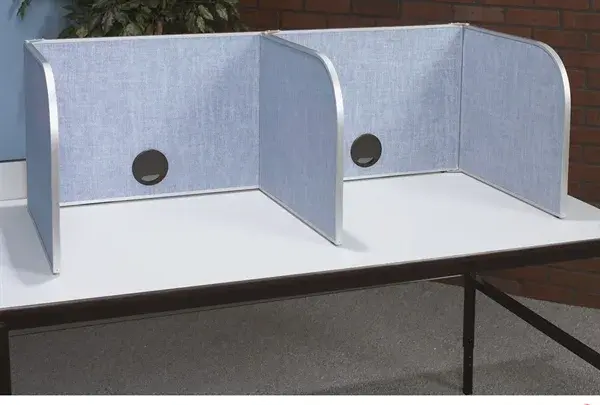
If the carrel isn't the right fit, a few alternatives cover similar ground. A pop-up sensory tent gives more enclosure with less durability. A desk divider offers the visual shield without the footprint.
A floor cushion nook trades walls for a defined mat and a screen.
Each has trade-offs:
| Option | Enclosure | Portability | Typical cost |
|---|---|---|---|
| Study carrel | High | Low | $80 to $600 |
| Pop-up sensory tent | High | High | $40 to $120 |
| Desk divider | Medium | Medium | $30 to $90 |
| Floor cushion nook | Low | High | $25 to $80 |
Choose a carrel for stability and privacy. Choose a tent for portability. Choose a divider for tight classrooms.
Choose a floor nook for kids who need movement, not walls.
Keeping the Corner Working Long Term
A calming corner isn't a one-time build. It drifts as the user grows, as sensory needs change, and as seasons shift. Revisit the five decisions every six months.
What worked at age seven often fails at age ten.
Wipe surfaces weekly and wash fabric covers every two weeks. Check batteries monthly. Replace compressed felt when it stops absorbing sound.
Rotate tools so the space stays fresh without becoming cluttered.
Most importantly, keep teaching the ritual. A corner only works when the user knows how to use it. Practice during calm moments, not crisis ones.
That single habit keeps the space alive for years.
Frequently Asked Questions
Can a calming corner help with ADHD as well as autism?
Yes. ADHD users often need active fidgets and movement, while autistic users may need deep pressure and reduced light. The carrel itself works for both.
You just tune the tools inside to match the sensory profile.
How much space does a study carrel calming corner need?
A desktop carrel needs roughly a 3 by 3 foot footprint. Floor carrels need closer to 4 by 4 feet plus clearance for the user to sit and exit. For wheelchair access, leave about 60 inches for a 180-degree turn.
What if the user refuses to use the corner?
Refusal usually means the corner feels like punishment or sits in a bad spot. Move it, use it during calm moments, and let the user pick one tool themselves. Forced use almost always backfires.
Do I need a therapist to set this up?
No, but an occupational therapist can help tune the sensory profile. If the user has significant regulation needs, an OT can guide which inputs match their nervous system. Many families build a basic corner first, then adjust with professional input later.
Is noise-cancelling better than noise-reducing headphones?
Noise-cancelling headphones suit loud environments like buses or cafeterias. Noise-reducing ear defenders suit classroom hum and everyday sensory sensitivity. For most calming corners, noise-reducing is the better first pick.
Final Decision Guide: Which Build Is Right for You
Match the build to the user, not the other way around. Use this quick guide:
- Calming need, young child: open-top carrel, felt lining, warm dimmable light, floor cushion, weighted lap pad.
- Calming need, teen or adult: hybrid carrel, ear defenders, warm light, silent fidget, breathing card.
- Alerting need: brighter warm light, rocking seat, active fidget, upbeat sound option.
- Classroom setting: open-top carrel, anchored to prevent tipping, felt-lined, positioned in a corner away from doors.
- Home setting: any carrel type works. Prioritize durability and easy cleaning.
- Wheelchair user: confirm 60-inch turning clearance before anything else.
Start minimal. Rehearse the ritual. Adjust after the first month.
That sequence beats any expensive setup, and it's the difference between a corner that sits unused and one that actually helps.

Similar Posts