How to Keep Cardboard Privacy Boards Dry in Humidity
Founder & Workspace Ergonomics Specialist at Desktop Carrel · Certified Professional Ergonomist (CPE), WELL Accredited Professional (WELL AP) · 13+ years testing acoustic privacy panels, modular carrels, and productivity workspace ergonomics
If your cardboard privacy boards are getting floppy, warped, or soft at the edges, you're dealing with moisture, not bad luck. Learning how to prevent cardboard privacy boards from getting soggy in humidity comes down to three things: cutting the humidity at the source, sealing the board itself, and protecting the raw corrugated edges that soak up water first.
Corrugated fiberboard is hygroscopic, meaning it pulls moisture straight out of the air and holds it inside the paper fibers. Per USDA Forest Service research on paper and wood behavior, board strength drops fast once relative humidity climbs past 50 to 60 percent, and the flutes inside the board collapse permanently once they get wet. Here's how to keep that from happening.
how to prevent cardboard privacy boards from getting soggy in humidity
Seal both faces of the board with a moisture barrier coating. Tape or wax every exposed corrugated edge. Keep the room below 50 percent relative humidity with a dehumidifier or airflow.
Store boards flat with space between them. Dry any damp board immediately in moving air.
Why Cardboard Fails in Humid Air (And Why Edges Fail First)
Humidity attacks cardboard in a specific order, and knowing that order tells you where to focus your effort. The face of a corrugated board is fairly tough. The raw edge is not.
The problem is cellulose, not cardboard
Paper fibers are made of cellulose, which loves water. In humid air, those fibers absorb moisture until they reach equilibrium with the room. That's why a board feels perfectly stiff on a dry Tuesday and floppy by Thursday.
Why the edges fail before the faces
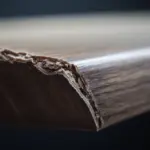
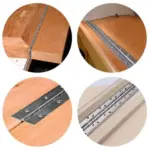
The exposed edge of a corrugated board is an open cross-section. You can see the fluting and the tiny air channels between the liners. That edge acts like a straw, pulling moisture inward through capillary action.
This is called edge wicking, and it's why a board can feel dry on the face while the corners are already soft.

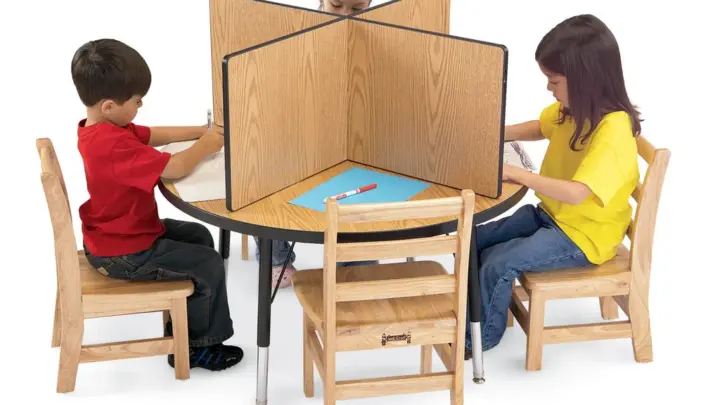
Image source: Web (Bing) / tradeindia.com (Web image (fair-use with source credit))
What happens once moisture gets in
Once water reaches the flutes, three things happen fast. The linerboard swells and delaminates from the fluting. The board warps or bows.
And the compressive strength, the whole reason the board stands up in the first place, disappears.
Worse, damp cellulose is a buffet for mold. The EPA and CDC both flag sustained indoor humidity above 60 percent as the threshold where mold growth kicks off. And mold on a study carrel is not something you scrub off and hand back to a student.
Image source: Web (Bing) / nellisauction.com (Web image (fair-use with source credit))
Quick Answer: The Three-Layer Fix
Every effective fix for soggy cardboard works on one of three layers. Miss a layer, and the whole board still fails.
| Layer | What It Does | How To Do It |
|---|---|---|
| Source | Removes moisture from the air | Dehumidifier, HVAC, ventilation |
| Barrier | Blocks moisture from touching the board | Spray sealant, lamination, paint-on coating |
| Edge | Seals the raw, wicking cross-section | Edge tape, wax, edge banding |
Source control first, always
If the room sits at 70 percent relative humidity, no coating will save your boards. A 20 to 50 pint dehumidifier pulling 300 to 600 watts will hold a classroom or small office below the 50 percent mark. Fix leaks first, because a dehumidifier fighting a dripping window is a losing battle.
Barrier coatings second
Spray-on sealants, acrylic lacquer, polyurethane, and clear contact film all work. Apply two thin coats rather than one thick one. Thin coats cure evenly and don't trap moisture underneath.

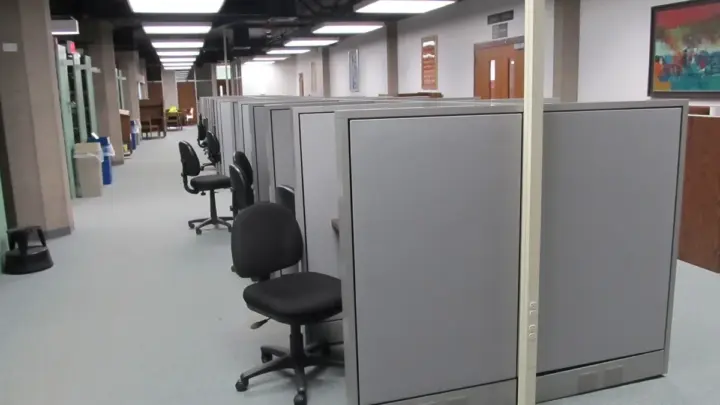
Image source: Bing (Web (fair-use with source credit))
Edge sealing last but not least
Tape every exposed edge. Packing tape works. Edge banding works better.
Paraffin wax rubbed along the raw edge works too. This single step prevents more board failures than any other, and it costs almost nothing.
The Decision Tree: Which Fix Fits Your Situation
Your boards need a different approach depending on whether they're dry, damp, or already ruined. Walk through the branches below.
Branch 1: You Have Dry Boards and Want to Keep Them That Way
If your boards are dry right now and you just want to protect them, go straight to prevention. Seal both faces with two thin coats of spray sealant. Tape or wax all four edges.
Store flat, not leaning, with airflow between stacked boards.
Check your room's relative humidity. If it holds below 50 percent, you're in good shape. If it regularly climbs higher, add a dehumidifier or run a fan to keep air moving.
Branch 2: Boards Live in a Chronically Damp Room
If the room itself stays humid, sealing alone won't cut it. You need source control plus barriers plus desiccants.
Run a room dehumidifier continuously during humid months. Add silica gel or calcium chloride packs inside storage bins, and swap them every two to six weeks. For rooms that stay above 65 percent year-round, switch to corrugated plastic boards instead of fighting the humidity.
Branch 3: Boards Are Already Damp or Warped
If your boards are already damp, act immediately. Blot them, don't rub. Lay them flat on a dry towel in moving air.
Weight them flat while they dry to fight warping. Full drying takes 24 to 72 hours depending on airflow.
If the flutes have collapsed or you see any mold, throw the board out. Moldy cardboard can't be salvaged for classroom use, and per EPA guidance on indoor mold, the safest move is removal.
Step-by-Step: Sealing, Edge Protection, and Smart Storage
Here's the full process from start to finish. It takes about an hour per batch of 10 to 12 boards.
Step 1: Check ambient conditions
Measure the room's relative humidity with a cheap hygrometer. Aim for below 50 percent. If it's higher, run the dehumidifier for a few hours before you start sealing.
Step 2: Prepare the boards
Wipe off dust. Make sure the boards are completely dry before coating. Sealing over moisture traps it inside, which is worse than no seal at all.
Step 3: Apply barrier coating
Spray or roll two thin coats on both faces. One can covers roughly four to six standard boards. Let the first coat cure per the manufacturer's spec before adding the second.
Step 4: Seal the edges
Run edge tape along all four sides, or rub paraffin wax into the raw edges. This is the step most people skip, and it's the one that matters most.
Step 5: Cure and inspect
Let the sealant fully cure in a dry space. Cure times vary by product, so check the label. Once cured, test an edge with a damp fingertip.
If moisture doesn't wick in within a few seconds, the seal is good.
Step 6: Store smart
Stack boards flat with airflow between them. Never lean them against a wall for months. Never store them directly on a concrete floor, which wicks moisture upward, or against a cold exterior wall where condensation forms.
| Term | Frequency | Action |
|---|---|---|
| Hygrometer check | Weekly during humid months | Record RH, adjust dehumidifier |
| Desiccant swap | Every 2 to 6 weeks | Replace or oven-dry silica gel |
| Seal inspection | Each term | Re-coat worn faces, re-tape edges |
| Edge test | Monthly | Fingertip moisture test on corners |
| Board rotation | Each season | Air out, inspect for soft edges |
Common Mistakes That Ruin Boards (And How to Avoid Them)
Most soggy board disasters come down to a handful of avoidable errors. Here's what to skip.
- Sealing the faces but not the edges. The edges are where moisture enters first. Tape or wax them.
- Over-sealing in one thick coat. Thick coats crack, trap moisture, and take forever to cure. Two thin coats beat one heavy one.
- Stacking boards while still damp. Damp boards stacked together cause blocking, which means they stick to each other and tear when pulled apart.
- Storing on concrete floors. Concrete wicks moisture upward and holds it against the board's bottom edge.
- Relying on silica packets alone. In a full classroom, a silica packet saturates in two to six weeks. It's a helper, not a solution.
- Ignoring the room. You can seal every board perfectly and still lose them if the room sits above 65 percent relative humidity.
- Dismissing wax because it feels old-fashioned. Paraffin on raw edges is one of the cheapest, most effective barriers you can apply.
- Keeping moldy boards. If you see black or green spots, toss it. Mold spreads to the rest of the stack.

Similar Posts