How to Remove Coffee Stains From Upholstered Carrels
Founder & Workspace Ergonomics Specialist at Desktop Carrel · Certified Professional Ergonomist (CPE), WELL Accredited Professional (WELL AP) · 13+ years testing acoustic privacy panels, modular carrels, and productivity workspace ergonomics
Coffee on a fabric carrel feels like a disaster the second it happens. You're staring at a spreading dark ring on a surface you can't exactly throw in the wash. The good news?
Most coffee spills on woven upholstery lift cleanly if you catch them early and use the right method.
Here's the catch. Upholstered carrels aren't all built the same. Per the IICRC S300 upholstery cleaning standard, the fabric's cleaning code decides what you're allowed to use, and using the wrong chemistry can set a stain permanently.
So before you grab a rag, let's figure out exactly what you're working with.
how to remove coffee stains from upholstered desk carrel
Blot the spill right away with a clean microfiber cloth. Never rub, since rubbing pushes coffee deeper into the fibers. Mix a teaspoon of dish soap with a cup of cool water.
Dab the solution on, then rinse with a damp cloth. For dried stains, add white vinegar or a 3% hydrogen peroxide dab.
First, Read the Fabric Before You Touch the Stain
Before any liquid touches that carrel, you need two pieces of information. What fiber is it, and what cleaning code does it carry? Skip this step and you're gambling with a permanent stain or a bleached patch.
Find the cleaning code (W, S, WS, or X) and what it tells you
The cleaning code is usually on a tag under the seat, behind the panel, or on the manufacturer's spec sheet. It tells you which solvent class is safe.
| Code | What it means | Safe cleaners |
|---|---|---|
| W | Water-based only | Dish soap, vinegar, water mixes |
| S | Solvent only | Dry-cleaning solvent, isopropyl alcohol |
| WS | Water or solvent | Either method works |
| X | Vacuum only | No liquids at all |
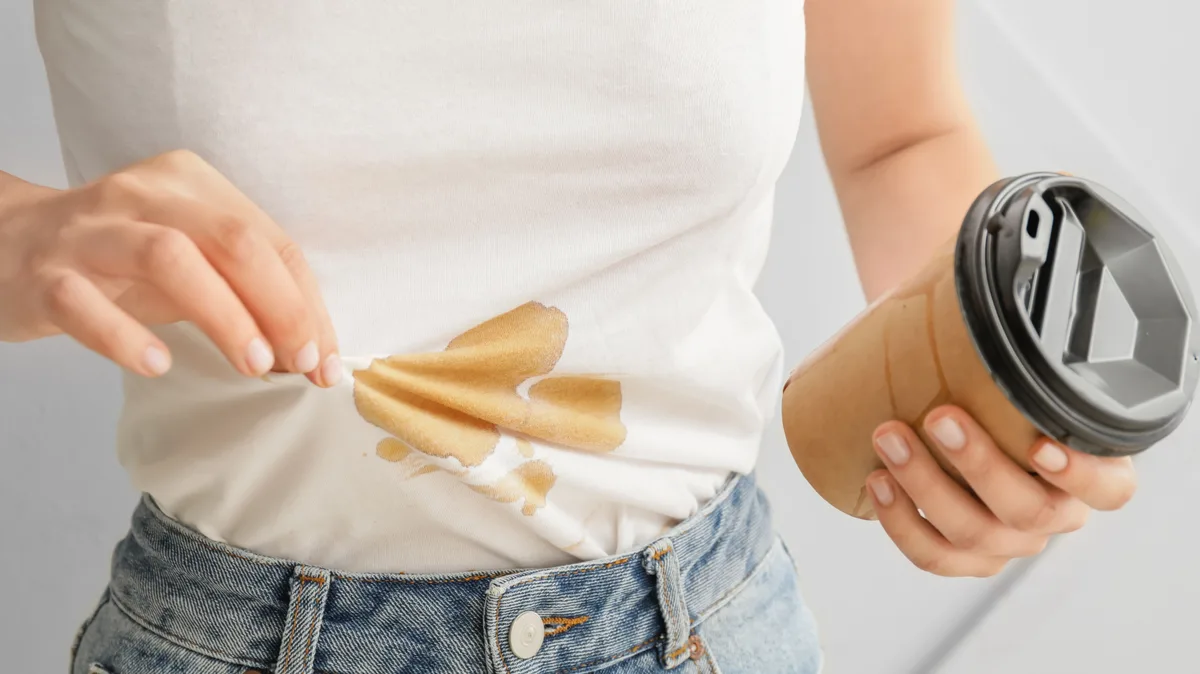
Image source: Bing (Web (fair-use with source credit))
If there's no tag, treat it as S-code and go dry. Water on an S-code fabric can cause browning, shrinking, or a water ring you'll never fully remove.
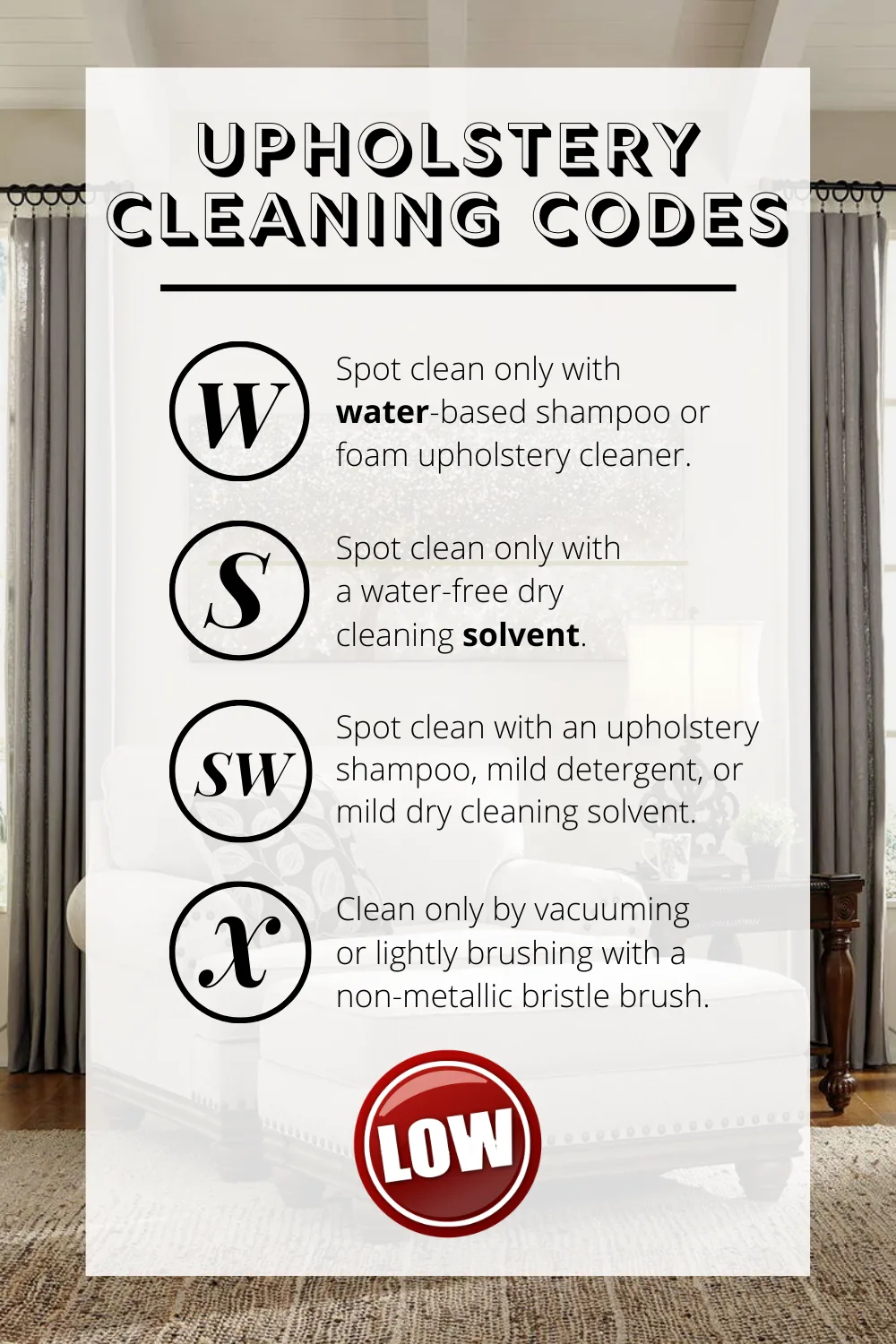
Image source: Web (Bing) / storage.googleapis.com (Web image (fair-use with source credit))
Fiber check: polyester, olefin, wool blend, or cotton
Most institutional carrels use olefin or woven polyester. Both handle water well. Wool blends and cotton are the tricky ones.
They absorb coffee fast and hold onto tannins.
Tug a hidden fiber. If it burns to ash, it's natural. If it melts into a bead, it's synthetic.
Natural fibers need gentler chemistry and cooler water.
Fresh vs. set-in: why the clock changes your whole approach
Fresh coffee (under a couple of hours) sits on the surface. Liquid lifts it with a simple blot and dab.
Set-in coffee (overnight or longer) has already bonded tannins to the fiber. That needs an acidic or oxidizing agent, like vinegar or diluted peroxide. Per WoolSafe guidance, wool and natural fibers should avoid alkaline cleaners entirely because they damage the fiber structure.
The Quick Answer: A 30-Second Triage
Not every spill needs the same recipe. Use these if/then rules to pick your path before you touch anything.
If it's fresh (under a few hours) and the fabric is W or WS
Go wet. Blot, dab with soapy water, rinse, dry. You'll be done in ten minutes.
This is the easy branch.
If it's set-in (overnight or longer)
Go slow. Rehydrate the stain first with a damp cloth for five minutes. Then apply diluted vinegar or hydrogen peroxide.
Give it fifteen to thirty minutes of dwell time before blotting. Repeat as needed.
If the fabric is S-code or you can't find a tag
Go dry. Skip water entirely. Use a solvent-based upholstery cleaner or 70% isopropyl alcohol applied to a cloth, not directly on the fabric.
Blot, don't soak. Air-dry with a fan.
What You'll Actually Need (and What to Skip)
Keep this kit stocked. Most of it lives under your kitchen sink already.
- White microfiber cloths (at least four, so you can rotate)
- Soft bristle brush (a clean toothbrush works)
- Spray bottle
- Distilled water (tap water leaves mineral rings)
- Dish soap (Dawn or Fairy work best, unscented)
- White vinegar
- 3% hydrogen peroxide
- Enzymatic cleaner (for milk-based coffee)
- Cornstarch or baking soda (dry extraction)
Skip these permanently:
- Bleach of any kind
- Hot water
- Paper towels (they leave lint and shed fibers)
- Colored cloths (dye transfer)
- Any cleaner with a strong fragrance or optical brighteners
Step-by-Step: Blot, Treat, Rinse, Dry
Here's the workflow. Follow it in order. Skipping steps is how small stains become permanent ones.
Prep the carrel: vacuum and test in a hidden spot
Vacuum loose crumbs and dust first. Then test your solution on the underside of the panel or a back corner. Wait ten minutes.
If the color holds and the fabric doesn't pucker, you're clear.
Lifting a fresh coffee stain
Work from the outside edge of the stain inward. This stops the ring from spreading. Blot with a dry microfiber cloth, pressing straight down.
Rotate to a clean spot on the cloth with each press.
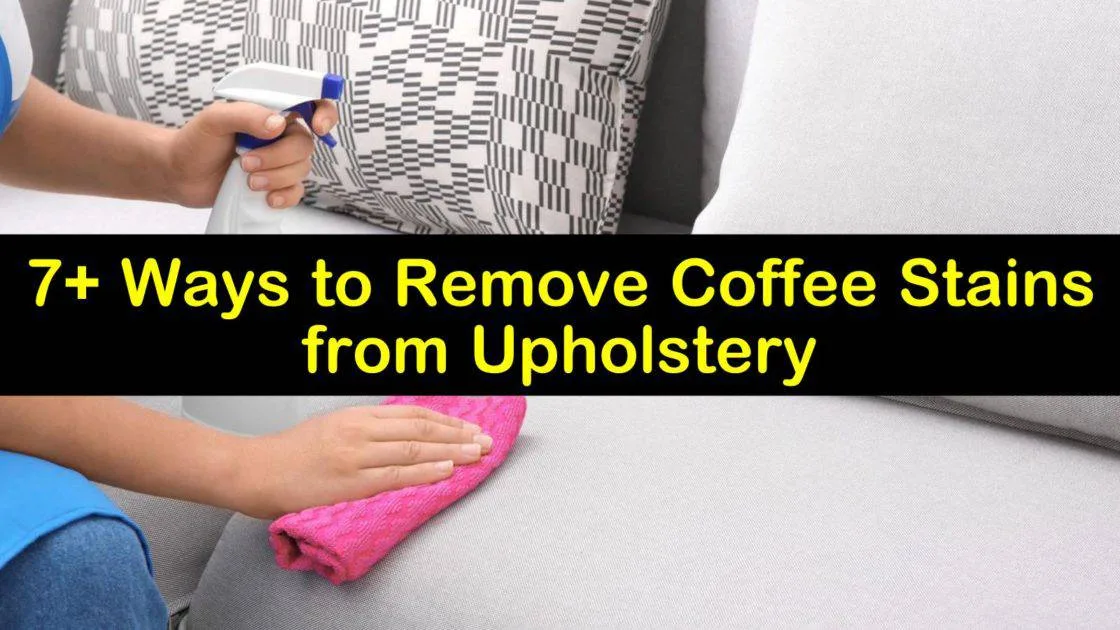
Image source: Web (Bing) / tipsbulletin.com (Web image (fair-use with source credit))
Once the blot stops pulling color, dab the soapy water on. Let it sit one minute. Blot again.
Alternate until the cloth comes away clean.
Breaking down a dried or set-in stain
Rehydrate first. Lay a damp cloth over the stain for five minutes. Then apply your choice of treatment:
- Vinegar mix: 1 part white vinegar to 1 part cool water
- Peroxide: straight 3% solution, for light-colored fabrics only
- Enzymatic cleaner: for any coffee that had milk or cream
Let it dwell fifteen to thirty minutes. Blot. Repeat up to three times.
If it's still visible, don't panic-scrub. Move to the dry extraction method.
Rinsing without over-wetting glued panels
Rinse with a barely damp cloth, not a soaked one. Glued carrel panels can't handle standing water. The adhesive softens and the fabric lifts at the edges.
Press a dry towel over the area. Stand on it or press hard with your palm. You want to pull moisture up and out, not push it down.
Drying fast to prevent water rings and mildew
Point a fan at the spot. Airflow is your friend. A hair dryer on the cool setting works too, but keep it moving and don't let the fabric get warm.
Full drying takes four to twelve hours depending on humidity. In damp climates, run a dehumidifier. Mildew starts at around the 24-hour mark if the fabric stays wet.
When the Stain Won't Budge: Branching Decisions
Some stains need a different approach. Match your method to the specific problem.
Milk and cream spills: the odor problem
Milk-based coffee leaves protein behind, and protein sours. Standard soap won't touch it. You need an enzymatic cleaner, which digests the protein at a molecular level.
Apply, cover with plastic wrap to keep it wet, and let it work for thirty minutes. Blot and rinse.
Sugar and flavored syrups: the caramelized crust
Sugar caramelizes when it dries, turning a light stain dark and crusty. Warm (not hot) water softens it. Then treat with the standard soapy water method.
Don't pick at the crust with your fingernail, or you'll pull fibers.
Wool blends and natural fibers: gentler chemistry
Skip the peroxide. Skip the vinegar if the fabric is dyed. Use only a pH-neutral wool-safe cleaner and cool distilled water.
Per WoolSafe, alkaline cleaners strip the natural lanolin and roughen the surface.
Glued or non-removable carrel panels: dry methods only
If the fabric is glued down, you can't soak it. Use dry extraction. Sprinkle cornstarch or baking soda over the damp stain, let it sit an hour, then vacuum.
Repeat. For stubborn spots, use a solvent cleaner applied to a cloth, never directly to the panel.

Image source: Bing (Web (fair-use with source credit))
When to call a pro (and what it costs)
Call a pro if the stain covers more than a hand-sized area, the fabric is silk or a wool-silk blend, or the carrel is vintage with unknown fiber content. Professional hot-water extraction runs $50 to $150 per carrel, depending on your region. That's cheap insurance against a reupholstery bill of $200 to $800 per panel.
For institutional chemical handling questions, the OSHA hazard communication standard covers what your facilities team needs to know about storing and labeling cleaning agents.
Mistakes That Turn a Small Stain Into a Permanent One
Most ruined carrels weren't ruined by the coffee. They were ruined by the cleanup. Here are the errors we see most often, and what to do instead.
Scrubbing, soaking, and the wrong cleaner on S-code fabric
Never rub a coffee stain. Friction pushes liquid deeper and pills the fiber surface. For glued panels, over-wetting softens the adhesive and lifts the fabric edge.
On S-code upholstery, plain water can trigger browning and permanent rings, so solvent cleaners are the only safe route.
Mixing vinegar and peroxide, or bleach with anything
Don't combine vinegar and hydrogen peroxide in the same bottle. The mixture forms peracetic acid, which is corrosive and irritates skin and lungs. Bleach plus vinegar releases chlorine gas.
Keep each cleaner separate, and ventilate the room whenever you use peroxide or solvents.
Cleaning outside-in and creating a ring
Always work from the outer edge of the stain toward the center. Cleaning from the middle outward spreads the coffee and leaves a halo. On light fabrics, that ring can be darker than the original spill after it dries.
Skipping the rinse and leaving a re-soiling halo
Soap residue stays sticky after it dries. Dust and dirt cling to it, so the spot darkens within a week. Rinse with a damp cloth until no suds remain.
Then blot dry and keep airflow moving over the area.
Keeping Carrels Clean Long-Term
Prevention beats treatment every time. A five-minute habit after cleaning saves you a full reupholstery job down the road.
Reapplying fabric protector after cleaning
Cleaning strips some of the factory soil retardant. Once the panel is fully dry (give it 24 hours), reapply a fluorine-free fabric protector. Light coats, two or three, drying between each.
This buys you reaction time on the next spill.
Quick-response kit for libraries, schools, and offices
Stock a small caddy in each department. Microfiber cloths, a spray bottle of diluted dish soap, distilled water, and a spare towel. Label the bottles with the cleaning code they suit.
When a spill happens, staff grab the kit and blot within minutes instead of hunting for supplies.
Handling multiple carrels on a maintenance schedule
Schedule a quarterly deep clean per carrel bank. Vacuum weekly, spot-clean as needed, and reapply protector every six months. In high-traffic libraries, monthly vacuuming cuts stain set-in rates noticeably.
Rotate carrels out of service for cleaning rather than doing them all at once.
FAQs
Can I use baking soda and vinegar together on coffee stains?
Yes, but not as a single mixed solution. The fizz is just carbon dioxide and it does nothing for coffee. Use vinegar as your acidic treatment first.
Then sprinkle baking soda as a dry extraction powder to pull residue and moisture out.
Does club soda really work on coffee stains?
Barely. Club soda is mildly alkaline water with bubbles, and it can dilute a fresh spill. It won't touch a dried stain.
Plain cool distilled water works just as well, and it won't leave the sodium residue that club soda can.
Will hydrogen peroxide bleach my carrel's fabric?
It can. Peroxide is an oxidizing agent, so on dark or vivid upholstery it may lighten the spot. Test on a hidden area first.
Stick to 3% concentration, never stronger. Skip it entirely on wool, silk, and any fabric labeled S-code.
How long does a cleaned carrel take to dry?
Four to twelve hours in normal indoor conditions. High humidity can stretch that past 24 hours, which is when mildew risk climbs. Point a fan at the panel and keep the room ventilated.
Don't put the carrel back into service until it's bone dry.
What if the stain comes back after drying?
That's wicking. Moisture pulled coffee up from the padding or foam below. Re-treat with your original solution, then blot harder and apply more weight.
A second rinse usually stops it. If it keeps returning after three attempts, call a pro.
Does cleaning void the manufacturer's warranty?
Sometimes. Steelcase, KI, and Smith System specify cleaning codes in their care documentation, and using the wrong solvent can void coverage. Check your panel's tag or the original spec sheet before you start.
Follow the code and you're covered.

Similar Posts