Stop Push Pins From Falling Out of Acoustic Panels
Founder & Workspace Ergonomics Specialist at Desktop Carrel · Certified Professional Ergonomist (CPE), WELL Accredited Professional (WELL AP) · 13+ years testing acoustic privacy panels, modular carrels, and productivity workspace ergonomics
Pushing a pin into an acoustic desk panel and hearing it drop five seconds later is one of the small, maddening problems of office life. If you want to know how to stop push pins from falling out of acoustic desk panels, the short version is this: the panel core, not the pin, is usually the culprit. Soft fiberglass cores barely grip a steel shaft.
Dense PET felt and mineral wool hold pins properly. So the fix depends entirely on what's behind that fabric.
In our research, panel density tells you almost everything about pin retention. Standard push pins have a shaft around 5/16 inch (8 mm), and that length simply isn't enough for low-density fiberglass rated near 1.5 to 3 lb/ft³. Manufacturer specifications for office partitions also tie panel materials to ASTM E84 fire ratings, which matters if you're tempted to glue or tape anything on.
Let's walk through the branches.
how to stop push pins from falling out of acoustic desk panels
Identify your panel core first, then match the pin to it. Soft fiberglass needs long T-pins inserted at a downward angle. PET felt and mineral wool grip standard push pins fine.
If the panel is metal-backed, use magnetic pins instead. Never glue or tape anything to a fire-rated panel.
First, Identify Your Panel Core — This Decides Everything
Press a pin in by hand before you do anything else. Your fingers will tell you more in five seconds than any spec sheet. Feel resistance, sponginess, or grit, and you'll know which branch of the decision tree you're standing on.
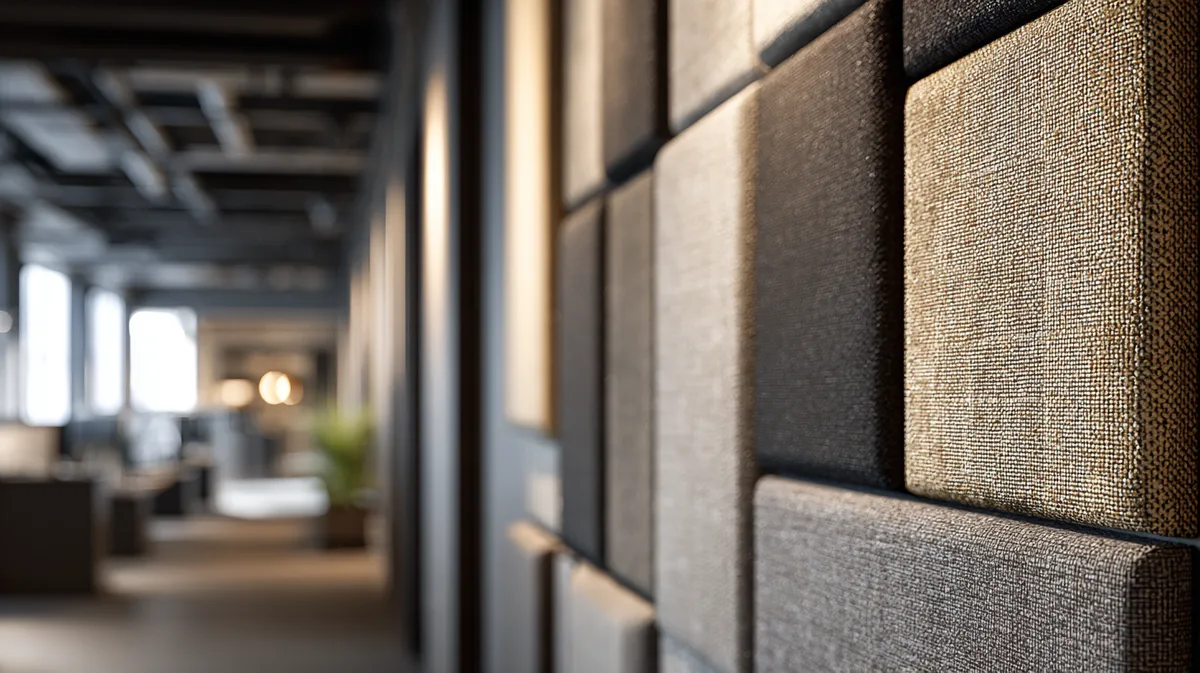
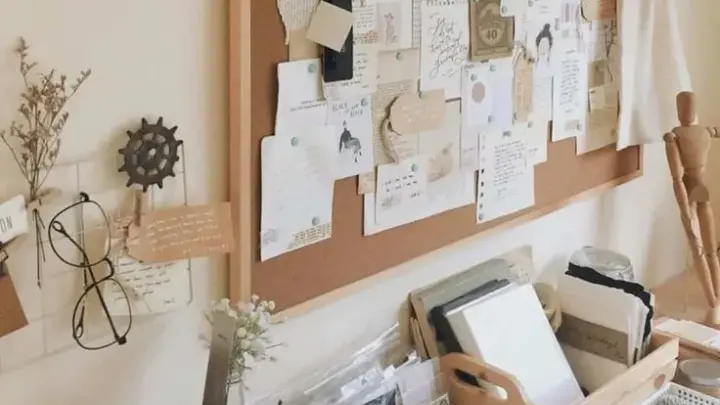
Image source: Bing (Web (fair-use with source credit))
Fiberglass (soft, spongy) — the worst offender
If the pin slides in with almost no resistance, you're dealing with fiberglass. Low-density fiberglass batts sit around 1.5 to 3 lb/ft³, which is far too loose to grip a 5/16-inch steel shaft. Pins will hold for a few hours, then work their way out under the weight of a single sticky note.
This is the single biggest reason people give up on pins entirely. The pin isn't faulty, and neither is your technique. The core just has nothing to bite into.
Mineral wool (firm, dense) — pins hold reasonably well
Mineral wool panels, sometimes sold as rockwool, typically run 6 to 10 lb/ft³. That's roughly three to five times denser than fiberglass. A standard push pin will hold here for weeks.
You'll feel a firmer, grittier resistance when you press. If that's what you feel, you can skip most of the reinforcement steps later in this guide. A long-ish pin and a slight downward angle is all you need.
PET felt (grippy, fibrous) — pins hold surprisingly well
Recycled PET felt is the quiet winner of the acoustic panel world. Density runs 10 to 20 lb/ft³, and the fibrous structure grabs pin shafts like corkboard. Aggregate user reviews rarely complain about pins dropping out of PET panels.
The catch is tear-out. Pull a pin straight out and you can drag fibers with it. Twist slightly as you remove it, and the hole closes back up.
Fabric-wrapped gypsum or MDF — hard core, bent pins, no grip
If the pin refuses to go in, or bends the second you push, you've hit a hard backer. Fabric-wrapped gypsum and MDF panels are common in framed cubicle systems because they accept Velcro and clips well.
Pins are the wrong tool here. You'll either snap shafts or leave visible dents in the fabric. Move straight to the clip and magnet options further down.
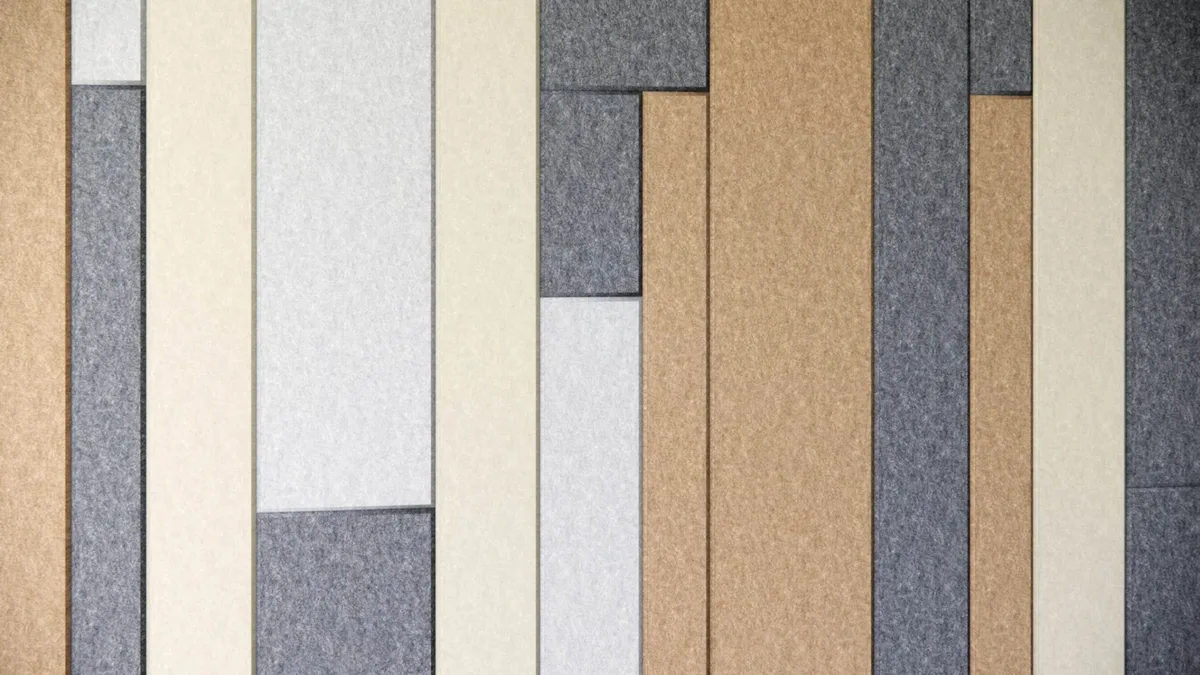
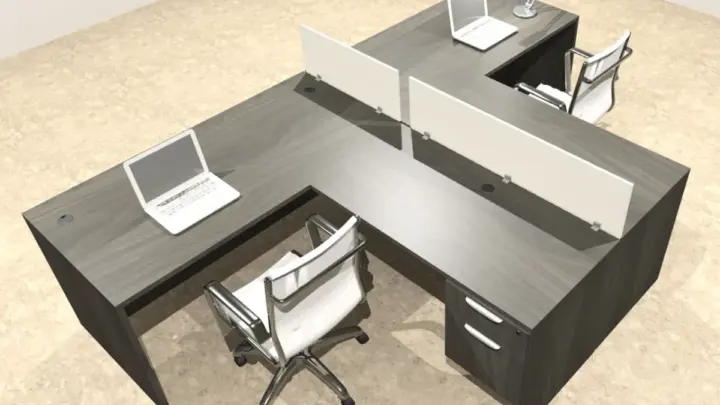
Image source: Web (Bing) / materiallogiq.com (Web image (fair-use with source credit))
Here's the quick decision table for matching core to fix:
| Panel core | Density range | Push pin verdict | Best fix |
|---|---|---|---|
| Fiberglass | 1.5–3 lb/ft³ | Falls out fast | Long T-pins at an angle, or cork backing |
| Mineral wool | 6–10 lb/ft³ | Holds weeks | Standard pin, slight downward angle |
| PET felt | 10–20 lb/ft³ | Holds months | Standard pin, twist on removal |
| Gypsum or MDF | Rigid backer | Bends or dents | Clips or magnetic pins |
Match the Pin to Your Panel (Length, Type, and Angle Matter More Than You Think)
Pin selection follows directly from the core you identified. If the panel is soft, the pin needs to be longer. If the panel is hard, the pin needs to be shorter and blunter, or replaced entirely.
Standard push pins vs. long T-pins vs. upholstery pins
Standard push pins have a shaft around 5/16 inch. Long T-pins run 1/2 to 3/4 inch and are the single cheapest upgrade for soft cores. Upholstery pins sit in the same length range but have a thicker shaft, which gives more friction.
If your fiberglass panel keeps spitting out standard pins, switch to T-pins before you try anything else. Our research suggests this one change fixes the problem for most people.
Why pin shaft length changes everything in soft cores
A pin holds by friction along its shaft. In low-density foam, there's very little material touching that shaft. Doubling the shaft length roughly doubles the friction surface, and that's usually enough to hold a light note or photo.
The rule of thumb: the shaft should reach at least halfway through the panel thickness. A 1/4-inch pin in a 1-inch fiberglass panel is barely inside the material.
The 15–30° downward insertion angle trick
Push pins fail under load, and gravity is the load. Insert straight in and the pin sags, widening the hole. Insert at a 15 to 30 degree downward angle and the shaft sits diagonally through the core, which gives it more material to grip.
This trick costs nothing and takes a second to apply. It's the difference between a pin that holds for a day and one that holds for a month.
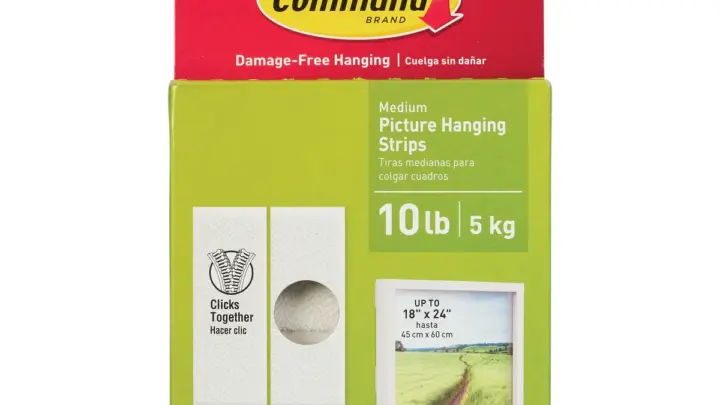
Image source: Bing (Web (fair-use with source credit))
When Pins Aren't the Answer: Panel-Safe Alternatives by Situation
Sometimes the right move is to stop using pins. That's not a defeat. It's the correct branch of the decision tree when the core is too soft, too hard, or the item is too heavy.
Clips that grip the frame edge (no puncture at all)
Binder clips and bulldog clips grip the top edge of the panel frame. Zero holes, zero fabric damage, and they hold far more weight than any pin. If your panel has a visible top edge, this is the cleanest fix.
The trade-off is placement. You're stuck hanging things near the edge, not in the middle of the panel.
Magnetic pins and hooks (only for metal-backed panels)
Some acoustic screens have a steel backing plate behind the fabric. If yours does, magnetic push pins and magnet hooks are unbeatable. They hold 1 to 5 lb depending on magnet grade, and they leave no marks at all.
Test with a fridge magnet first. If it sticks, you've got a metal backer.
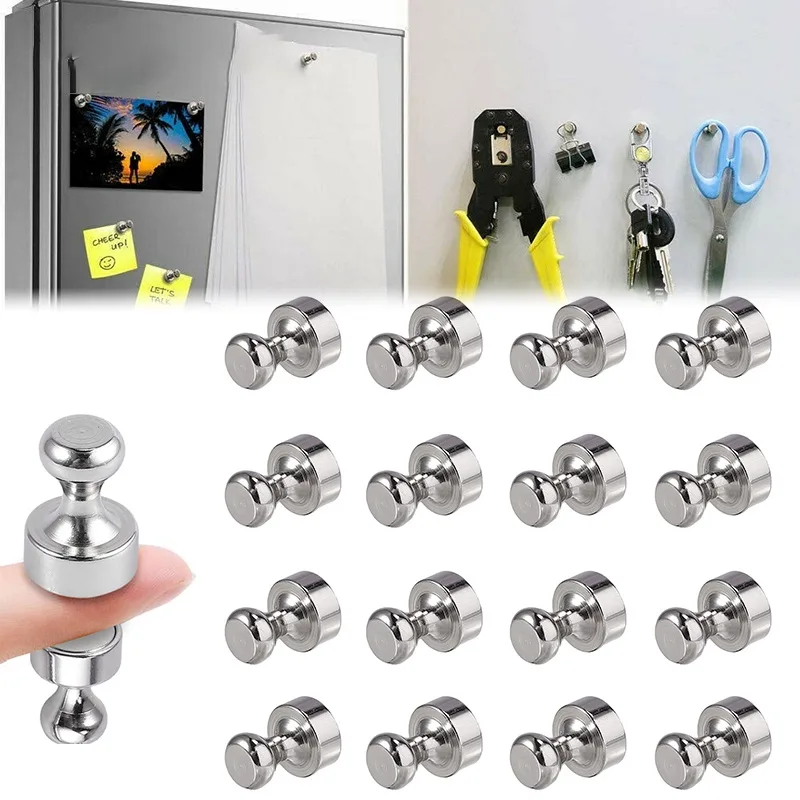
Image source: Bing (Web (fair-use with source credit))
Adhesive hooks — when they work and when they void your fire rating
Adhesive hooks work fine on home office panels. In commercial offices, they're a problem. Most acoustic panels carry an ASTM E84 Class A fire rating, and adding adhesive or tape to the surface can void that compliance entirely.
Check your lease or ask facilities before you stick anything on a rated panel. If it's your own home setup, adhesive hooks are fine for anything under about 1 lb.
Foam-core or cork backing strips for keeping pins you already use
This is the workaround for people who want to keep using pins on a fiberglass panel. Cut a thin strip of cork or foam-core board, pin it to the panel first, then pin your notes into the cork.
The cork gives the pin something to grip. It also hides behind the paper, so nobody notices. It's not elegant, but it works, and it costs almost nothing.
The Insertion and Maintenance Workflow That Stops the Drop
Once you've picked the right pin or alternative, the workflow matters as much as the hardware. Here's the sequence that keeps pins in place.
Weigh your item before you pin it
Anything over about 8 oz needs more than a standard push pin, even in a good panel. A single sheet of paper is fine. A stack of five pages, a laminated card, or a small photo frame is not.
Weigh it on a kitchen scale if you're not sure. It takes ten seconds and saves you a dropped item later.
Rotate pin locations to avoid enlarging holes
Every pin insertion widens the hole slightly. Reuse the same spot and the hole grows until the pin has nothing to grip. Move each new pin a few millimeters sideways from the last one.
On PET felt, this is less critical because the fibers spring back. On fiberglass, it matters a lot.
Test with a gentle tug before walking away
Pin your item, then give it a light tug. Not a yank, just enough to feel resistance. If the pin slides, you'll know immediately instead of finding your note on the floor an hour later.
This one habit catches almost every failure before it happens.
Monthly panel check and pin replacement
Bent pins hold poorly. Rusty or dull pins hold worse. Once a month, pull out any pins that look tired, replace them, and rotate positions across the panel.
It's a two-minute job. It's also the difference between a panel that works for years and one that slowly becomes useless.
Mistakes That Make Pins Fall Out Faster
Most pin failures trace back to one of five habits. Fix these and you'll solve the problem for the majority of panels.
Reusing the same hole over and over
This is the number one mistake. Each reuse widens the hole. After four or five insertions in the same spot, even a good pin won't hold.
Rotate your positions and this problem disappears.
Pinning too much weight to one spot
One pin, one sheet of paper. That's the safe rule. Hanging a calendar, a photo, and a to-do list from the same pin is asking for a drop, even in a dense panel.
Inserting straight in instead of angled
Straight insertion gives gravity a direct path to pull the pin out. Angle it down 15 to 30 degrees and gravity works with you instead of against you. It's a two-second change with a big payoff.
Stripping fire-rated coating with tape or glue
Adhesive residue on a Class A rated panel can void the rating. Per ASTM E84 testing, surface treatments change how a material behaves in a fire. If your panel is rated, keep glue and tape off it.
Ignoring vibration from typing and desk movement
Typing, mouse movement, and desk bumps all vibrate the panel. Pins work loose slowly under constant vibration, even ones that started out secure. This is why monthly checks matter, especially in busy offices.
Safety, Fire Ratings, and Lease Rules You Can't Skip
Before you modify any panel, know what you're allowed to modify. This is where a lot of office workers get caught out.
ASTM E84 and Class A fire ratings explained simply
ASTM E84 is the standard test for how building materials behave in a fire. Class A is the top rating, meaning a flame spreads very slowly across the surface. Most commercial acoustic panels carry this rating because office fit-outs require it.
Adding adhesive, tape, or aftermarket coatings to a rated panel can void the rating. That's a compliance issue, not a cosmetic one. If you're not sure whether your panel is rated, ask facilities before you stick anything on it.
Fiberglass handling and glove basics
Exposed fiberglass edges irritate skin. If you're cutting cork backing strips or handling a panel with a damaged edge, wear gloves. This matters more on older panels where the facing has worn through.
What your facilities team or lease will actually allow
Company-owned panels usually come with rules. Some leases ban adhesives, some ban any modification at all. A quick email to facilities costs you nothing and saves you a repair bill later.
If the panel is yours, in your own home office, you've got more freedom. Just keep the fire rating in mind if the panel sits near a heat source.
Real Scenarios: Which Fix Fits Which Panel
Theory is fine, but real panels come in specific shapes. Here's how the decision tree plays out in four common setups.
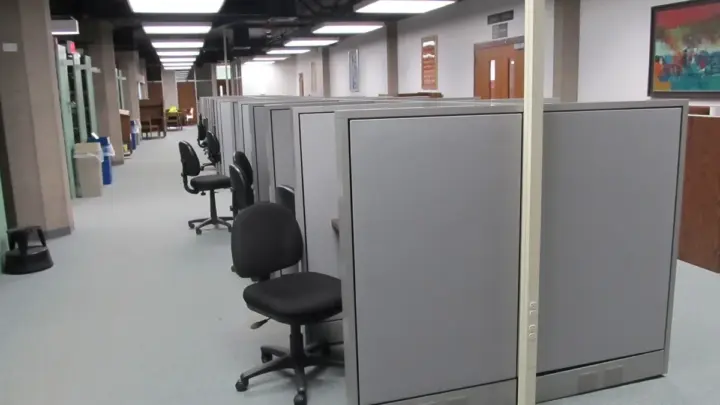
Open-plan cubicle with 1-inch fiberglass panel
This is the hardest case. The core is soft, the panel is thin, and you can't modify it. The fix: long T-pins inserted at a 20-degree downward angle, with a small cork backing square behind each one.
If that feels like too much work, switch to edge clips.
Home office PET felt divider
Easy case. Standard push pins hold fine for months. Twist slightly when removing them so you don't tear fibers.
Every few months, rotate positions and you're set.
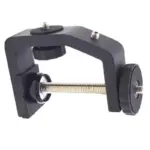
Freestanding clamp-mount panel you can't modify
You can't pin it and you can't glue it. Binder clips on the top edge are your answer. They hold more weight than pins anyway, and they leave zero marks.
Metal-backed acoustic screen in a hot-desking office
Test with a fridge magnet. If it sticks, use magnetic push pins. They hold 1 to 5 lb, leave no holes, and survive hot-desking abuse far better than anything you push into fabric.
Mistakes That Make Pins Fall Out Faster
Most pin failures trace back to a handful of habits. Fix these and you'll solve the problem for a large share of panels.
Reusing the same hole over and over
This is the number one mistake. Each insertion widens the hole slightly. After four or five reuses in the same spot, even a good pin has nothing left to grip.
Rotate positions by a few millimeters and the problem disappears.
Pinning too much weight to one spot
One pin, one sheet of paper. That's the safe rule. Hanging a calendar, a photo, and a to-do list from the same pin invites a drop, even in a dense PET felt panel.
Split the load across two or three pins instead.
Inserting straight in instead of angled
Straight insertion gives gravity a direct pull path. Angle the shaft down 15 to 30 degrees and gravity works with the core, not against it. Two seconds of effort, weeks of extra hold.
Stripping a fire-rated surface with tape or glue
Per ASTM E84 testing, surface treatments change how a material behaves in a fire. Adhesive residue on a Class A panel can void the rating. If your panel is rated, keep glue and tape off it entirely.
Ignoring vibration from typing and desk movement
Typing, mouse work, and desk bumps vibrate the panel constantly. Pins work loose slowly under that load, even ones that started out secure. Monthly checks matter most in busy shared offices.
Safety, Fire Ratings, and Lease Rules You Can't Skip
Before you modify any panel, know what you're allowed to modify. This is where plenty of office workers get caught out.
What ASTM E84 and Class A ratings actually mean
ASTM E84 is the standard test for how building materials behave in a fire. Class A is the top rating, meaning flame spreads very slowly across the surface. Most commercial acoustic panels carry it because office fit-outs require it.
Adding adhesive, tape, or aftermarket coatings can void that rating. That's a compliance issue, not a cosmetic one. If you're unsure whether your panel is rated, ask facilities first.
Fiberglass handling basics
Exposed fiberglass edges irritate skin. If you're cutting cork backing strips or handling a panel with a worn edge, wear gloves. This matters more on older panels where the facing has thinned through.
What your facilities team or lease allows
Company-owned panels usually come with rules. Some leases ban adhesives outright. Others ban any modification at all.
A quick email to facilities costs you nothing and saves a repair bill later. If the panel is yours, in your own home office, you've got more freedom. Just keep the fire rating in mind near heat sources.
Real Scenarios: Which Fix Fits Which Panel
Theory is fine, but real panels come in specific shapes. Here's how the decision tree plays out across four common setups.
Open-plan cubicle with a 1-inch fiberglass panel
This is the hardest case. The core is soft, the panel is thin, and you probably can't modify it.
The fix: long T-pins at a 20-degree downward angle, with a small cork backing square behind each one. If that feels like too much work, switch to edge clips instead.
Home office PET felt divider
Easy case. Standard push pins hold fine for months. Twist slightly on removal so you don't tear fibers.
Rotate positions every few months and you're set.
Freestanding clamp-mount panel you can't modify
You can't pin it and you can't glue it. Binder clips on the top edge are your answer. They hold more weight than pins anyway, and they leave zero marks.
Metal-backed acoustic screen in a hot-desking office
Test with a fridge magnet. If it sticks, use magnetic push pins. They hold 1 to 5 lb, leave no holes, and survive shared-desk abuse far better than anything pushed into fabric.
A Quick Troubleshooting Checklist for Stubborn Pins
If you've tried the right pin and it still drops, work through this list in order. It catches nearly every remaining cause.
- Check panel thickness with a straightened paperclip. If the pin only reaches a quarter of the way through, it's too short.
- Feel for a metal backer with a magnet. If it sticks, switch to magnetic pins and stop fighting the fabric.
- Weigh the item. Anything over 8 oz needs a clip, not a pin.
- Look for a hidden hard backer behind the fabric. MDF and gypsum panels bend pins without warning.
- Try a fresh hole two centimeters away. If the new hole holds, the original spot was simply worn out.
If none of those work, the panel core is the limitation, not your technique. Move to edge clips or adhesive alternatives.
Frequently Asked Questions
Why do push pins keep falling out of my acoustic desk panel?
The core is usually too soft. Low-density fiberglass sits around 1.5 to 3 lb/ft³, which gives a 5/16-inch steel shaft almost nothing to grip. Switch to long T-pins and insert them at a downward angle, or move to clips.
Do T-pins hold better than standard push pins in acoustic panels?
Yes, in soft cores. A T-pin shaft runs 1/2 to 3/4 inch, roughly double a standard pin. That extra length means more friction surface, which is the single biggest factor in pin retention.
In dense PET felt, the difference is minor.
Can I use adhesive hooks on a fire-rated acoustic panel?
Only if your facilities team approves it. Most commercial acoustic panels carry an ASTM E84 Class A fire rating, and adhesives can void that compliance. In a home office setup with no rating, adhesive hooks are fine for items under about 1 lb.
What's the best no-damage way to hang things on an acoustic panel?
Edge clips and magnetic pins. Binder clips grip the frame with zero punctures. Magnetic push pins work on metal-backed panels and hold 1 to 5 lb with no holes at all.
Both beat any puncture method for reversibility.
How do I stop pins from tearing the fabric when I remove them?
Twist gently as you pull. A straight pull drags fibers out of PET felt and woven fabric, leaving a visible hole. A small twist lets the fibers close back around the shaft.
Rotate positions each time you re-hang something.
Is it worth putting cork behind a fiberglass panel to hold pins?
Yes, if you want to keep using pins. A thin cork or foam-core strip gives the pin something to bite into, and it hides behind the paper. It's the cheapest fix for soft panels that won't hold anything otherwise.

Similar Posts