How to Air Out Off-Gassing Smell from a New Foam Study
Founder & Workspace Ergonomics Specialist at Desktop Carrel · Certified Professional Ergonomist (CPE), WELL Accredited Professional (WELL AP) · 13+ years testing acoustic privacy panels, modular carrels, and productivity workspace ergonomics
If your new foam study carrel smells like a chemistry lab, you're not imagining it. Learning how to air out off-gassing smell from new foam study carrel setups comes down to one thing: moving fresh air across the foam until the volatile organic compounds (VOCs) stop escaping. Most carrels clear within one to four weeks with steady ventilation.
That smell comes from residual blowing agents, amine catalysts, and trace aldehydes trapped inside polyurethane foam during manufacturing. Per U.S. EPA indoor air quality guidance, these compounds off-gas fastest in the first 72 hours.
After that, the release tapers off, but it can linger for weeks in a sealed room. Here's how to read your situation and pick the fix that actually works.
how to air out off-gassing smell from new foam study carrel
To air out a new foam study carrel, unbox it fully, remove all packing, and set up cross-ventilation with a fan pulling air out of the room. Keep the carrel isolated from occupants, target four to six air changes per hour, and run this for three to five days before reassessing the smell.
What's Actually Causing That Smell (And Why It's Not Just "New Furniture Odor")
That smell isn't one chemical. It's a cocktail, and each ingredient behaves differently.
Flexible polyurethane foam is made by reacting polyols with isocyanates, then expanding the mix with a blowing agent. Some of that blowing agent stays trapped in the cell walls after the foam cools. Amine catalysts, used to speed the reaction, leave behind the fishy, ammonia-adjacent note most people notice first.
Then there's the frame. Laminate, medium-density fiberboard (MDF), and particleboard panels are usually bonded with urea-formaldehyde or phenol-formaldehyde adhesives. Those adhesives emit formaldehyde at low levels for weeks.
Upholstery fabric can carry its own finishes, including fire retardants and anti-stain coatings.
Aggregate user reports and chamber testing data suggest the foam is the loudest offender in the first two weeks. The frame and adhesives take longer to fade but emit at lower concentrations. That distinction matters, because it changes how you ventilate.
Foam releases VOCs from its interior, so airflow across the surface helps but doesn't reach the core. Framing and adhesive emissions come off the surface, where air movement works fast.
One quick test: pull the foam cushion out and smell it separately from the frame. If the cushion is the source, focus on heat, airflow, and time. If the frame or laminate smells stronger, focus on surface wiping and room-level ventilation.
The Three Variables That Decide How Fast Your Carrel Airs Out
Three things control your timeline. Get these right and you'll cut weeks off the process.
1. Air exchange rate (ACH). This is how many times the full volume of room air is replaced per hour. A sealed interior room with no windows might sit under one ACH.
Opening a window and running a fan can push it past five. The VOC concentration in the room drops proportionally faster as ACH rises.
2. Temperature and humidity. Heat speeds up off-gassing. At 75 to 85°F (24 to 29°C), foam cures faster than at 65°F.
Humidity above 60% makes the smell feel heavier and slows the perception of clearing. Aim for warm and dry, not warm and damp.
3. Foam type and certification. Density and cell structure matter. Open-cell foam off-gasses faster than closed-cell.
And certified foam is a different animal entirely.
| Foam Type | Typical Off-Gassing Duration | Key Trait |
|---|---|---|
| Uncertified polyurethane | 1 to 4 weeks | Highest VOC load |
| CertiPUR-US certified | 1 to 7 days | Tested for low emissions |
| Memory foam (viscoelastic) | 2 to 3 weeks | Denser, slower release |
| Closed-cell foam | 3 to 4 weeks | Trapped gas escapes slowly |
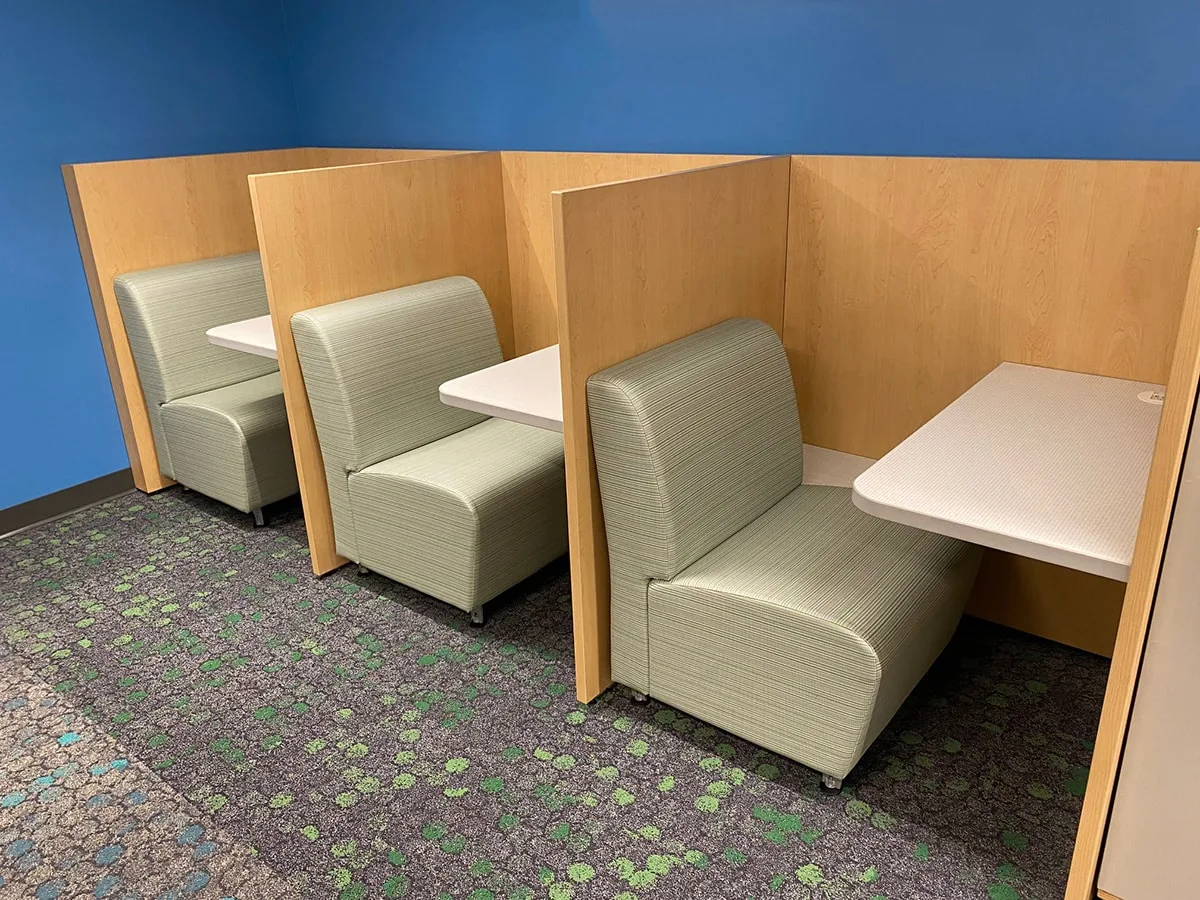
Image source: Bing (Web (fair-use with source credit))
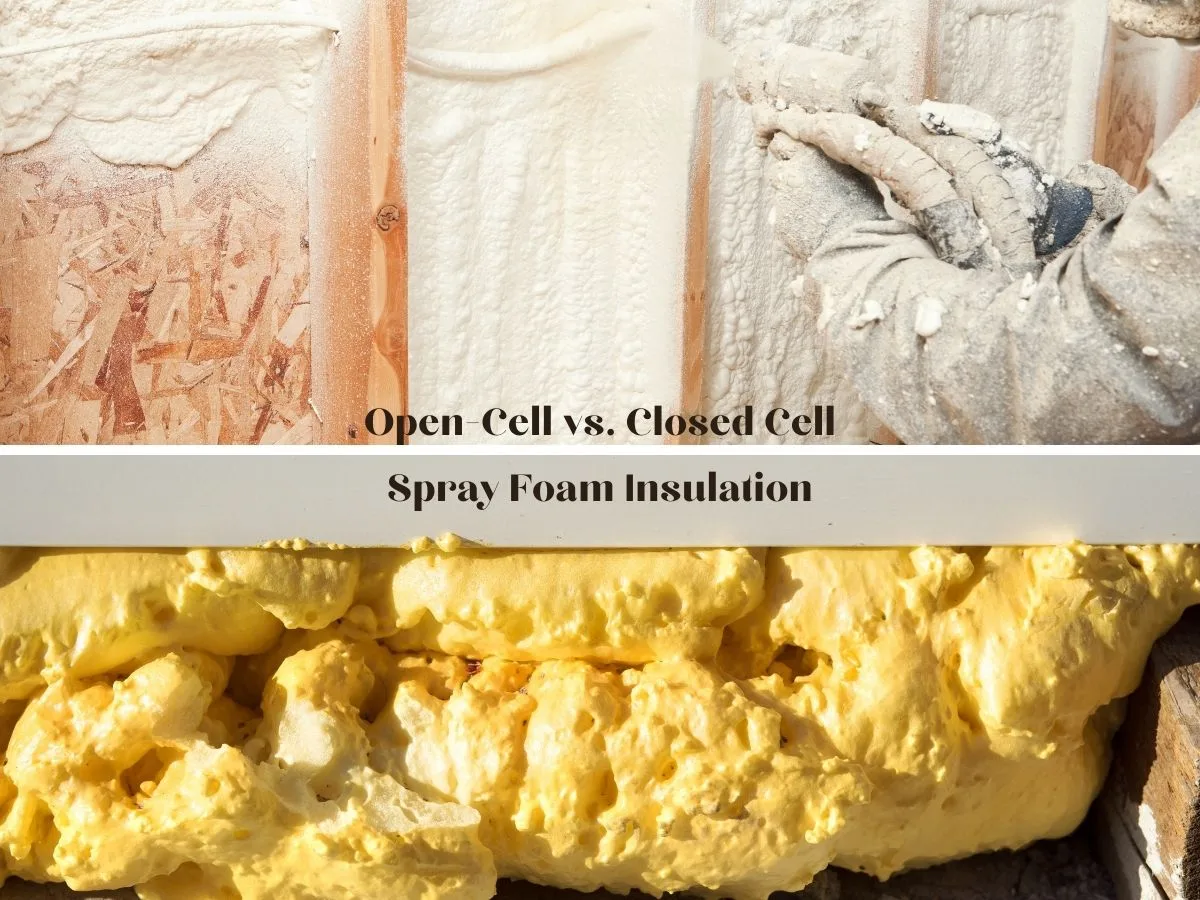
Image source: Bing (Web (fair-use with source credit))
If your carrel's foam carries a CertiPUR-US or GREENGUARD Gold label, you're working with a much shorter window. CertiPUR-US screens foam for VOC emissions under controlled testing, so the smell should clear in days, not weeks. No label means you're starting from scratch with time and airflow.
Your Decision Path: Pick the Fix That Matches Your Room
Not every room gets the same fix. Match your setup to one of these four paths.
Path A: The Carrel Sits Near an Operable Window
If you have a window, you're in the best spot. Open it wide and place a box fan facing outward, about two feet from the opening. This pulls room air out and creates negative pressure, which draws fresh air in from the rest of the building.
Run it 8 to 12 hours a day for the first three days. Then drop to 4 to 6 hours a day until the smell fades.
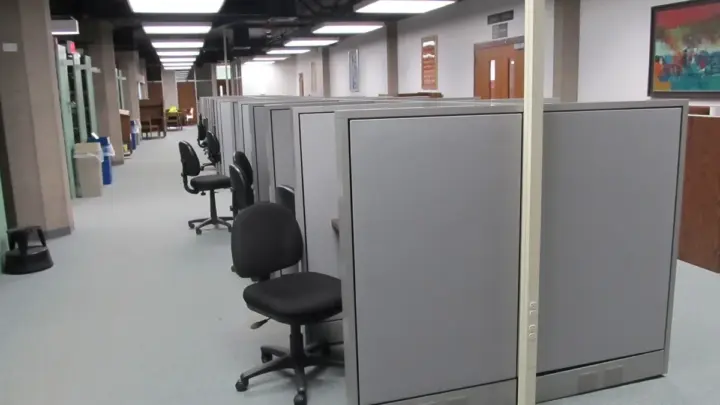
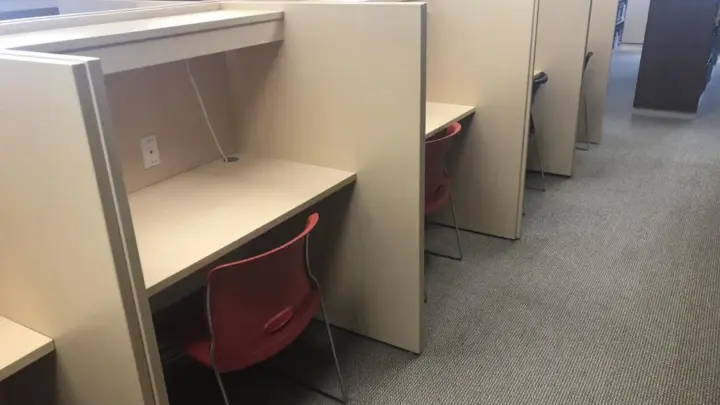
Path B: Interior Room, No Windows (The Library Problem)
No window is the hard case. You'll need an exhaust path through the HVAC system or a nearby door. Set a box fan at the doorway blowing outward, and crack a second door on the opposite side of the room.
This creates a rough cross-flow. If the building has an exhaust vent or return duct, position the carrel near it. Otherwise, rotate the carrel to a hallway-adjacent room for the first week.
Path C: Cold, Wet, or Closed-Up Season
If it's winter or you're in a humid climate, windows stay shut and off-gassing slows to a crawl. Set the room to 78°F, run a dehumidifier to hold humidity at 40 to 50%, and use a box fan to keep air moving. A small space heater pointed at the foam for a few hours a day (from a safe distance) can push the cure along.
Don't overheat it.
Path D: You've Got a Sensitive User (Asthma, MCS, Kids)
Sensitive users change the whole calculation. Isolate the carrel in a room no one occupies, and run a HEPA plus activated carbon air purifier continuously. Don't return the carrel to service until the smell test passes at nose level.
If symptoms appear, stop immediately and consult the manufacturer about a return.
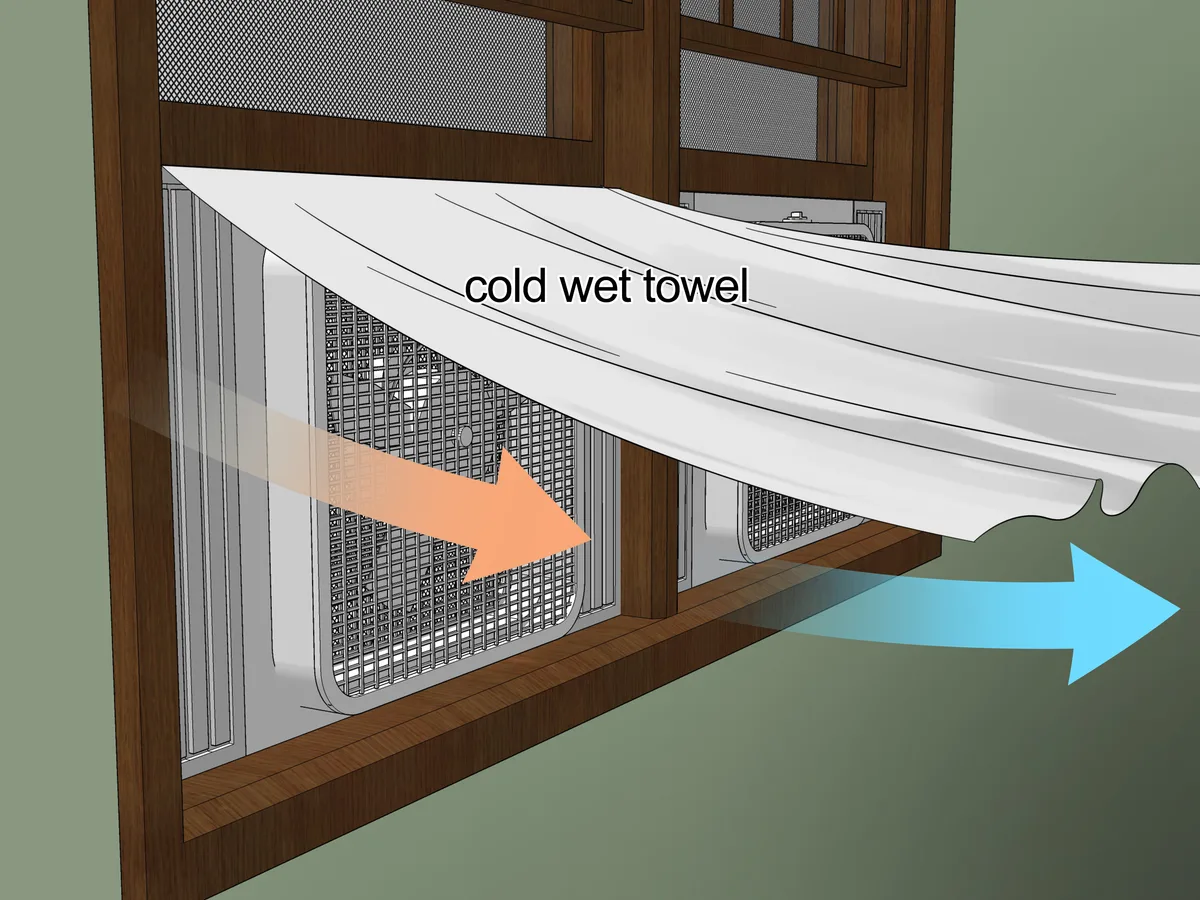
Image source: Bing (Web (fair-use with source credit))
Step-by-Step: Running the Airing Process Without Wrecking the Foam
Once you've picked your path, run the process the same way regardless of setup.
- Unbox immediately. Unpack the carrel the day it arrives. Leave the foam cushions and any removable panels exposed, not stacked or covered.
- Separate the parts. Pull cushions off the frame if the design allows. More surface area equals faster off-gassing.
- Wipe down non-porous surfaces. Damp-cloth the laminate, steel, and any plastic trim. This removes surface residue and does nothing for deep foam emissions, but it helps with frame odors.
- Set up ventilation. Open windows, position fans, and confirm air is actually moving. A fan moving air in a closed room does little.
- Run the cycle for 3 to 5 days. Target 4 to 6 air changes per hour. Keep the room warm (75 to 80°F) and dry if you can.
- Reassess at nose level. Kneel down, put your nose a few inches from the seat cushion, and take a slow breath. If it still smells chemical, keep going.
- Escalate if needed. Add activated carbon, raise the temperature slightly, or isolate the unit further.
Run this for a week and most carrels are usable. Two weeks clears nearly all of them. If you're past three weeks with no improvement, the smell isn't fading, and it's time to consider a return.
What Actually Works vs. What Just Masks the Smell
Adsorbents and filters genuinely remove VOCs from the air. Masking products just cover them up. That's the line that separates a fix from a delay.
What works:
- Activated carbon and zeolite. These porous materials trap VOC molecules on their surface. Carbon granules in a bag or tray pull amines and aldehydes out of the air. Replace or recharge them every two to six months.
- HEPA plus carbon air purifiers. The HEPA layer catches particles, and the carbon layer handles gases. Run it continuously in sealed rooms where windows stay closed.
- Cross-ventilation. Nothing beats fresh air for the price. A box fan moving air through the room outperforms most gadgets.
- Heat cycling. Warm the room to 78 to 80°F for a few hours, then ventilate hard. This drives VOCs out of the foam faster.
What doesn't work:
- Baking soda and coffee grounds. These absorb some odor molecules, but their capacity is tiny. They mask the smell at best.
- Febreze-style sprays and scented candles. These add their own VOCs to the mix. You're stacking chemicals on top of chemicals.
- Ozone generators. The U.S. EPA warns against using ozone generators in occupied spaces. Ozone irritates the lungs and can damage foam. Skip these entirely.
- Sealing the carrel in plastic. This traps VOCs against the foam and slows the cure.
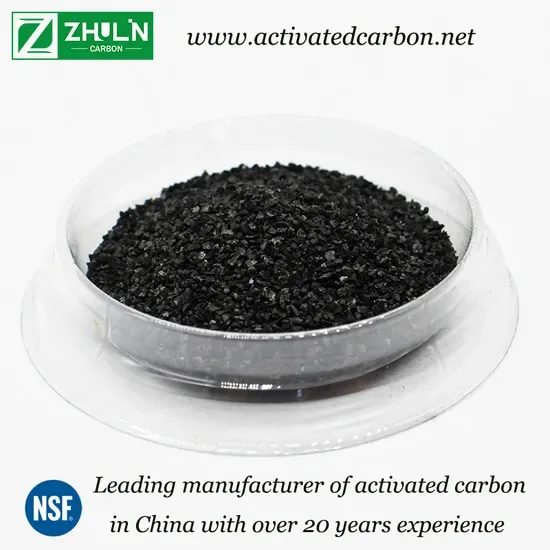
Image source: Web (Bing) / zhulincarbon.en.made-in-china.com (Web image (fair-use with source credit))
If you're stuck in an interior room with no airflow and no budget, activated carbon plus a box fan is your best cheap combo. If you have a certified foam carrel that's only mildly smelly, ventilation alone will do the job.
Mistakes That Slow You Down (And the Ones That Can Hurt Someone)
The most common mistake is waiting. People assume the smell will fade on its own, so they close the door and hope. It won't fade in a sealed room.
It just sits.
Here's what trips people up most:
- Leaving packing material in place. Foam wrapped in plastic or stacked against other foam has no surface exposure. Unbox the same day it arrives.
- Running the HVAC on recirculate. This cycles the same VOC-loaded air back through the room. Switch to fresh-air mode.
- Pointing a fan at the foam and calling it done. Air movement helps, but without an exhaust path, VOCs just swirl around. You need air leaving the room.
- Using an ozone generator around people. This is the one that can actually hurt someone. Ozone inflames airways. Asthma sufferers and children are at higher risk.
- Masking with sprays. You've now added fragrance VOCs on top of the foam VOCs. The room smells "better" and measures worse.
- Ignoring a sensitive occupant's symptoms. Headaches, nausea, or tight chest mean stop. Don't push through.
- Missing the return window. Typical windows run 30 to 90 days. If you've aired for three weeks with no change, start the return process before the deadline passes.
Per OSHA indoor air quality guidance, workplace VOC levels should stay below irritation thresholds. A carrel that smells strongly enough to notice from a few feet away is a signal, not a nuisance.
When to Escalate: Returning the Carrel, Calling Facilities, or Bringing In a Pro
Escalate when three weeks of proper ventilation produce no improvement. That timeline is the trigger. Below it, keep going.
Past it, change your approach.
Three escalation paths, depending on what you're dealing with:
Return or exchange. If the carrel is under warranty and the smell hasn't budged in three weeks, contact the seller. Document everything: photos of the label, the purchase date, your ventilation setup, and a written log of daily smell checks. Some manufacturers cover off-gassing complaints, some don't.
Ask before the window closes.
Facilities or building management. In a library or institution, the problem may not be the carrel alone. If the room has poor ACH or the HVAC has no fresh-air intake, no amount of DIY ventilation will fully solve it. Facilities can adjust the system, add an exhaust, or relocate the carrel to a better room.
Professional help. If you suspect the frame, adhesives, or upholstery rather than the foam, a certified indoor air quality consultant can run chamber testing or TVOC measurements. This costs money, but it gives you hard numbers for a warranty claim or a complaint.
One rule before any of these: stop using the carrel if anyone reports symptoms. Headaches, dizziness, or breathing trouble aren't things to tolerate. Isolate the unit and act.
FAQs: Off-Gassing Timelines, Certifications, and the Questions Everyone Asks
How long does a new foam study carrel smell?
Most clear in one to four weeks with steady ventilation. Certified foam (CertiPUR-US or GREENGUARD Gold) typically clears in one to seven days. Uncured, uncertified foam can linger past a month in a sealed interior room with no airflow.
Does baking soda actually remove the smell?
No, not really. Baking soda absorbs a small amount of odor molecules, but its capacity is tiny compared to activated carbon. It's better than nothing, and worse than a $15 bag of carbon.
What is CertiPUR-US and does it matter?
CertiPUR-US is a foam certification program that tests for VOC emissions, heavy metals, and certain flame retardants. Foam with this label has been screened for low emissions. It doesn't mean zero smell, but it means a much shorter off-gassing window.
Is the smell dangerous?
For most people, it's a nuisance, not a health hazard. Low-level VOCs can cause headaches or irritation in sensitive individuals. Formaldehyde from adhesives has a regulatory exposure limit (OSHA sets 0.75 ppm over an 8-hour shift).
If you smell it strongly, ventilate.
Can I speed up off-gassing with heat?
Yes, within limits. Warming the room to 75 to 80°F speeds the cure. Don't overheat it.
Above 85°F you risk warping laminate and damaging foam structure.
Do air purifiers really help?
Yes, if they have an activated carbon layer. HEPA alone catches particles, not gases. Look for a filter with a substantial carbon bed, and replace it every two to six months during heavy off-gassing.
What if the smell never goes away?
Three weeks of proper ventilation with no improvement means escalate. Check the return window, contact the manufacturer, and document everything. Some units have defective foam or an adhesive problem that won't resolve on its own.

Similar Posts