Attach Study Carrel Panels to Butcher Block Desk
Founder & Workspace Ergonomics Specialist at Desktop Carrel · Certified Professional Ergonomist (CPE), WELL Accredited Professional (WELL AP) · 13+ years testing acoustic privacy panels, modular carrels, and productivity workspace ergonomics
Most people assume a study carrel panel mounts the same way on any desk. Then they hit a thick butcher block top and realize the geometry is different. The block is heavy, the frame sits somewhere underneath, and your panel flange was almost certainly designed for a thin laminate top.
Learning how to attach study carrel panels to a thick butcher block desk comes down to three things: screw depth, bracket choice, and where the desk frame lives.
In our research, butcher block tops between 1.5 and 2 inches create a real problem. A #8 wood screw longer than 1-1/4 inches can punch through the top surface. Panel flanges typically assume a 3/4-inch top, so you'll need either shorter screws or a threaded insert setup.
Let's walk through the mounting options, safe screw zones, and the exact steps that keep both the panel and the block intact.
how to attach study carrel panels to a thick butcher block desk
Attach carrel panels using L-brackets or Z-clips fastened to the underside of the butcher block. Drill pilot holes to 1-1/4 inches maximum depth. Space brackets 12 to 16 inches apart.
Avoid drilling over frame rails or grommets. Use short wood screws only.
Why Butcher Block Changes the Mounting Game
Butcher block isn't like particleboard or MDF. It's solid hardwood, usually maple, oak, or walnut, glued into strips and built to move with humidity. That changes how fasteners behave.
The block also holds screws much better than composite tops. A proper pilot hole in hard maple grips a #8 screw tight. Skip the pilot hole and the wood splits along the grain.
That's the trade-off: strong holding power, zero forgiveness for sloppy drilling.

Image source: Web (Bing) / casolia.com (Web image (fair-use with source credit))
End-Grain vs. Edge-Grain: Why It Matters for Screws
Edge-grain block is what you'll find on most desks. The strips run lengthwise, so screws bite into long grain fibers. That's the strong hold you want.
End-grain block is the butcher block cutting board style. The strips stand on end and form a checkerboard. Screws driven into end grain hold roughly 30 percent weaker and are more likely to split.
If your desk is end-grain, plan on threaded inserts instead of direct screws.
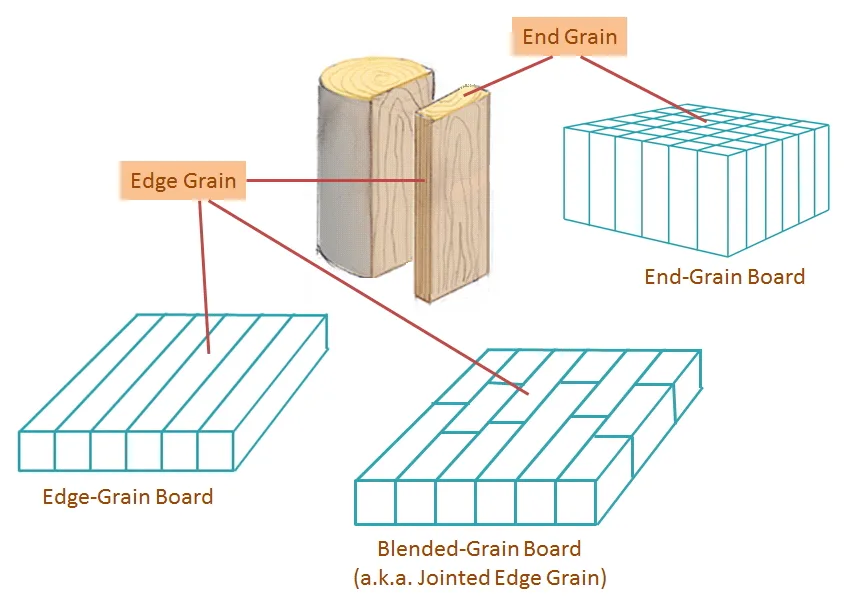
Image source: Bing (Web (fair-use with source credit))
The Screw-Depth Math That Prevents Punch-Through
Here's the rule our research keeps landing on. Screw length equals block thickness minus 3/8 inch. That leaves a 3/8-inch safety margin so the tip never surfaces.
For a 1.5-inch block, use a 1-1/8-inch screw. For a 2-inch block, use a 1-5/8-inch screw. Never go longer.
A screw tip poking through maple leaves a permanent mark you can't sand out without refinishing the whole top.
Why Panel Flanges Usually Assume a Thin Laminate Top
Most carrel panels sold today come with flanges drilled for a 3/4-inch top. The flange sits flush and short screws go straight in. On a 1.5-inch block, the flange sits the same way, but the screw path is now too deep for the flange's included hardware.
That's the moment where you swap screws. Match the flange hole diameter to a shorter screw. Or step up to threaded inserts and machine screws, which give you a cleaner install on thicker stock.
Know Your Mounting Options Before You Drill
Three main options dominate this job. Each one behaves differently on hardwood, and each has a clear best-fit scenario.
L-Brackets, Z-Clips, and Figure-8 Fasteners Compared
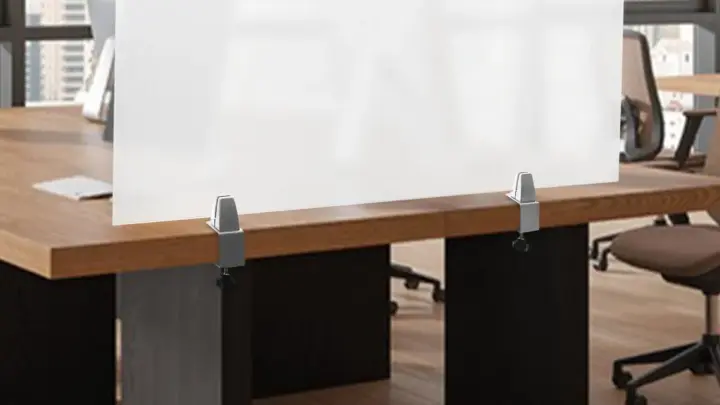
L-brackets are the workhorse. They bolt to the panel flange and screw into the underside of the block. Simple, strong, but rigid.
On a butcher block that expands seasonally, rigid brackets can stress the joints over time.
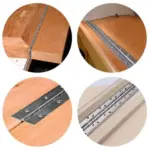
Z-clips are the woodworker's pick. They slide into a routed groove or a shallow kerf and hold the top down while allowing it to move. They're the standard for tabletop mounting on solid wood.
Figure-8 fasteners are the compromise. They screw into the top and the substrate, and the figure-8 shape lets the wood pivot slightly. Cheap, effective, and great for desks that see humidity swings.
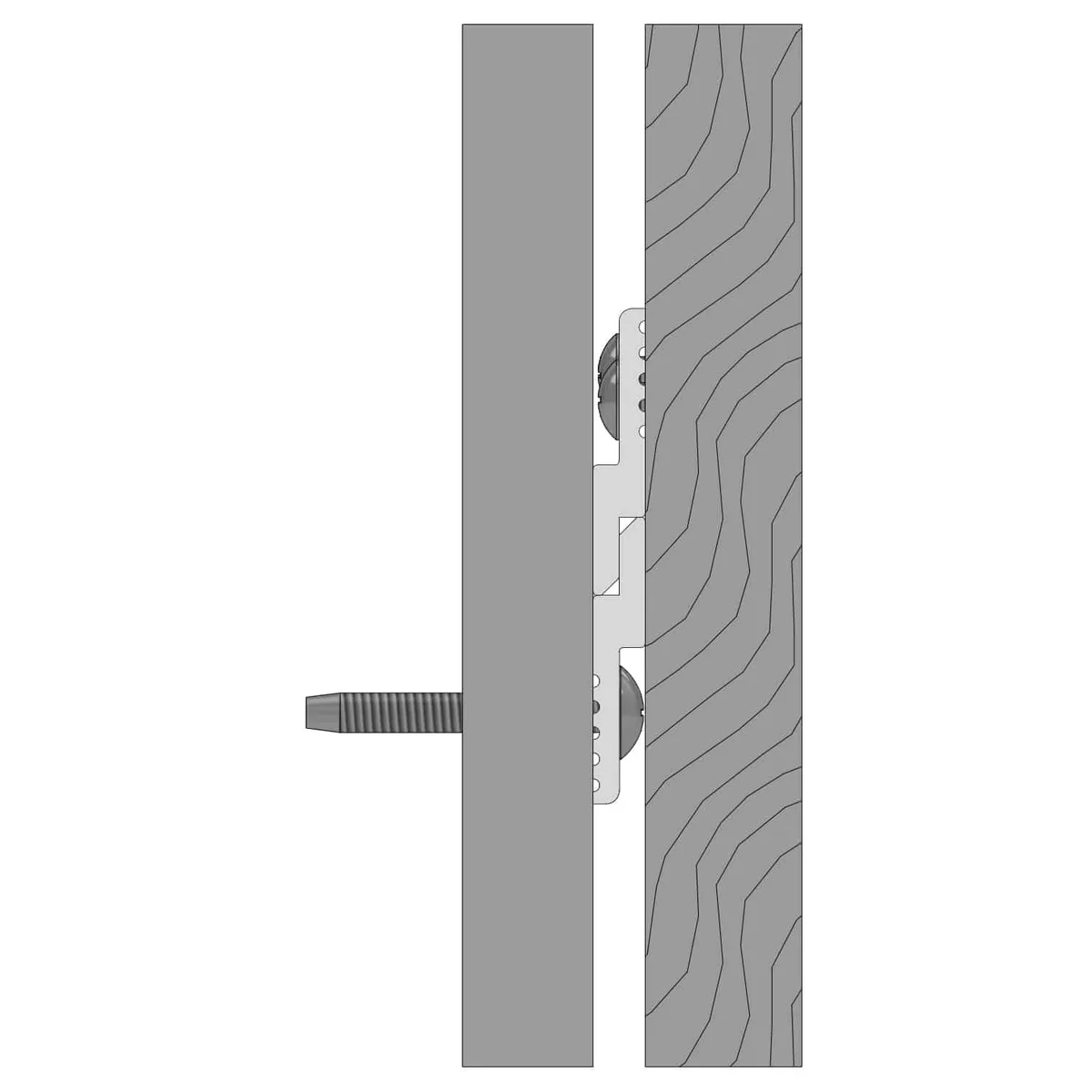
Image source: Web (Bing) / monarchmetal.com (Web image (fair-use with source credit))
Through-Bolt vs. Surface-Mount vs. Clamp-On
| Method | Holds How | Best For | Damage to Block |
|---|---|---|---|
| Through-bolt | Machine screw through block | Heavy panels, permanent installs | Visible holes |
| Surface-mount (L-bracket) | Wood screw into underside | Most home office setups | Hidden holes |
| Clamp-on | Friction, no drilling | Rentals, temporary setups | None |
When a Removable Setup Beats a Permanent One
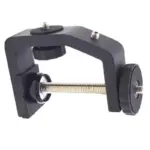
If you rent, share the desk, or think you'll reconfigure the space, go clamp-on. A padded C-clamp or bar clamp holds a panel foot without drilling anything. It's less rigid, but it's reversible.
If the panel weighs over 15 pounds or you need it to survive daily bumping, clamp-on won't cut it. Screw-mounted L-brackets or Z-clips are the way.
Step-by-Step: Mounting the Panel Without Ruining the Desk
Set aside 45 to 90 minutes for a single panel. Two panels take longer because you'll want to level them against each other.
Mapping the Frame, Apron, and Safe Screw Zones
Flip the desk or crawl underneath with a flashlight. Mark where the steel frame rails, wood apron, and grommets sit with painter's tape on the underside.
Safe screw zones are the open areas between those obstacles. Aim for at least 1 inch of clearance from any frame rail. Frame screws will strip if they hit steel.
Drilling Pilot Holes and Counterbores Correctly
Pilot hole diameter matters more than people think. For a #8 screw in maple, use a 1/8-inch bit. For a #10, step up to 5/32 inch.
Wrap a piece of tape on the bit at your target depth so you don't overshoot.
If you want the screw head flush, add a counterbore with a Forstner bit. It's optional for underside mounting. It's mandatory if the screw head would otherwise sit proud and rock the bracket.
Image source: Bing (Web (fair-use with source credit))
Attaching the Bracket to the Panel First
Bolt the L-bracket to the panel flange before the panel goes anywhere near the desk. It's faster, and you're not fighting gravity. Snug the bolts.
Don't gorilla them, especially if the flange is thin steel.
Fastening to the Underside of the Block
Set the panel in place. Have a helper hold it steady or prop it with a clamp. Drive screws through the bracket's base into the pilot holes.
Go slow. Stop the moment the screw seats.
Leveling, Squaring, and Final Torque
Check the panel with a small level. Check square against the desk edge. Hand-tighten plus a quarter turn is the torque target for wood screws.
Anything tighter and you're stripping threads or crushing fibers.
Wait a week, then recheck every screw. New installs often settle after the first few days of use.
If a screw feels loose on the second pass, step up to a slightly longer screw or switch to a threaded insert.
Common Mistakes That Crack Blocks and Wobble Panels
Most failures in this job trace back to one of four errors. All four are avoidable with a few minutes of prep.
Splitting the Wood With No Pilot Hole
Hard maple splits fast. If you drive a screw straight into edge-grain block without a pilot hole, the grain fibers separate along the strip lines. The crack often runs further than you expect.
Once it's there, you can't glue it back invisibly.
Drill every hole. No exceptions. Even self-tapping screws marketed for hardwood need a pilot in butcher block.
Screws Poking Through the Desktop Surface
This one shows up weeks later when the wood moves and the screw tip shifts. The math is simple. Block thickness minus 3/8 inch equals your maximum screw length.
Anything longer is a gamble on humidity swings.
If you've already punched through, the only fix is filling the hole with a matching wood plug and refinishing that spot. That's a bigger job than the original install.
Fighting the Desk Frame and Stripping Holes
Steel desk frames don't care about your pilot hole. If a screw hits a frame rail, it stops cold or strips the hole in the wood. Mark the frame location on tape before you drill anything.
If you're using a sit-stand base, check the actuator travel path too. Panels mounted too low can clip the frame when the desk moves up or down.
Ignoring Wood Movement in Humid Rooms
Butcher block absorbs and releases moisture through the year. In humid climates, a 30-inch-wide top can move a quarter inch seasonally. Rigid L-brackets resist that movement and stress the panel flange.
If your room swings between dry winters and muggy summers, favor Z-clips or figure-8 fasteners. They hold the panel but let the block breathe.
Specs, Load Limits, and Hardware Numbers to Know
Numbers keep this job honest. Here are the ranges our research keeps surfacing across butcher block and panel hardware specs.
| Spec | Typical Range | Notes |
|---|---|---|
| Block thickness | 1 to 2 inches | 1.5 inches most common |
| Max screw length | Block minus 3/8 inch | Never exceed this |
| Pilot hole (#8 screw) | 1/8 inch | 5/32 inch for #10 |
| Bracket spacing | 12 to 16 inches | Tighter for tall panels |
| Panel weight | 5 to 25 lbs | Weigh before choosing hardware |
| Bracket load rating | 20 to 100 lbs each | Check manufacturer label |
Load rating is the number people ignore. A 100-lb bracket doesn't mean one bracket holds a 100-lb panel safely. Two brackets sharing a 20-lb panel with a 4:1 safety margin is the honest target.
Sit-stand desks add another constraint. Actuator load ratings count the desktop, monitors, and everything mounted to it. Add a 20-lb panel and you've just cut your usable capacity.
Sit-Stand, Library, and Home Office Scenarios
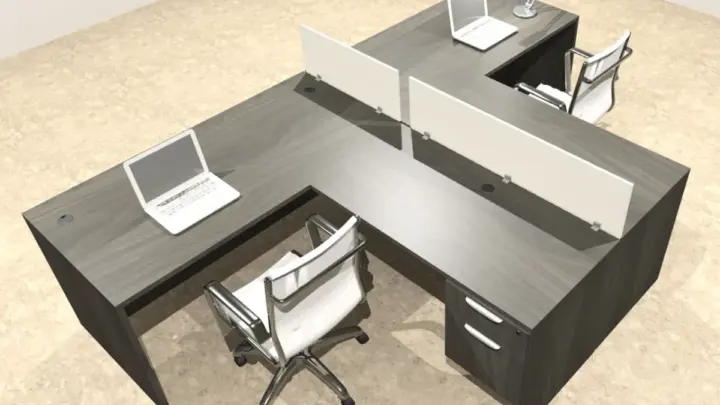
The right mount depends on where the desk lives. Here's how the same job shifts across three common setups.
Sit-Stand Desks
Panels mounted low can clip the frame as the desk rises. Keep the panel's lower edge at least 2 inches above the frame's top rail.
Weight matters more here. If your base is rated for 200 lbs, a 25-lb panel plus two monitors eats most of that margin. Use Z-clips to save hardware weight.
Library and School Study Zones
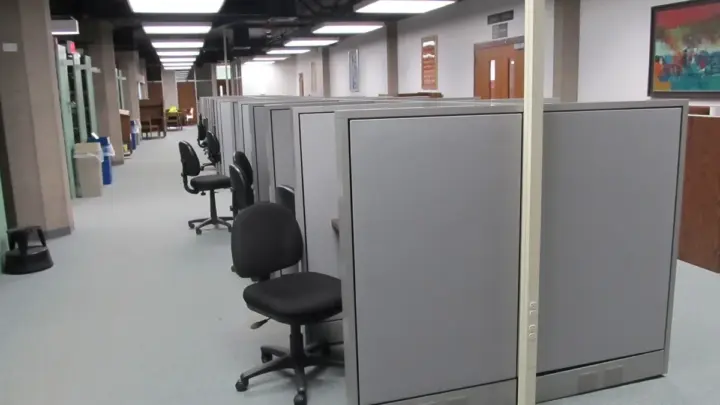
Commercial installs usually face code review. Fire-rated panels, ADA clearance for protruding objects, and landlord partition rules all apply. Screw mounting is standard here because panels stay put.
Height matters. Panels above 14 inches can count as protruding objects under ADA rules if they sit in a walkway. Keep them at 14 to 18 inches for seated privacy.
Home Offices
Home setups have the most flexibility. Clamp-on options work great for renters. Screw mounting is fine for owned furniture.
If the desk sits under a window, watch for sun exposure. Prolonged UV dries the block unevenly and increases seasonal movement. Z-clips handle that swing better than rigid brackets.
Safety, ADA Clearance, and Commercial Code Basics
Safety in this job splits into two categories: the tool hazards and the code requirements.
Tool and Material Hazards
Hard maple resists drill bits and generates heat. Wear eye protection every time you drill overhead. A snapped bit or flying chip near your face is not worth the risk.
If you're cutting or sanding a particleboard or MDF panel, wear a dust mask. The formaldehyde-based binders in those panels are a known respiratory irritant. Butcher block itself is low-risk when sanded.
ADA and Commercial Compliance
Under the ADA Standards for Accessible Design, objects protruding more than 4 inches from a wall between 27 and 80 inches above the floor can be a hazard in walkways. A carrel panel mounted to a desk edge is usually fine, but panels along an egress path may need review.
Fire ratings apply to commercial offices. Panels must usually meet Class A or Class B flame spread. Check the panel spec sheet before installing in a leased commercial space.
Landlord and Lease Rules
Many commercial leases restrict permanent modifications. Screw-mounted panels count as permanent. Clamp-on or freestanding panels usually don't.
Read the lease before drilling.
For home renters, the same logic applies. A screw hole in a desk you don't own is a repair bill waiting to happen.
FAQs
Can I mount carrel panels to butcher block without drilling?
Yes, using padded C-clamps or bar clamps on the panel feet. This works for panels under 15 lbs. Clamp-on mounts are less rigid and can shift with bumping.
Best for renters or temporary setups.
What's the best bracket for a 2-inch maple block?
Z-clips are the best pick for a 2-inch block. They hold the panel while allowing the wood to move seasonally. L-brackets work too, but use 1-5/8-inch screws maximum.
Threaded inserts plus machine screws are the cleanest option.
Will adding panels overload my sit-stand desk?
Possibly, if your desk is near its load limit. Check the actuator rating, then subtract the desktop, monitors, and accessories. Most 2-leg bases handle an extra 20 lbs fine.
A 25-lb panel on an already-loaded desk is where trouble starts.
How far should brackets be spaced?
Space brackets 12 to 16 inches apart along the panel flange. Use 12 inches for panels taller than 18 inches. Use 16 inches for shorter panels under 12 inches.
Always use at least two brackets per panel.
Can I remove the panels later without visible damage?
Yes, if you use clamp-on mounts. Screw-mounted panels leave pilot holes underneath the block. Those holes stay hidden in normal use.
Fill them with matching wood filler if you ever flip the top.
Do I need threaded inserts for a butcher block desk?
Only if you're mounting heavy panels or using end-grain block. Threaded inserts give machine screws a stronger anchor and allow repeat removal. For a standard 20-lb panel on edge-grain block, wood screws are fine.

Similar Posts