Stabilize Freestanding Desk Panels Near AC Vents
Founder & Workspace Ergonomics Specialist at Desktop Carrel · Certified Professional Ergonomist (CPE), WELL Accredited Professional (WELL AP) · 13+ years testing acoustic privacy panels, modular carrels, and productivity workspace ergonomics
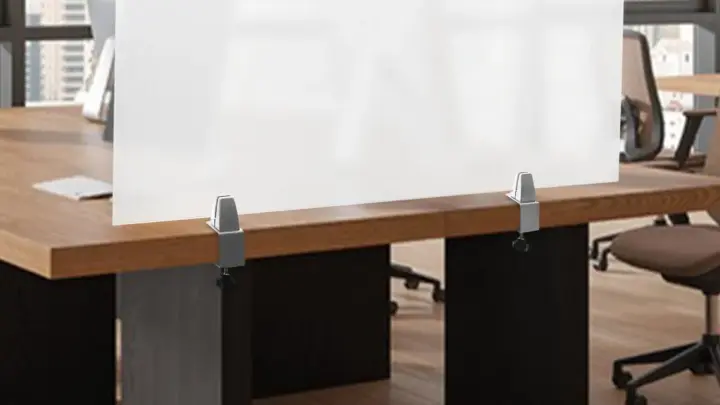
Cold air from a ceiling diffuser doesn't just cool a room. It pushes. And a freestanding desk panel sitting in that airstream behaves like a sail in a stiff breeze: it drifts, wobbles, vibrates, or tips.
If you're wondering how to keep freestanding desk panels stable near an AC vent, the fix isn't stronger tape. It's understanding airflow, pressure, and weight.
HVAC supply registers typically throw air at 300 to 700 feet per minute (FPM) at the face, per ASHRAE air distribution fundamentals. That's enough lateral force to walk a lightweight panel across a smooth floor overnight. Below, we'll walk through diagnosis, decision branches, and the fixes that actually hold, so you stop re-setting your panel every morning.
how to keep freestanding desk panels stable near an AC vent
Stabilize the panel by breaking the airflow's push, not by adding tape. Align the panel edge parallel to the vent's throw. Redirect air with a deflector.
Add ballast to the base. Use a high-friction anti-slip pad underneath. Never fully block a return vent.
The Real Culprit: Airflow Pressure, Not Weak Adhesion
Most people assume the panel falls because the base is weak. That's rarely the whole story. The dominant force is aerodynamic loading: moving air slams into a flat surface and pushes it.
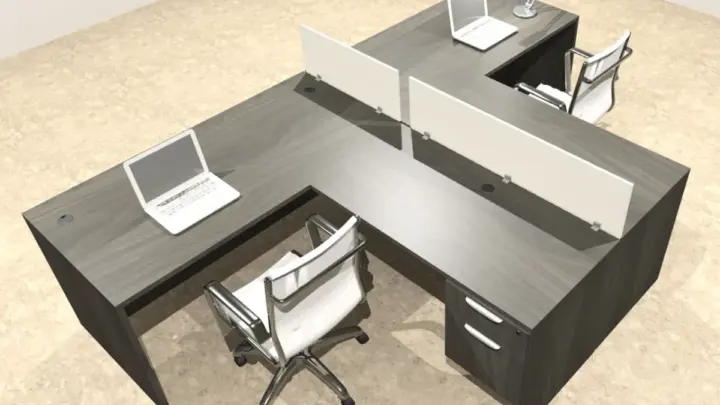
Engineers call this the "sail effect," and a 24-inch-tall divider with a 40-inch span has plenty of surface area to catch a draft.
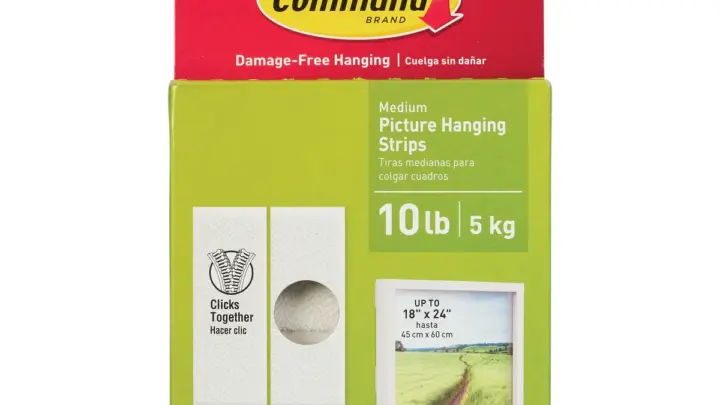
Adhesive tape fails in this scenario for two reasons. First, cold supply air lowers surface temperature, and most pressure-sensitive adhesives lose tack below roughly 50°F. Second, and more important, tape resists sliding, not continuous lateral force.
A constant 300 FPM push over eight hours will win against nearly any consumer-grade adhesive putty.
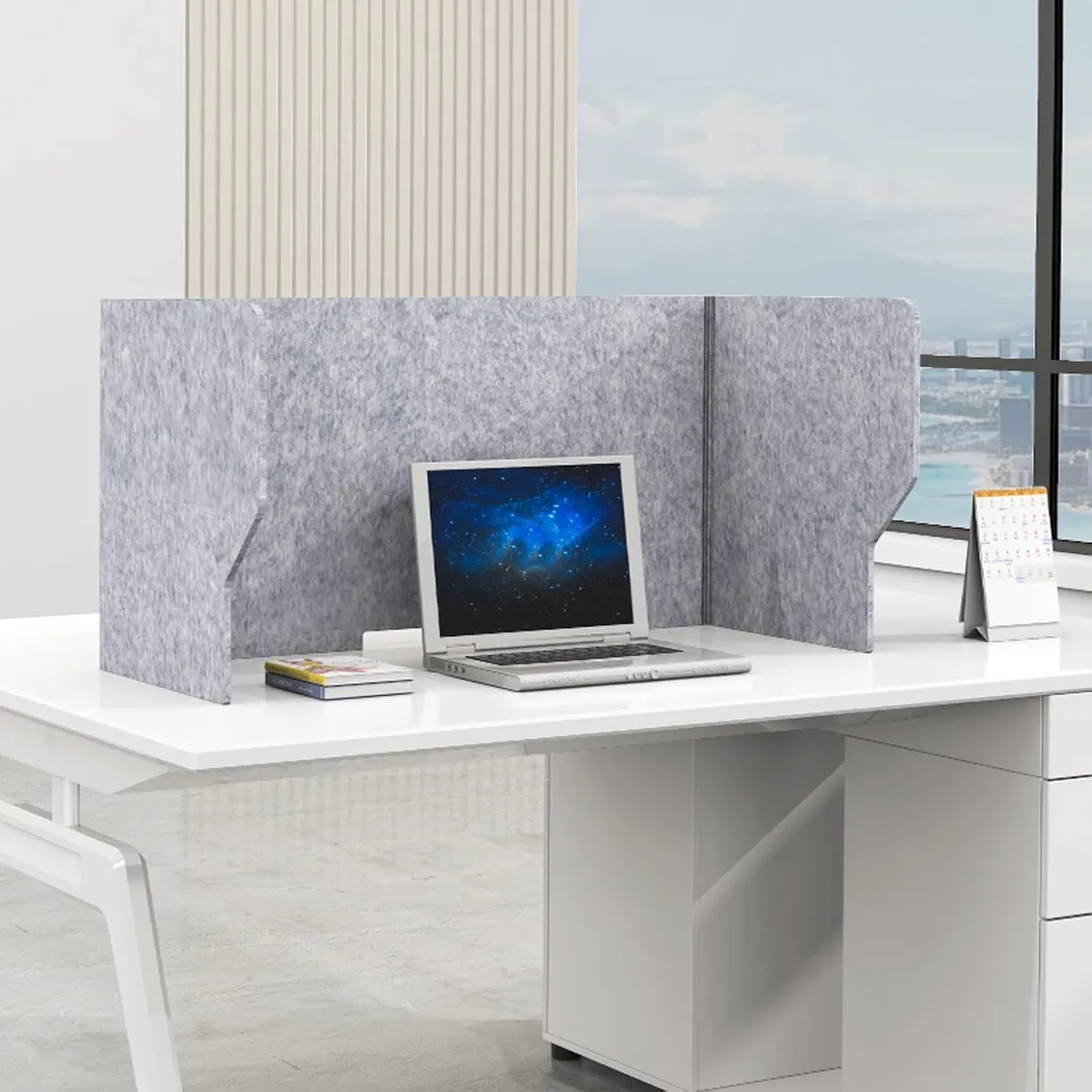
Image source: Web (Bing) / amazon.co.uk (Web image (fair-use with source credit))
So the real fix is structural: reduce the force the panel receives, increase the mass resisting it, or both. That's the logic behind every branch in the decision tree below. Once you accept that you're managing aerodynamic load, the right repair becomes obvious.
First, Diagnose Your Vent Situation
Before you buy a single weight or bracket, figure out what kind of air you're actually dealing with. Supply and return vents behave completely differently, and a fix that works for one will fail for the other. Ten minutes of diagnosis saves you a weekend of trial and error.
Supply vs. Return Air: They Behave Completely Differently
Supply vents push conditioned air into the room. Return vents pull air out. A freestanding panel near a supply vent gets shoved away from the vent.
Near a return, it gets sucked toward the vent, which is a subtler but equally destabilizing force.
If you're not sure which is which, hold a thin strip of tissue near the vent. If it blows outward, it's a supply. If it sticks to the grille, it's a return.
Never obstruct a return vent at all, as we'll cover in the safety section.
Ceiling, Wall, and Floor Vents Each Break Panels a Different Way
Ceiling diffusers create a downward cone that spreads outward at the floor. Wall registers throw horizontally at desk height. Floor registers dump air straight up the back of a panel.
Every geometry produces a different failure mode.
- Ceiling: panel wobbles at the base, tips slowly over hours.
- Wall: panel slides laterally across the desk or floor.
- Floor: panel vibrates, buzzes, or lifts slightly on one edge.
- Mini-split head: focused jet that hits one panel corner hardest.
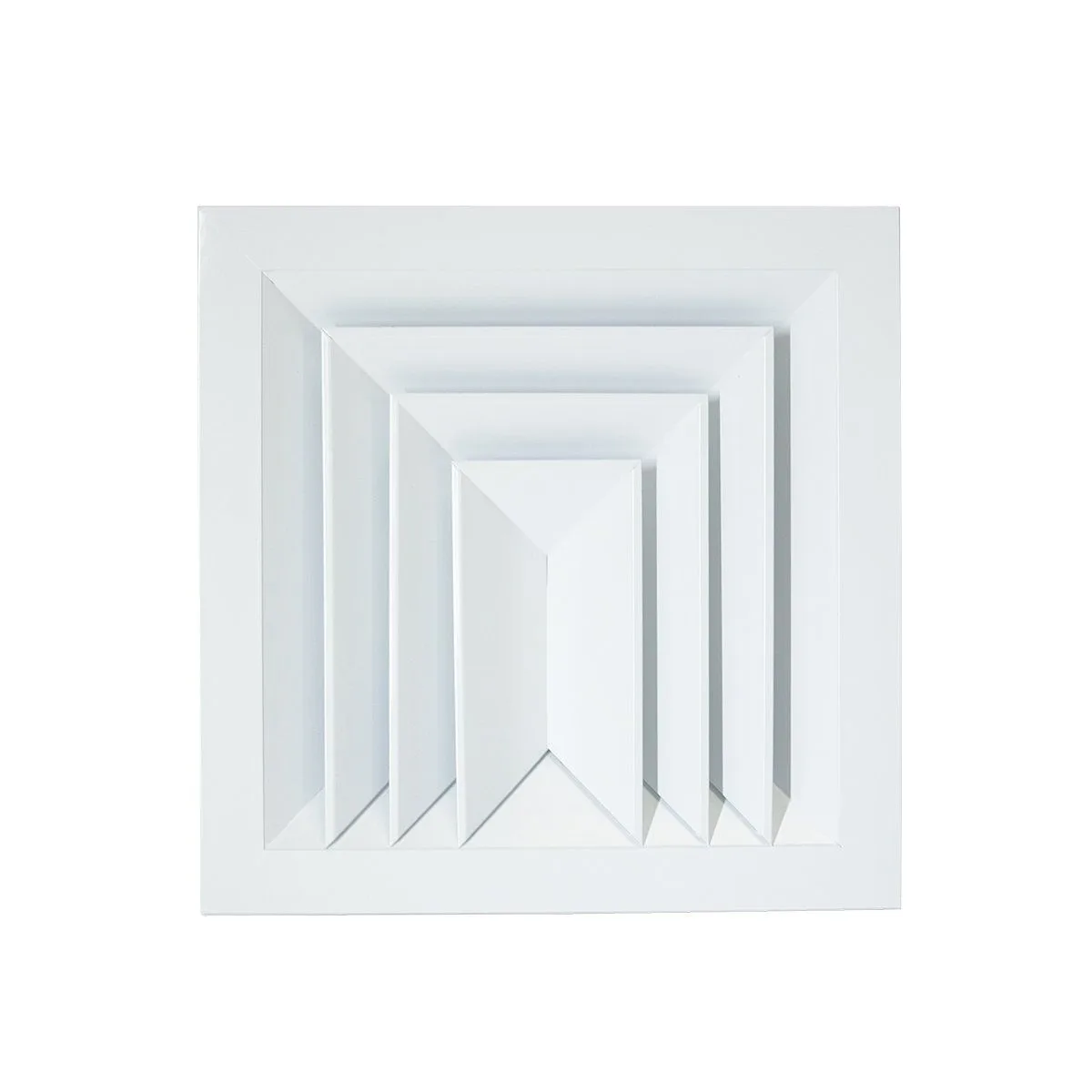
Image source: Web (Bing) / gfiduct.en.made-in-china.com (Web image (fair-use with source credit))
Reading Airflow: Throw Distance, Velocity, and the Sail Effect
Throw distance means how far the airstream travels before it slows noticeably. Ceiling diffusers typically throw 6 to 12 feet. If your panel sits inside that cone, it's getting hit with meaningful force all day.
A cheap handheld anemometer (around $25 to $40) reads FPM at the vent face. Anything above 400 FPM within three feet of your panel means airflow is your primary problem, not the base. That's your cue to look at deflection and placement before adding weight.
The Decision Tree: Match Your Fix to Your Condition
Pick the branch that matches what your panel actually does. Don't guess. Watch it for a full day at peak AC hours, which is usually mid-afternoon, then match the symptom.
Branch 1: Panel Drifts or Slides Across the Floor
This is a lateral push problem. If the panel walks slowly in one direction, do this: rotate the panel 90 degrees so its edge faces the airstream instead of its face. Add a rubber anti-slip pad rated 0.6 or higher friction coefficient under each foot.
If drift continues, add 5 to 10 pounds of ballast to the base.
Branch 2: Panel Wobbles or Tips in Place
Wobble is a leverage problem, not a drift problem. The panel's center of gravity sits too high for its base footprint. If your base footprint is under 30% of panel height, that's your cause.
Widen the base, lower the ballast, or switch to a T-leg foot with a wider stance.
Branch 3: Panel Vibrates and Buzzes Against the Desk
Vibration usually comes from turbulent airflow, not steady push. If the panel hums at peak AC, place a thin foam or cork isolation pad between the panel base and the desk. Check that all clamp screws are snug.
Loose hardware amplifies every ripple in the airstream.
Branch 4: Panel Blocks Airflow and Creates a Hot or Cold Pocket
If one side of the panel feels stuffy or freezing, the panel is disrupting room air distribution. Move the panel out of the throw cone entirely. Use a magnetic vent deflector to redirect air along the ceiling.
If that's not possible, reduce panel height so air passes over the top.
Branch 5: Panel Is Fine Until Peak AC Hours
Intermittent failure means the issue is tied to HVAC cycling, not the panel itself. If the wobble only shows up when the compressor runs, your fix is deflection or timing-based placement. Try repositioning during the hottest two hours of the day, then re-test stability at other times.
The Fixes That Actually Work, Ranked
Not every fix deserves equal trust. Here's how they stack up, based on physics and verified buyer feedback across HVAC and office-furniture categories.
| Fix | Best For | Cost | Reality Check |
|---|---|---|---|
| Air deflector | Supply vents | $8 to $30 | Redirects force, doesn't fight it |
| Panel rotation | Lateral drift | $0 | Free, often underused |
| Weighted base / ballast | Wobble, tipping | $15 to $80 | Most reliable for taller panels |
| Anti-slip pad | Sliding on smooth floors | $5 to $20 | Works best combined with ballast |
| Adhesive putty | Very light panels only | $5 to $10 | Fails in cold airflow |
Redirect the Air Instead of Fighting It
A magnetic vent deflector clips onto a metal ceiling or wall register and redirects the airstream sideways. This removes the force at the source, which is the cleanest possible fix. If your vent is plastic, look for a clip-on model instead of magnetic.
Break the Pressure Seal: Panel Angle and Placement
Rotating the panel so its edge faces the airflow drops the exposed surface area dramatically. A panel that presented 40 inches of face now presents a 1-inch edge. That's roughly a 40x reduction in aerodynamic drag.
Move the panel out of the 6 to 12 foot throw cone when possible.
Ballast, Weighted Bases, and Anti-Slip Interfaces
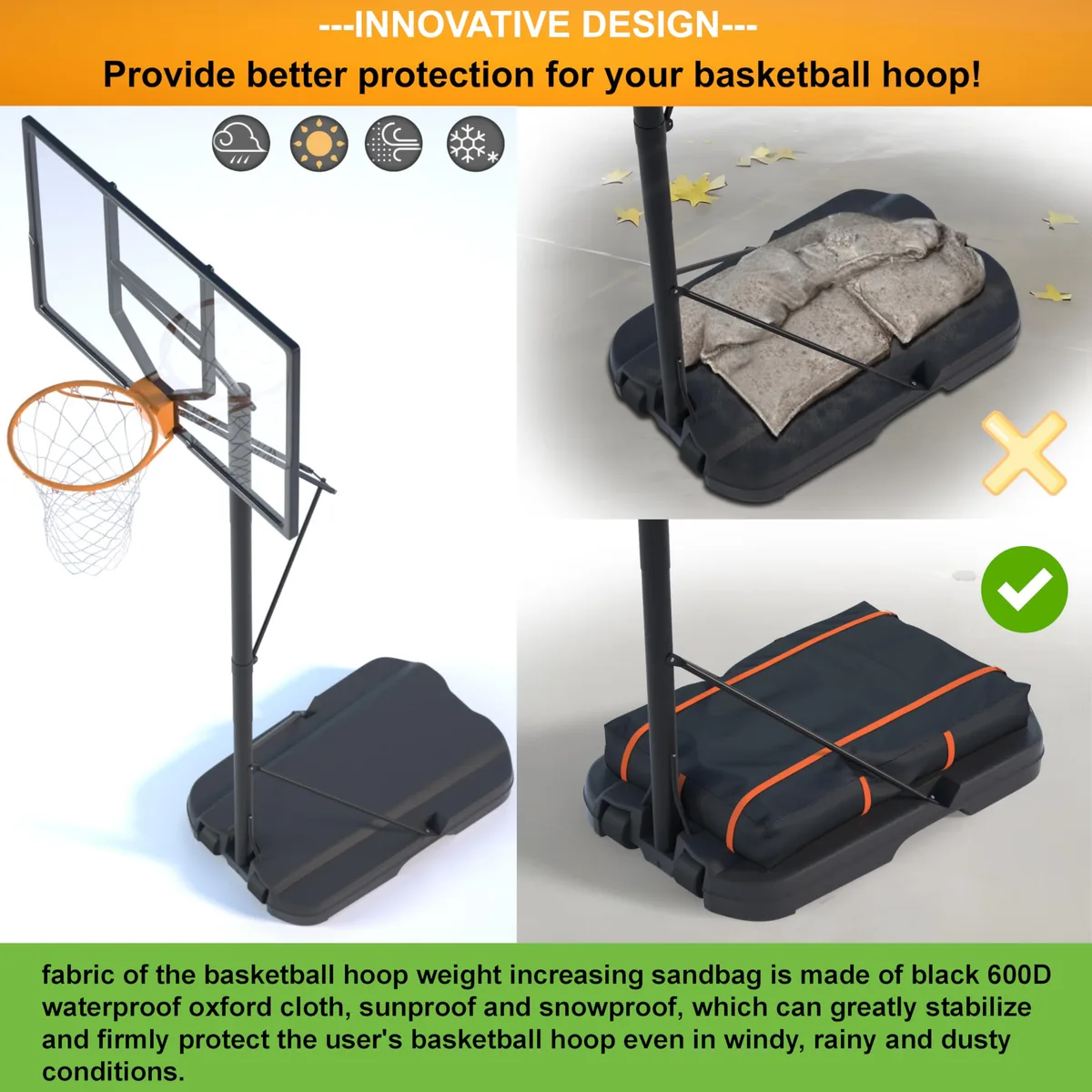
Image source: Web (Bing) / activmedias.com (Web image (fair-use with source credit))
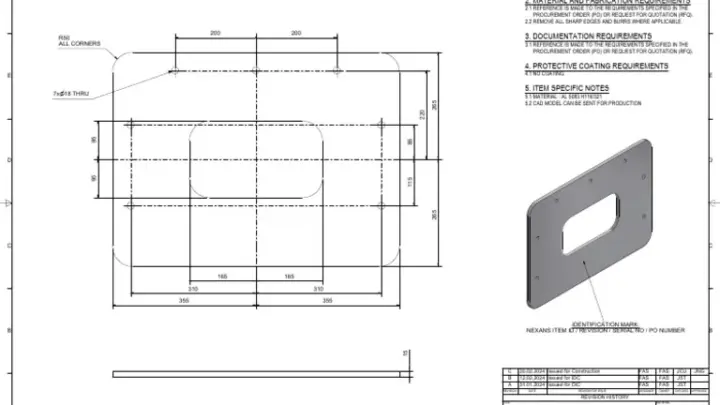
As a rule of thumb, add 5 to 15 pounds of ballast per foot of panel height. A 5-foot panel needs 25 to 75 pounds of counterweight at the base to resist meaningful lateral force. Sandbags, steel plates, and purpose-built weighted feet all work.
Combine ballast with a high-friction pad for the best result.
When Adhesives and Tape Are the Wrong Tool
Adhesives resist shear for a few hours, then slowly creep under constant load. They also damage finishes during removal. Use them only for very light decorative panels that see no meaningful airflow.
For everything else, weigh and deflect. Tape is a last resort, not a first move.
Mistakes That Make the Wobble Worse
The fastest way to fail is to fight airflow with force instead of redirecting it. Here are the errors we see most often, and why each one backfires.
- Taping the panel tighter. Tape resists sliding, not lateral push. Cold supply air kills adhesive tack below 50°F.
- Fully blocking the vent. This starves airflow, raises HVAC runtime, and can freeze a coil or trip a high-limit switch.
- Stacking weight on top of the panel. Top-loading raises the center of gravity and makes tipping easier, not harder.
- Ignoring the base footprint. A base narrower than 30% of panel height will wobble no matter how much you bolt it down.
- Putting ballast on the desk instead of the base. Weight needs to sit at floor level to lower the center of gravity.
One more mistake: assuming the fix is permanent. HVAC airflow changes with filter loading, season, and damper position. Retest after every filter change.
Safety and HVAC Rules You Can't Ignore
Never block a return air vent, even partially. Returns pull air back to the air handler, and starving them raises static pressure, reduces cooling capacity, and can freeze the evaporator coil on a hot day.
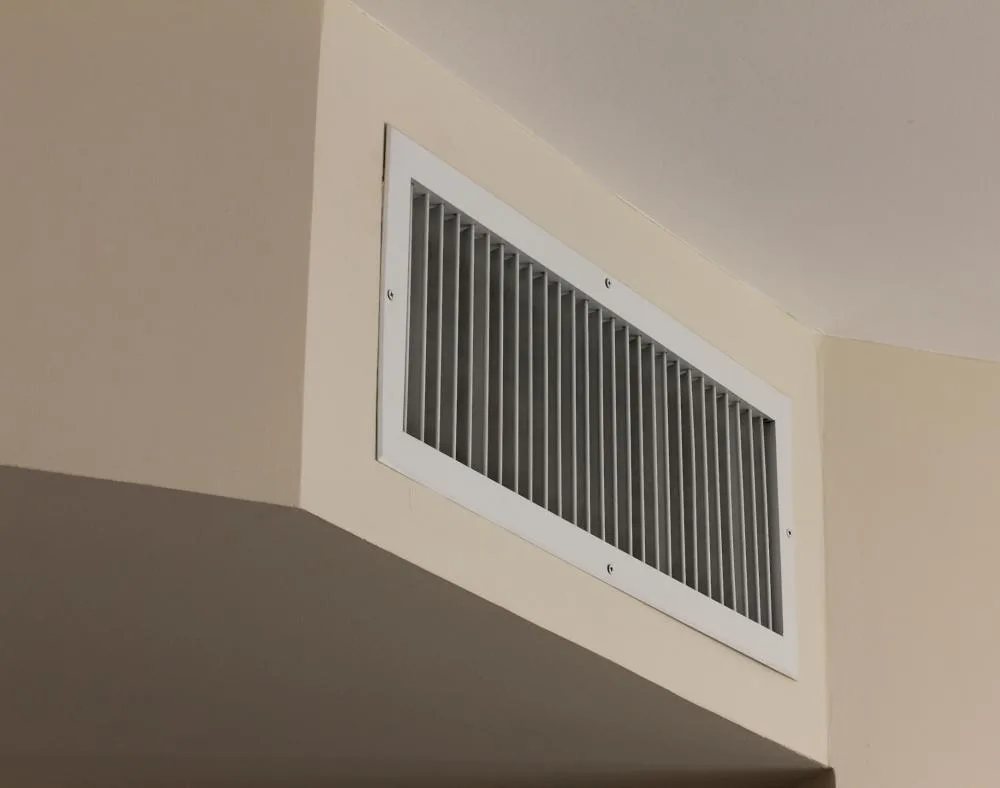
Image source: Web (Bing) / storage.googleapis.com (Web image (fair-use with source credit))
NFPA 90A and 90B govern air conditioning and ventilating system safety in commercial spaces. Those rules matter more in offices than homes, but the principle holds everywhere: keep combustible fabrics away from heat sources and heating registers.
Tall freestanding panels carry a tip-over risk. The U.S. Consumer Product Safety Commission has issued repeated guidance on furniture tip-over hazards.
If your panel is over 48 inches tall, anchor the base or choose a low-profile divider instead.
Clearance matters too. Industry guidance typically calls for 12 to 18 inches between a supply register and any obstruction. That's the minimum distance to let air diffuse without creating turbulence or hot spots around your desk.
Keeping It Stable Through Seasonal Changes
When heating season starts, everything you learned about supply and return flips. Warm air from a ceiling register rises, so it rarely hits a low panel. But a wall register or floor vent dumping hot air will produce a completely different push pattern.
Retest your setup the week after you switch the thermostat from cool to heat. If the panel wobbled in summer but not winter, the fix probably needs adjusting, not replacing. Deflectors that worked for cold air may work poorly for warm air because density and velocity change.
Humidity swings matter too. A fabric-wrapped panel can absorb moisture in summer and dry out in winter, which slightly changes mass and stiffness. In our research, most wobble complaints spike during the first two weeks of a season change, then settle once airflow stabilizes.
If you run a mini-split, check the louver angle every season. Louvers often get reset during cleaning, and a 15-degree change in vane angle shifts the throw pattern enough to reintroduce drift.
FAQ: Freestanding Panel Stability Near AC Vents
What's the fastest fix for a wobbling panel near a supply vent?
Rotate the panel so its edge faces the airflow, then add 5 to 15 pounds of ballast per foot of panel height. This combination cuts aerodynamic load and lowers the center of gravity at once. Most readers report stability within one afternoon.
Can I just move the panel away from the vent?
Yes, if you have at least 12 to 18 inches of clearance outside the throw cone. Ceiling diffusers throw 6 to 12 feet, so a small move may not be enough. Measure with a tissue strip before committing to a new spot.
Will adhesive putty damage my desk finish?
It can, especially on laminate, veneer, or painted surfaces. Cold airflow makes the putty harder to remove cleanly. Weighted bases and anti-slip pads are safer for finishes and far more reliable under continuous load.
How much weight do I actually need on the base?
A rough rule is 5 to 15 pounds per foot of panel height. A 4-foot panel needs roughly 20 to 60 pounds of ballast to resist a 300 to 700 FPM airstream. Place weight at the base, not on the desk.
Is it safe to cover part of a return vent with a panel?
No. Returns need unobstructed airflow to keep the system balanced. Blocking even a portion raises static pressure and can cause coil freeze or compressor strain.
Reposition the panel instead.
Do refrigerator-style magnetic deflectors work on all vents?
No. They only stick to ferrous metal registers. Plastic, aluminum, or composite vents need a clip-on deflector.
Check with a fridge magnet first, then pick the matching deflector style.

Similar Posts