Fix Stripped Leg Screws on a Wood Study Carrel Desk
Founder & Workspace Ergonomics Specialist at Desktop Carrel · Certified Professional Ergonomist (CPE), WELL Accredited Professional (WELL AP) · 13+ years testing acoustic privacy panels, modular carrels, and productivity workspace ergonomics
Most carrel leg failures aren't broken wood. They're stripped screw holes, stripped screw heads, or snapped shanks, and each one needs a completely different fix. Guess wrong and you'll blow out the panel instead of saving it.
In our research, the single biggest cause is overtightening with an impact driver, which strips an MDF or particleboard hole at a fraction of the torque solid wood tolerates. Per U.S. Forest Service Forest Products Laboratory data, screw holding strength in particleboard runs roughly 40 to 60 percent lower than in solid hardwood of the same thickness.
So before you reach for a bigger screw, let's figure out what actually failed.
Identify What Actually Broke Before You Touch a Tool
Diagnosis comes first. A stripped hole, a stripped head, and a snapped shank look similar from the outside but demand three different repair paths. Get this wrong and you'll waste an afternoon and make the damage worse.
Start by flipping the carrel or working underneath it with a flashlight. Then walk through these checks in order.
- Turn the screw gently. If it spins freely with zero resistance, the hole is stripped, not the head.
- Press the driver in hard and turn. If the bit slips and jumps, the drive recess is rounded out. That's a stripped head.
- Look for a stub. If the head is sheared off flush with the wood, you've got a snapped shank.
- Check the joint style. If there's no visible screw head at all, you may be looking at a cam-lock, not a screw.
That last point trips up a lot of people. Study carrels from libraries and schools are often built with cam and dowel fittings, not screws. A cam lock uses a round metal disc that a bolt hooks into.
If the cam housing itself is stripped, no screw trick on earth will fix it. You'll need to replace the cam, not drive a bigger fastener.
Quick Diagnosis Table
| Symptom | What Failed | Repair Path |
|---|---|---|
| Screw spins, no grip | Stripped hole | Plug, epoxy, or threaded insert |
| Bit slips and jumps | Stripped head | Extractor bit or slot cutting |
| Head sheared off | Snapped shank | Drill and extract |
| No visible fastener | Cam-lock joint | Replace cam housing |
Once you've matched the symptom, you know which of the four repair methods below fits your situation.
The Three Failure Types and Why Each One Needs a Different Fix
Each failure type has a root cause, and treating the symptom without the cause means the repair fails in a month. Here's how they break down.
Stripped hole is the most common. The wood fibers or the particleboard core around the screw have crumbled, so the threads no longer bite. Root cause is almost always overtightening or too many removal cycles.
Fix it by giving the screw fresh material to bite into.
Stripped head happens when the driver cams out of the recess. Cheap Phillips bits, the wrong size driver, or an angle that isn't square all contribute. Fix it by extracting the screw, then replacing it and using the correct bit next time.
Snapped shank is usually a sign of over-torque or a screw that was already weakened. The stub sits below the surface and resists every extraction trick until you drill around it.
There's a fourth, sneakier failure worth knowing about. In humid climates, MDF and particleboard swell, and a swollen hole never re-tightens properly once it dries. If your carrel lives in a damp basement or an unconditioned storage room, address the moisture first or your repair won't hold.
Why Substrate Material Changes Everything
Toothpicks and wood glue work beautifully in solid pine. They fail in MDF. That's because MDF has no long fibers to grab onto, so a glued plug just shears off under load.
Solid wood compresses and springs back. MDF crumbles into dust and stays crumbled.
Know your substrate before you pick a method. A magnet or a scratch test in an inconspicuous spot will tell you whether you're dealing with solid wood, plywood, or a particleboard core.
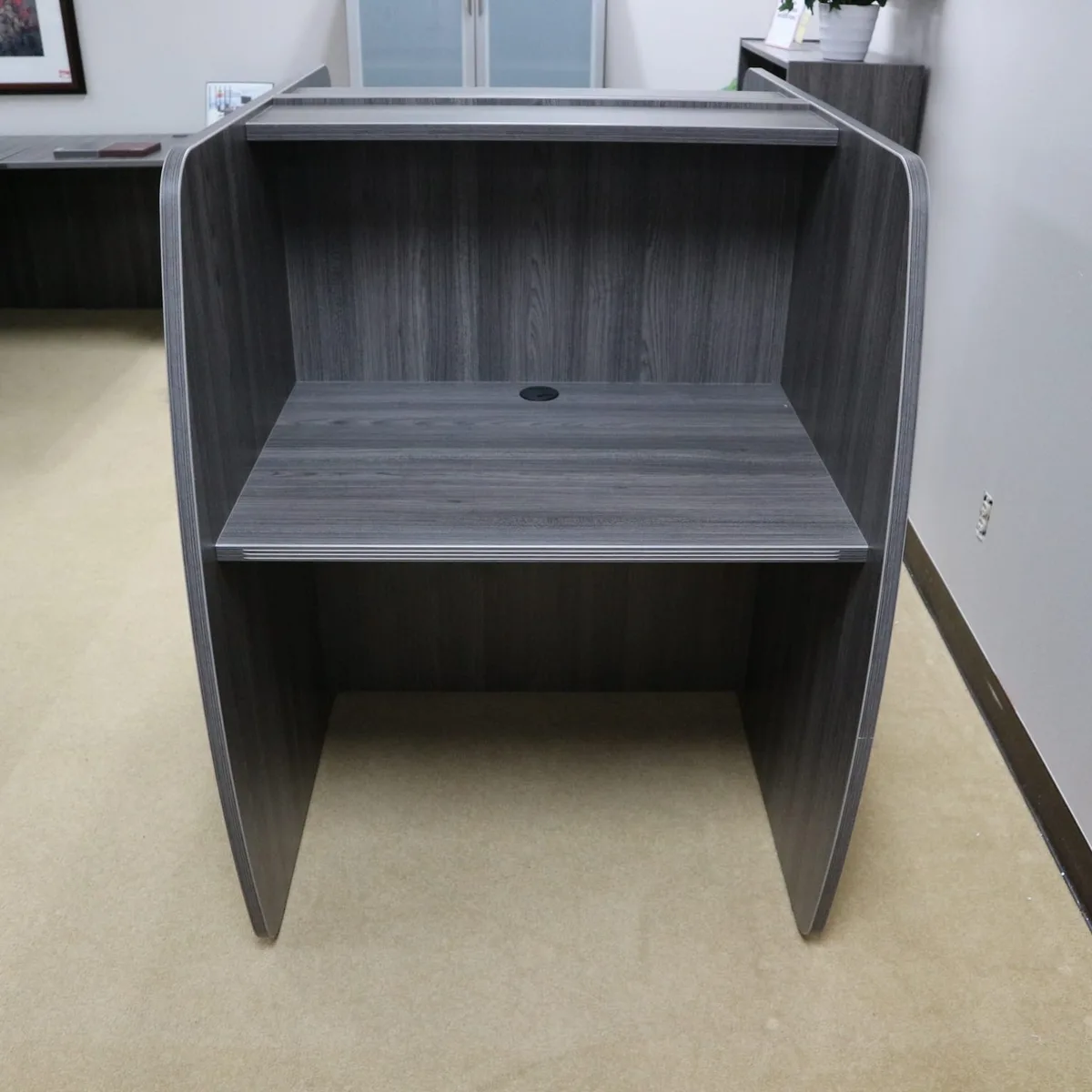
Image source: Web (Bing) / officefurnituresa.com (Web image (fair-use with source credit))
Solid Wood vs. MDF vs. Particleboard: How Your Carrel's Core Changes the Repair
The material under the veneer decides which repair will last and which one wastes your time. Here's the honest breakdown.
Solid hardwood holds repairs well. Dowel plugs, toothpick shims, and threaded inserts all work. You can also simply go up one screw gauge and re-drive into fresh wood nearby.
Best for older or higher-end carrels.
Plywood is strong across the face but splits along the plies. A plug repair is fine. Drilling too close to an edge is not.
If the stripped hole sits within half an inch of a ply edge, move the fastener location entirely.
MDF needs structural help. Wood filler alone will fail under a leg's load. Two-part epoxy putty or a threaded insert are the only reliable fixes.
Best for modern flat-pack and institutional furniture.
Particleboard is the weakest of the four. Screws strip at very low torque, and the core is basically compressed sawdust. A threaded insert with a machine bolt is your best shot.
If the board is already crumbled, cut a clean hole and epoxy in a hardwood plug first.
Pilot Hole Sizing by Material
| Material | Pilot Hole for a #8 Screw | Notes |
|---|---|---|
| Solid hardwood | 5/32 in (4 mm) | Undersize splits the wood |
| Softwood | 1/8 in (3.2 mm) | Standard fit |
| Plywood | 1/8 in (3.2 mm) | Watch edge distance |
| MDF / particleboard | 3/16 in (4.8 mm) | Drill slow, clear dust often |
The pilot hole should match the screw's shank, not its threads. Too small and you'll split the wood or crush the core. Too large and the screw has nothing to bite.
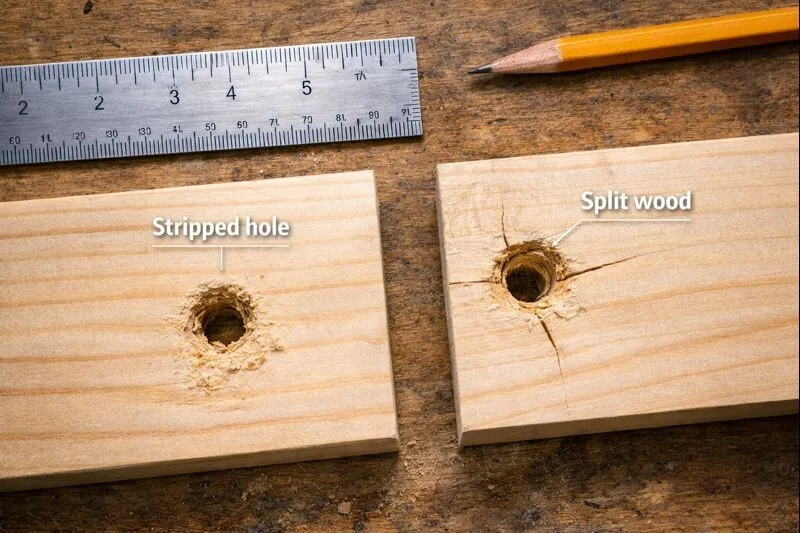
Image source: Bing (Web (fair-use with source credit))
Step-by-Step: Four Repair Methods, Matched to Your Situation
Pick your method based on what you diagnosed and what material you're working with. Here's the full walkthrough for each.
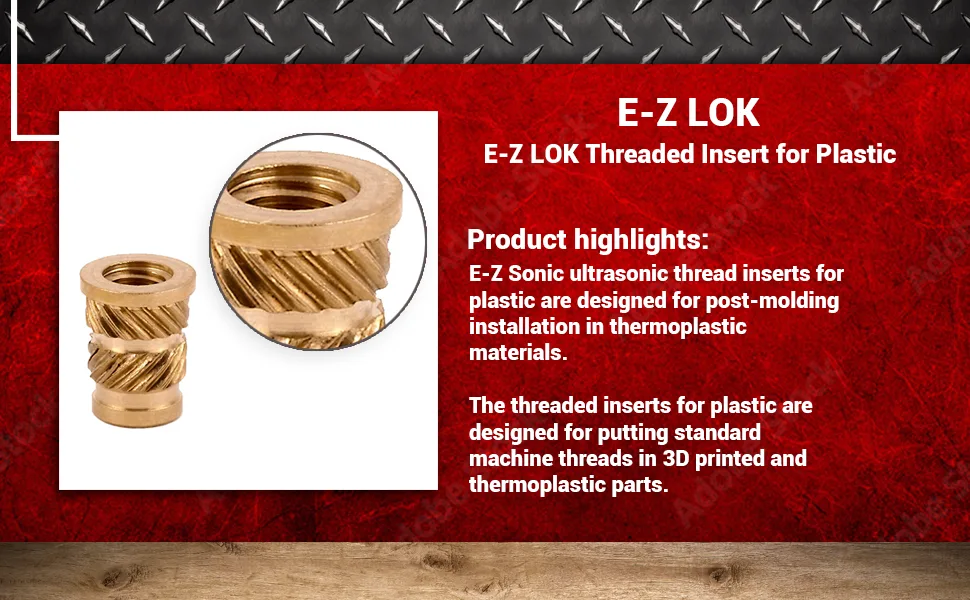
Image source: Web (Bing) / amazon.com (Web image (fair-use with source credit))
Method 1: Toothpick and Glue Plug (Solid Wood Only)
This is the classic cheap fix, and it works in real hardwood.
- Squeeze wood glue into the stripped hole.
- Pack in toothpicks or a golf tee until the hole is snug.
- Snap them off flush with a chisel or utility knife.
- Let the glue cure 24 hours.
- Re-drill a pilot hole and drive the original screw.
Skip this method entirely on MDF or particleboard. The plug will shear off the first time someone leans on the desk.
Method 2: Epoxy Putty Rebuild (MDF and Particleboard)
Two-part epoxy putty is structural, unlike cosmetic wood filler.
- Clean the hole of all dust and loose fibers.
- Knead the epoxy until it's uniform.
- Press it into the hole, overfilling slightly.
- Let it cure per the label, usually 24 hours for full strength.
- Drill a fresh pilot hole and drive the screw.
Use a 5-minute epoxy only if you're patient enough to let it cure the full 24 hours before loading it. Fast cure doesn't mean fast strength.
Method 3: Threaded Insert and Machine Bolt (Best Overall Fix)
This is the strongest repair for any material. A threaded insert (also called a T-nut, EZ-Lok, or brass insert) gives the bolt metal threads to bite.
- Drill the hole to the insert's specified diameter.
- Thread or press the insert in per manufacturer instructions.
- Run a machine bolt through the leg frame into the insert.
- Hand-tighten only. Stop at the first resistance.
- Add a thread locker if the bolt keeps backing out.
Common insert sizes are 1/4"-20 and 5/16"-18, both widely available. Manufacturer specs for EZ-Lok and comparable inserts list holding strengths well above any wood screw of the same diameter.
Method 4: Screw Extraction and Replacement
For stripped heads and snapped shanks, you need the old fastener out first.
- Center-punch the screw if the head is gone.
- Drill a small pilot with a left-hand bit.
- Switch to a screw extractor and turn counterclockwise.
- If the stub won't budge, drill it out and use a plug or insert.
- Install the new fastener with the correct drive bit.
Always use the exact bit size for the drive. A sloppy fit is how heads strip in the first place.
Cam-Lock, Confirmat, and Threaded Insert Joints: When It's Not a Screw Problem
Not every loose leg is a screw problem, and treating it like one wastes time and money.
Cam-lock joints use a round metal disc and a hooked bolt. If the leg wobbles but you can't find a screw head, look for a round recess on the inside face of the panel. A stripped cam housing needs a new cam, not a bigger screw.
Turn the cam with a flathead or hex key to unlock it, then replace the whole fitting.
Confirmat screws are the fat, coarse-threaded fasteners used in particleboard flat-pack. They have a wide shank and a blunt tip. A standard wood screw is not a substitute.
If a confirmat strips, replace it with the same size confirmat or step up to a threaded insert.
Threaded inserts with machine bolts are the gold standard for carrels that get moved a lot. The metal-on-metal thread resists loosening, and you can tighten or remove the bolt dozens of times without damaging the wood.
Match the joint type before you buy hardware. A cam replaced with a screw leaves the panel structurally compromised.
How to Tell Which Joint You Have
Look at the inside face of the leg panel. A cam lock shows a round disc. A confirmat shows a large Phillips or hex head with a wide shank.
A threaded insert shows a metal ring set into the wood. If you see a plain wood screw, it's a standard screw joint.
Now you know what you're dealing with. Next up: the mistakes that turn a cheap fix into an expensive one, and how to prevent the wobble from ever coming back.

Similar Posts