Level a Wobbly Library Study Carrel on Carpet
Founder & Workspace Ergonomics Specialist at Desktop Carrel · Certified Professional Ergonomist (CPE), WELL Accredited Professional (WELL AP) · 13+ years testing acoustic privacy panels, modular carrels, and productivity workspace ergonomics
Wobbly library study carrels are one of those problems that looks simple until you actually crawl under one. The carrel rocks, the laptop slides, the pen rolls off the edge, and no amount of leaning on one corner fixes it. If you want to know how to level a wobbly library study carrel on carpet, the short answer is: diagnose the wobble type, check the leg hardware, and adjust or replace the leveling glide before you ever reach for a shim.
Carpet makes this harder than bare floor. Per ANSI/BIFMA X5.5 stability testing, institutional furniture is generally designed for firm, level surfaces, yet most library carpet compresses unevenly under carrel legs. Pile height, padding density, and subfloor slope all shift things by a quarter inch or more.
So let's walk through the diagnosis, the fix, and the traps that make wobble come back next semester.
how to level a wobbly library study carrel on carpet
Diagnose the wobble first. Check whether it rocks, spins, or flexes.
Adjust the threaded leveling glides one corner at a time. Use a bubble level across the desktop.
Only shim as a last resort, and never on top of a chair mat. Anchor tall or heavy carrels to the wall or floor.
The Real Reason Carpet Makes Carrels Wobble
Carpet is not a flat surface. It just looks like one.
Broadloom and carpet tile both compress under load. A carrel leg sitting on 3/8-inch pile sinks gradually, then keeps sinking. High-traffic library carpet is usually denser than residential, but it still deflects.
So the carrel doesn't sit on a plane. It sits on four slightly different planes.
That creates three predictable failure modes.
- One leg sinks deeper than the others.
- One leg sits on the carpet's cut edge or a tile seam.
- A rolling chair mat catches a carrel foot and lifts it.
Subfloor matters just as much. Glue-down carpet over a sloped concrete slab telegraphs that slope straight through. Older library buildings with raised access floors are worse, because panels flex independently.
Here's the practical takeaway: carpet itself rarely causes wobble. Carpet plus an unadjusted leg, a stripped glide, or a missing anchor does. Fix the hardware, and the carpet stops being a problem.
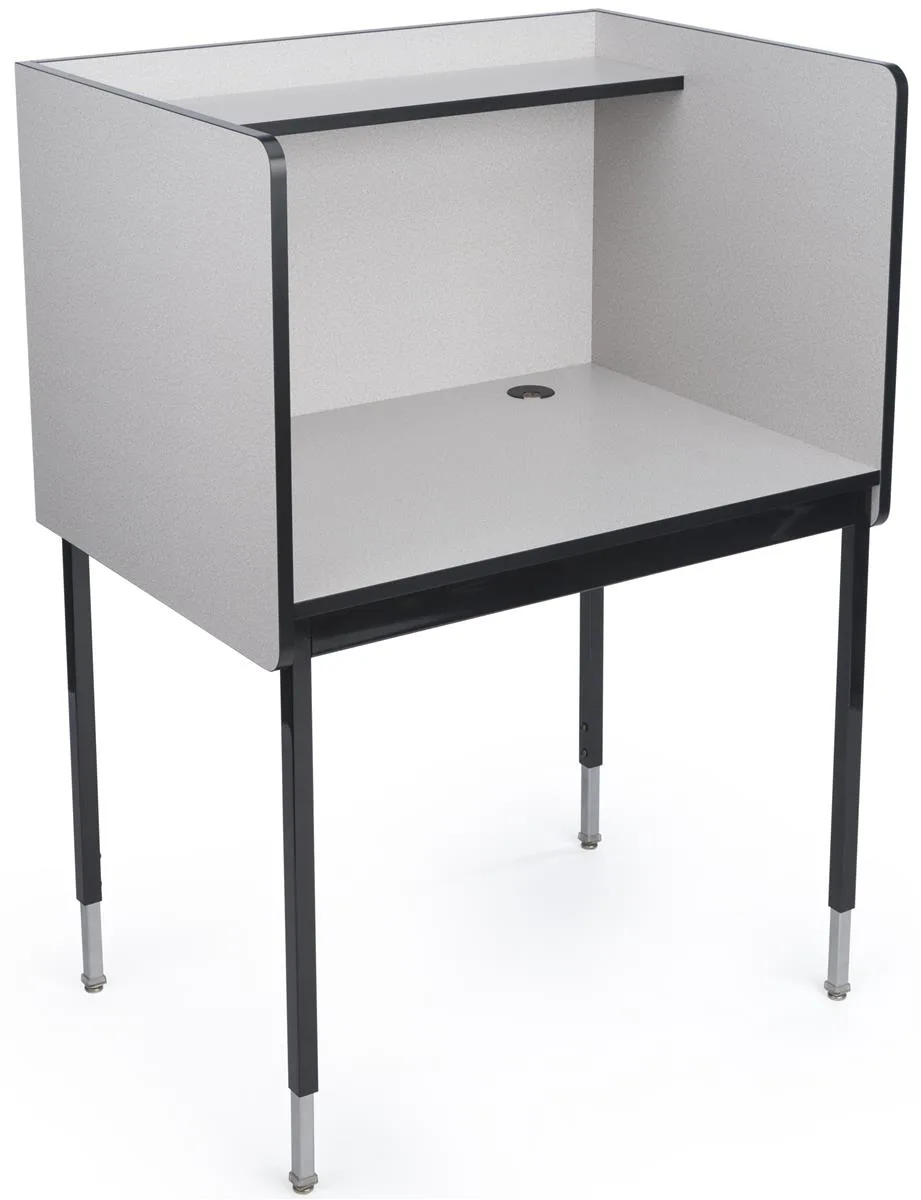
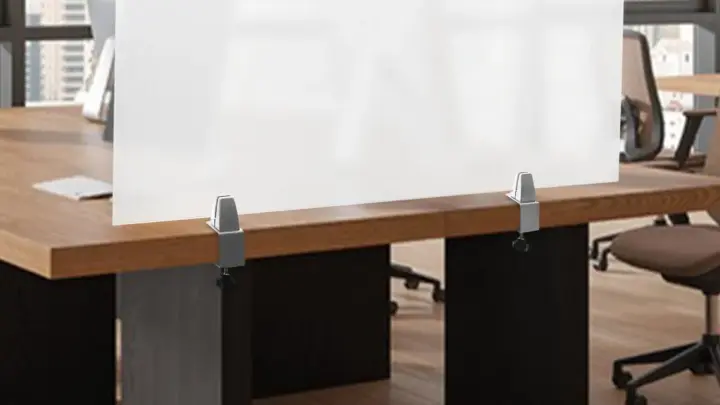
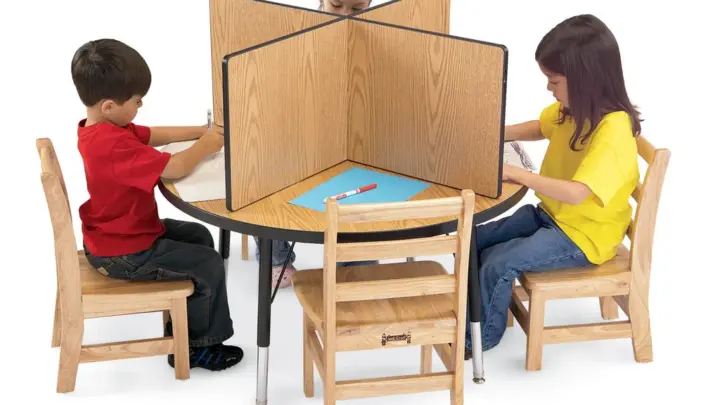
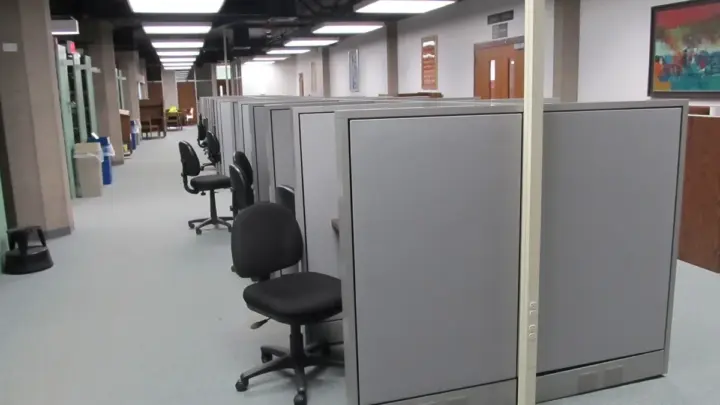
Image source: Web (Bing) / displays2go.com (Web image (fair-use with source credit))
First, Diagnose the Wobble: Rock, Spin, or Flex
Press down on each corner of the carrel top, one at a time. Watch the opposite corner. That single test tells you which of three wobbles you're dealing with.
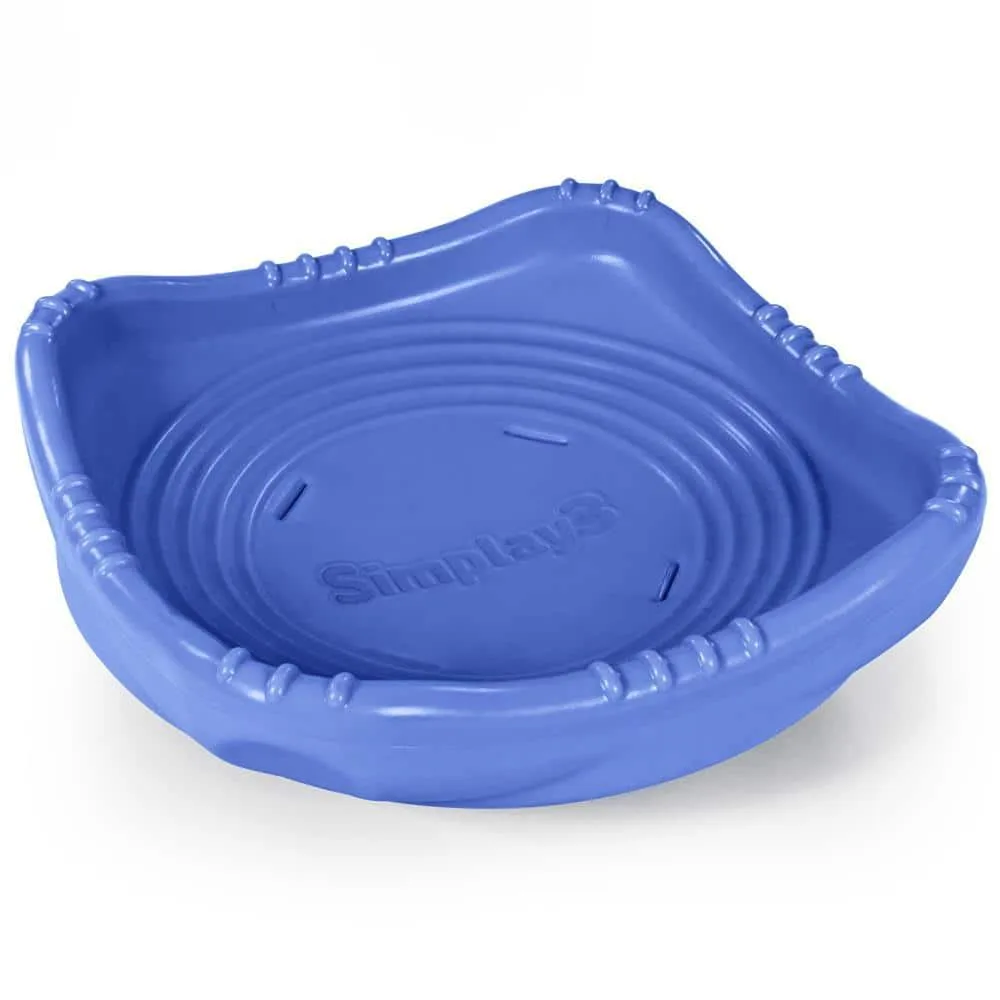
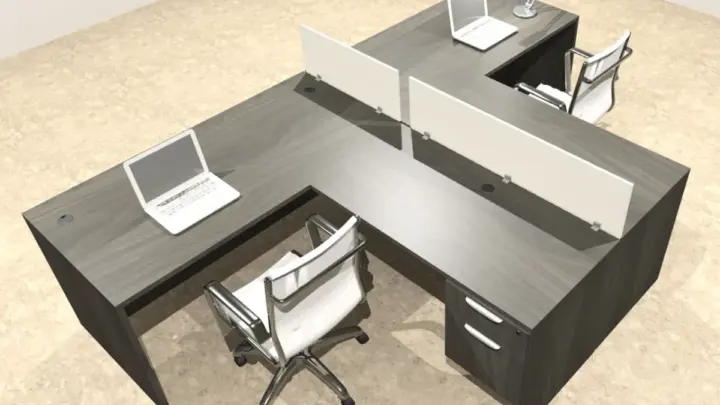
Image source: Web (Bing) / homedepot.com (Web image (fair-use with source credit))
Rock
Rock means the carrel tips back and forth on a diagonal. Two opposite legs are touching, two are floating. This is the most common type on carpet, and it almost always means one glide is too short or one leg has sunk.
Spin
Spin means the carrel rotates slightly at the base while the top stays put. Grab the desktop and twist gently. If it moves, your leg hardware is loose at the frame connection, not at the floor.
Tighten the bolts before you touch the glides.
Flex
Flex means the whole carrel twists or bows. Push sideways on the top corner and watch the modesty panel. If the frame racks, you need anchoring, not leveling.
No glide adjustment fixes a frame that moves.
The Four-Corner Press Test
- Empty the desktop. Remove books, monitors, and lamps.
- Press each corner firmly for two seconds.
- Note which corners move and which stay planted.
- Mark the floating leg with a piece of masking tape.
- Check whether the wobble follows the marked leg.
If the wobble moves with the mark, it's a leg problem. If it stays in the same diagonal, it's the frame or the floor.
Match the Fix to Your Carrel's Leg Type
Look under the carrel. Leg type determines everything you can and can't do.
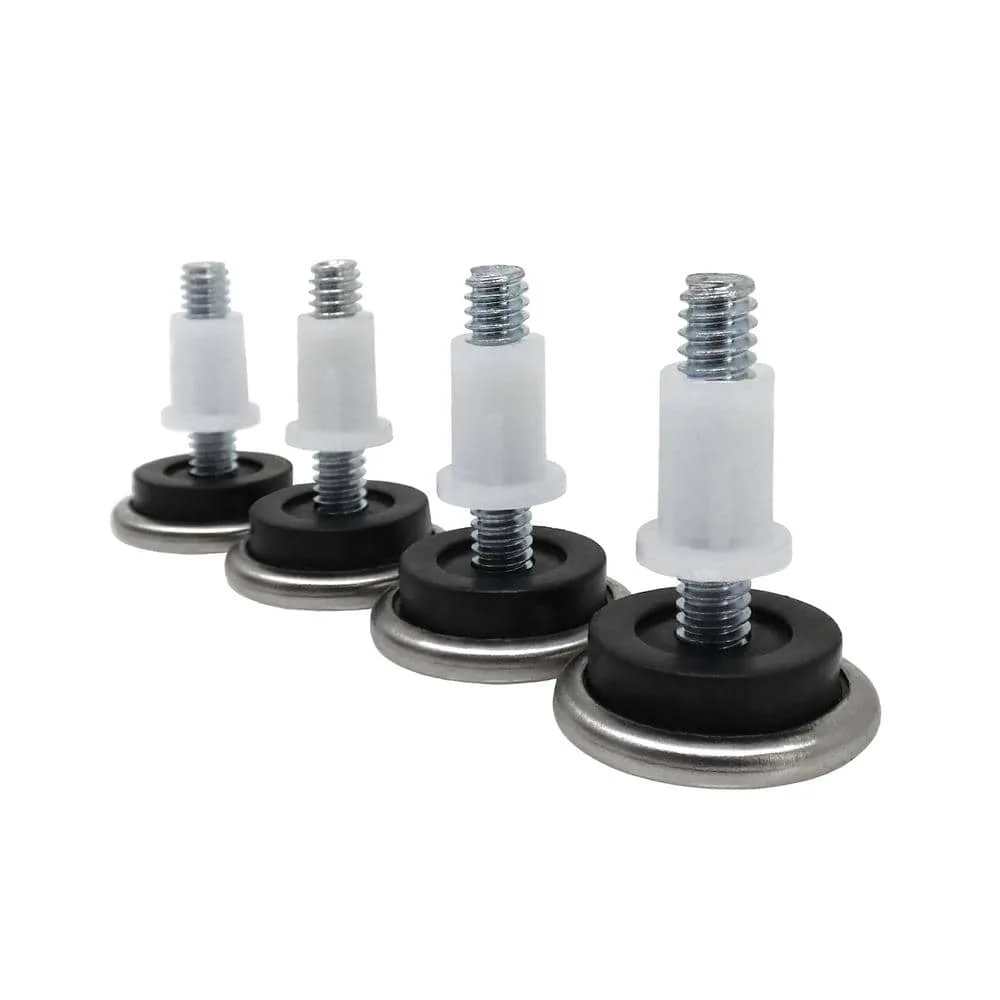
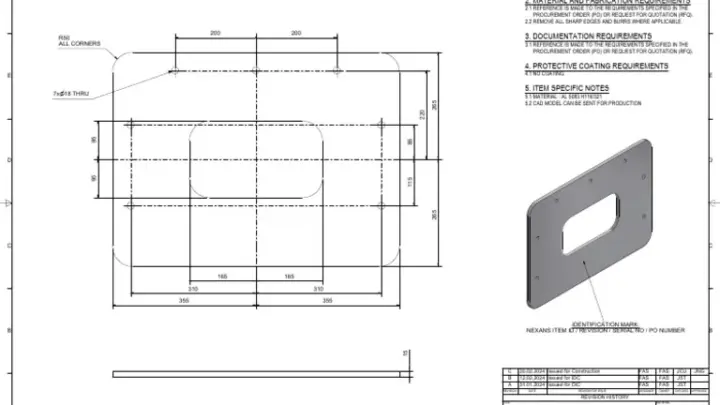
Image source: Web (Bing) / homedepot.com (Web image (fair-use with source credit))
If you have threaded leveling glides
Threaded glides are the gold standard. They screw in and out to raise or lower the foot. Manufacturer specifications indicate most institutional glides travel between half an inch and an inch and a half.
Turn counterclockwise to extend, clockwise to retract.
If you have fixed welded feet
Fixed feet have no adjustment. You can't raise them without hardware. Your options are leg levelers that slip under the foot, shims, or replacing the whole foot assembly.
If you have casters
Casters on carpet often sit unevenly because the wheel sinks into pile. Lock the casters, then check the wobble again. If it's gone, the problem is mobility, not leveling.
Add caster cups with a flat base to spread the load.
If you have a T-base or four-post frame
T-bases usually hide glides inside the base tube. Four-post frames often have one adjustable leg and three fixed ones. Find the adjustable leg first.
That's your control point.
Thread sizes worth knowing
| Common Glide Thread | Typical Use | Travel Range |
|---|---|---|
| 1/4-20 | Light carrels, laminate bases | 1/2" to 1" |
| 5/16-18 | Standard steel carrels | 3/4" to 1-1/4" |
| M8 | Imported and European units | 1/2" to 1" |
| M10 | Heavy double carrels | 3/4" to 1-1/2" |
Match the thread exactly. Forcing a mismatched glide strips the insert, and that's a permanent repair.
Step-by-Step: Leveling a Carrel on Carpet
Work on one carrel at a time. This takes about fifteen minutes once you know the wobble type.
Step 1: Empty the carrel and lock everything down
Clear the desktop completely. Lock any casters. If the carrel is wall-anchored, don't remove the anchors.
You're working around them.
Step 2: Check the frame bolts first
Tighten every bolt connecting legs to the carrel base and the modesty panel. Loose frame bolts mimic wobble and no amount of glide adjustment fixes them. Per OSHA general furniture safety guidance, unstable institutional furniture should be repaired before being put back into service.
Step 3: Extend the floating leg's glide
Turn the glide on your tape-marked leg counterclockwise. Go a quarter turn at a time. After each quarter turn, press the corner again.
Stop the moment the wobble disappears.
Step 4: Level across the desktop
Place a bubble level across the desktop front to back, then side to side. Aim for within 1/16 inch across the working surface. A digital inclinometer gives you a precise reading if you have one.
Step 5: Re-check all four corners
Press each corner again. If a new corner floats, you've over-extended the first glide. Back it off slightly and adjust the neighbor instead.
Step 6: Confirm the glide isn't bottomed out
If the glide won't extend further and the wobble remains, you've hit its travel limit. That's your signal to move to shimming or hardware replacement.
Step 7: Test with a real load
Put the weight back on. Sit at the carrel, lean on the desktop, and push sideways. A level carrel under load should stay level.
If it doesn't, your fix is cosmetic.

Similar Posts