How to Stop Your Desk Carrel Smelling Like Chemicals
Founder & Workspace Ergonomics Specialist at Desktop Carrel · Certified Professional Ergonomist (CPE), WELL Accredited Professional (WELL AP) · 13+ years testing acoustic privacy panels, modular carrels, and productivity workspace ergonomics
You've unboxed a new acoustic desk carrel and the whole room now smells like a hardware store. That sharp chemical odor isn't imaginary, and it isn't going to fade in a day. The good news is that how to stop acoustic desk carrel from smelling like chemicals comes down to one thing: matching your fix to the actual source of the smell.
Most people reach for baking soda or an air freshener and wonder why nothing changes. That's because the odor is off-gassing, meaning volatile organic compounds (VOCs) are slowly releasing from the panel's core, adhesive, or fabric. Per WHO indoor air guidance, formaldehyde is considered a concern above 0.1 ppm, and CARB Phase 2 and TSCA Title VI set the composite-wood emission rules carrels have to meet as of 2026.
So before you do anything, you need to know which part of the carrel is actually talking.
how to stop acoustic desk carrel from smelling like chemicals
Match your fix to the smell source. New MDF or particleboard cores need ventilation and heat cycles. Fabric panels need extraction or replacement.
Adhesive odors fade with airflow. A sealed room just needs real air exchange. Seal the surface only after off-gassing slows, not before.
Why New Carrels Smell, and Why "Just Air It Out" Often Fails
That smell is off-gassing, the slow release of VOCs from materials inside the carrel. It's not one chemical. It's a mix, and each one fades at a different speed.
That's why a carrel can seem fine on day three and punch you in the face on day ten.
Here's where it's coming from.
- Urea-formaldehyde and phenol-formaldehyde binders in MDF or particleboard cores
- Solvent-based contact adhesives used to bond laminate and fabric
- Melamine or laminate edge banding and its hot-melt glue
- Flame retardants and antimicrobial treatments on acoustic fabric
- Residual cleaner or adhesive from manufacturing and shipping
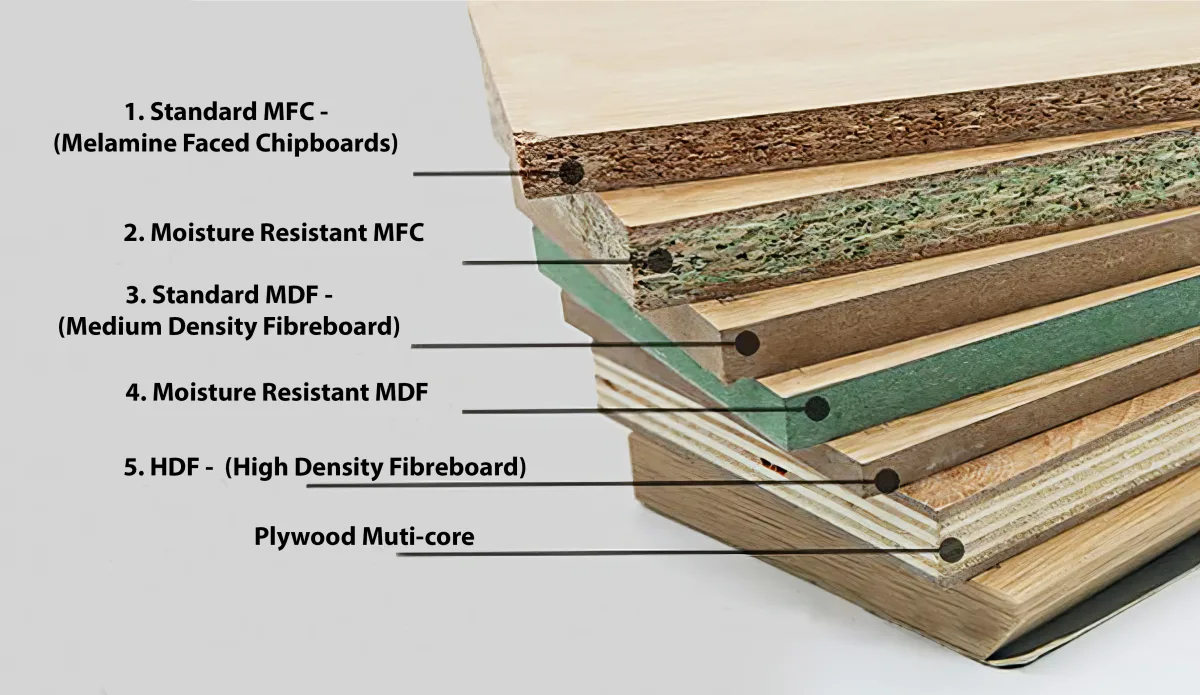
Image source: Web (Bing) / point.esmoker-warehouse.de (Web image (fair-use with source credit))
Fabric is the sneaky part. Acoustic panels are porous by design, which means they don't just emit VOCs, they absorb them. If cleaner, adhesive, or core emissions sit in that pile, they slowly release for weeks.
A fan blowing across the surface won't pull them out.
Temperature and humidity make it worse. Off-gassing speeds up in warm, humid rooms, so a carrel that smells mild in winter can get noticeably worse in summer. Passive airing only works if fresh air actually replaces the stale air.
Crack a window in a closed room with no cross-flow and you're just recirculating the same VOCs.
Why "just wait it out" is bad advice
Waiting works eventually, but "eventually" can mean 2 to 8 weeks with the peak in the first 72 hours. If you're using the carrel daily in that window, you're breathing the worst of it. And if the room has poor air exchange, the smell lingers far longer than the label suggests.
Image source: Web (Bing) / made-in-china.com (Web image (fair-use with source credit))
Diagnose First: A 5-Minute Check Before You Do Anything
Don't start treating until you know what you're treating. A five-minute sniff test saves you from wasting a month on the wrong fix. Run through this before you buy a single filter.
The four-source sniff test
Get close and smell deliberately. Each source has a tell.
- Press your nose to the panel face and inhale. A sharp, glue-like sting points to the core or adhesive.
- Bury your face in the fabric and sniff. A stale, sweet, or cleaner-like note means the fabric absorbed it.
- Smell the edges and seams. A stronger hit at the banding points to edge-band adhesive.
- Rub a corner with a damp cloth and smell the cloth. A residue smell means cleaner or surface contamination.
When does the smell show up?
Timing narrows the source fast.
- Smell strongest right after unboxing: fresh off-gassing from the core and adhesive.
- Smell worse when the room warms up: heat-driven core emissions.
- Smell returns after cleaning: reactivated fabric residue or new cleaner VOCs.
- Smell never faded after a month: poor ventilation or a high-emission core.
Quick reference: symptom to likely source
| What you notice | Most likely source | First move |
|---|---|---|
| Sharp glue sting at the panel face | MDF/particleboard core | Ventilation and heat cycles |
| Stale or cleaner smell in the pile | Acoustic fabric | Extraction or fabric swap |
| Strongest at edges and seams | Edge-band adhesive | Wipe-down and airflow |
| Worse when room heats up | Core off-gassing | Temperature control plus exhaust |
| Fades then returns after cleaning | Fabric residue | Stop scented cleaners, extract |
The Decision Tree: Pick Your Branch Based on What You Find
Here's the part most guides skip. Your fix depends on which branch you landed on. Read your symptom above, then follow the matching path.
If you're unsure, start with Branch 1, since fresh off-gassing is the most common cause.

Image source: Web (Bing) / cargetup.com (Web image (fair-use with source credit))
Branch 1: Fresh off-gassing from an MDF or particleboard core
If the smell is sharp, glue-like, and strongest at the panel face, treat the core. Run cross-ventilation and heat cycles for 2 to 4 weeks. Add activated carbon filtration in the room.
Wipe hard surfaces with mild soap and water, not solvents. Expect steady improvement, not an instant fix.
Branch 2: Fabric panels holding absorbed VOCs or cleaner residue
If the smell lives in the pile, target the fabric. Stop using scented or solvent cleaners immediately. Steam or extract the fabric with plain water, then ventilate hard.
If it still smells after two weeks, the fabric may need replacing. Porous materials hold chemicals far longer than hard surfaces.
Branch 3: Adhesive and edge-banding odor
If the seam is the hot spot, treat it as an adhesive problem. Wipe edge banding with a barely damp cloth. Run airflow directly across the seams.
This odor usually fades faster than core emissions, often within 1 to 2 weeks of consistent ventilation.
Branch 4: Sealed room with no air exchange
If the carrel improved with a window open, you have a ventilation problem, not a carrel problem. You need real air exchange, not a fan moving stale air around. Aim for 4 to 6 air changes per hour in a small office.
If you can't open a window, use an exhaust fan pulling air out of the room.
Branch 5: Used carrel with unknown history
If you bought secondhand, assume the worst. Prior smoke, chemical, or mold exposure can sit in the fabric for months. Do a full clean, then decide fast.
If the smell doesn't drop within three weeks, replacing the fabric or the whole unit is usually cheaper than fighting it.
Branch summary
| Branch | Core symptom | Primary action | Timeline |
|---|---|---|---|
| 1 | Sharp glue smell at face | Vent + heat cycles + carbon | 2 to 4 weeks |
| 2 | Stale smell in fabric | Extract or replace fabric | 2 weeks to replacement |
| 3 | Strongest at seams | Wipe + directed airflow | 1 to 2 weeks |
| 4 | Better with window open | Raise room air exchange | Immediate improvement |
| 5 | Unknown history | Full clean, reassess fast | Decide by week 3 |
Step-by-Step: The Ventilation and Bake-Out Workflow That Actually Works
This is the core workflow. It works on any branch, and it's the fastest safe path for fresh off-gassing. The principle is simple: warm the room to accelerate release, then flush the air out hard.
Repeat.
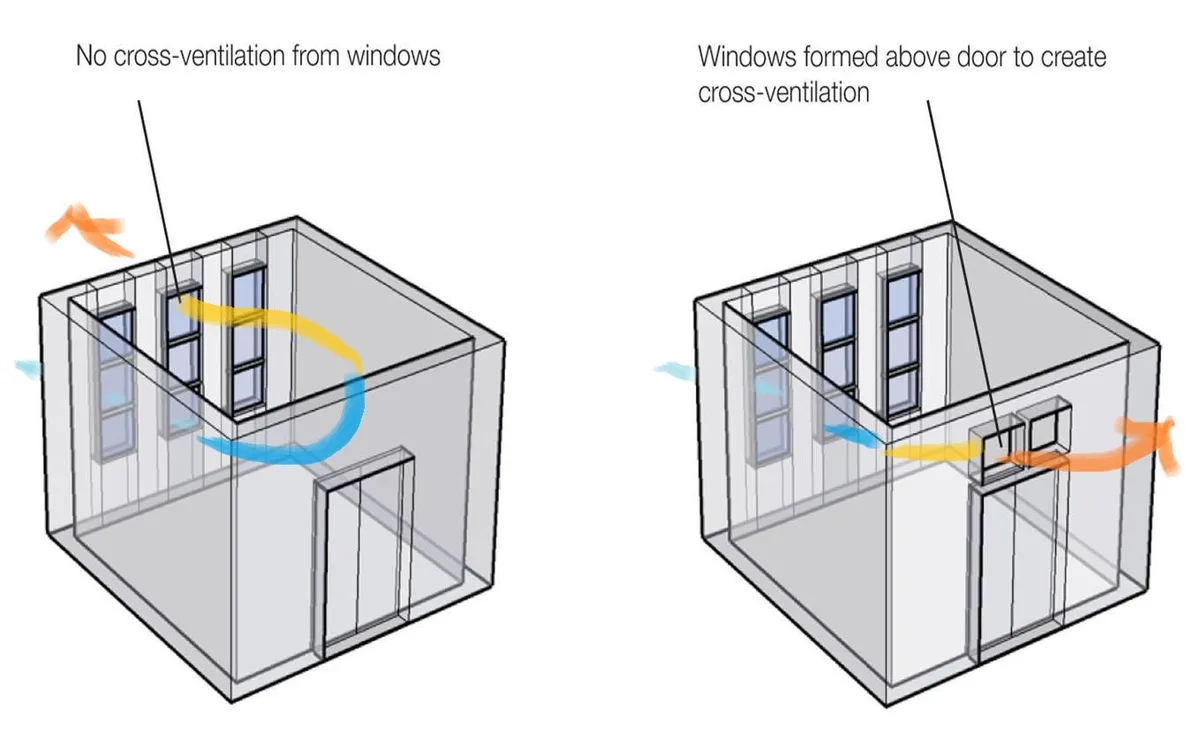
Image source: Web (Bing) / pinterest.com (Web image (fair-use with source credit))
Week 1: Air out and set up cross-ventilation
Unbox outdoors or in a garage if you can. If not, open two windows on opposite sides of the room so air flows through, not around. Place a box fan at one window pushing air in, and another at the opposite window pulling air out.
Run them daily for 20 to 30 minutes minimum, longer if you can stay out of the room.
Weeks 2 to 4: Heat cycles, filtration, and wipe-downs
Raise the room temperature to around 25 to 30°C for a few hours, then ventilate hard to flush the released VOCs. Repeat two or three times a week. Add an activated carbon filter air purifier, not a HEPA-only unit, since HEPA doesn't capture gases.
Swap carbon every 2 to 6 months depending on load. Wipe hard surfaces weekly with mild soap and water.
What not to do
- Don't run an ozone generator in an occupied space. The EPA warns against it, and it can create harmful byproducts.
- Don't seal the surface too early. Trapping VOCs inside the finish slows the release and can make it worse.
- Don't use scented cleaners or air fresheners. They add more VOCs and mask the problem.
- Don't rely on a fan alone without cross-flow. You'll just recirculate the same air.
When to seal the surface
Seal only after the smell has clearly dropped, usually around weeks 4 to 8. Use a low-VOC or no-VOC encapsulant or primer. Check the manufacturer's warranty first, since some coatings void it.
Sealing too soon is one of the most common mistakes, and it's the easiest to avoid.
Mistakes That Make It Worse, and the Safety Lines You Can't Cross
Some "fixes" backfire hard. Here's what to avoid if you actually want the smell gone. Each of these is a common move, and each one makes the problem worse.
Sealing too early
Sealing too early traps VOCs inside the finish. The surface feels better, then the smell creeps back through. Wait until the odor has clearly dropped before you coat anything.
Ozone generators and fragrance masking
Never run an ozone generator in an occupied room. The EPA warns it can create harmful byproducts at levels you're breathing. Air fresheners are just as bad.
They add new VOCs and hide the original ones.
Wet-wiping fabric
Soaking acoustic fabric traps moisture and can feed mold later. Steam or extract lightly. Don't drench it.
Safety lines worth knowing
Composite wood emissions fall under TSCA Title VI, and the US EPA sets indoor air guidance worth following. Check the carrel maker's warranty before coating anything, since some finishes void it. Landlords often restrict drilling or panel removal, so ask before you modify.
Ventilation limits to respect
A fan without cross-flow just recirculates stale air. Keep the room below 50% relative humidity to limit mold risk while you air things out. If anyone in the space has asthma or chemical sensitivity, prioritize real exhaust over fans.
When to escalate
If headaches, dizziness, or breathing issues show up, stop using the carrel and ventilate immediately. Symptoms that don't ease with fresh air need a doctor, not a filter.
What to Buy, What to Skip, and What It Costs
You don't need much, and you definitely don't need everything marketed as "odor removal." Here's what actually works, what's a waste, and what to expect on price.
What to buy
Activated carbon is the workhorse, since it adsorbs gases that HEPA can't touch. A carbon-filter air purifier sized for the room is the single best purchase. Box fans and a decent steam cleaner round out the kit.
What to skip
Baking soda and vinegar only mask surface odor. They do nothing for VOCs in a carrel core. Scented cleaners make it worse.
Ozone generators are a hard no in occupied spaces.
A quick comparison
| Option | Works on VOCs? | Best for | Cost range |
|---|---|---|---|
| Activated carbon filter | Yes | Room-wide gas removal | $40 to $200 |
| Zeolite bags | Partly | Small enclosed spaces | $15 to $40 |
| Baking soda | No | Surface odor only | $3 to $10 |
| HEPA-only purifier | No | Dust and particles | $80 to $300 |
| Steam cleaner | Yes (fabric) | Extracting fabric residue | $40 to $120 |
What to expect on the timeline
Aggregate user reports suggest most carrels improve noticeably within 2 to 4 weeks of consistent ventilation. Stubborn cores can run 6 to 8 weeks. Fabric issues often need replacement rather than treatment.
Budget accordingly and don't expect a one-day fix.
Where the money goes
The carbon filter is the only real recurring cost. Replacement media runs every 2 to 6 months depending on the load. If you buy a used carrel, factor in a possible fabric swap, which can run $50 to $150 for a panel.
When to Replace, Return, or Escalate
At some point, fighting the smell costs more than fixing the source. Here's how to know when to stop treating and start replacing.
When to swap the fabric
If the fabric still smells after two weeks of extraction and ventilation, replace it. Porous acoustic material holds VOCs far longer than hard surfaces. A new fabric panel usually solves it outright.
When to replace the core
If the panel face still off-gasses sharply after 8 weeks of heat cycles and ventilation, the core is the problem. No coating fixes a high-emission core long term. Replace the unit or the panel.
When to return or claim warranty
New carrels that smell strongly past 30 days may qualify for a return or warranty claim. Document your ventilation steps with dates. Some makers require proof you followed their care guidance.
Check the emission rating on the box, since E0 and CARB Phase 2 units should off-gas far less.
When it's a workplace issue
If the carrel is in an office, you can request an accommodation for chemical sensitivity. Employers often respond faster to a documented IAQ complaint than to a personal one. Ask facilities to boost ventilation or relocate the unit.
When to walk away
If you've done everything and the smell persists past 8 weeks, cut your losses. A replacement carrel with a low-emission rating is cheaper than months of filters and headaches.
Frequently Asked Questions
How long does it take for a new carrel to stop smelling like chemicals?
Most carrels improve within 2 to 4 weeks of consistent ventilation, with the sharpest peak in the first 72 hours. Stubborn MDF cores can take 6 to 8 weeks. Fabric problems may need replacement rather than waiting.
Does baking soda actually remove the chemical smell?
No. Baking soda absorbs some surface odor, but it can't pull VOCs out of a carrel core or fabric pile. Use activated carbon instead.
It adsorbs the gases that HEPA and baking soda can't touch.
Is the chemical smell dangerous to breathe?
Short-term exposure can cause headaches, eye irritation, and nausea. Formaldehyde is a concern above 0.1 ppm per WHO guidance. If symptoms don't ease with fresh air, stop using the carrel and see a doctor.
Can I just seal the carrel to trap the smell?
Sealing too early traps VOCs inside and can make things worse. Wait until the smell drops, usually around weeks 4 to 8. Use a low-VOC encapsulant and check the warranty first.
Will an air purifier fix the smell on its own?
Not on its own. A carbon-filter purifier helps, but it works best alongside cross-ventilation and heat cycles. HEPA-only units won't touch the gases.
You need airflow plus adsorption.
What if the smell is coming from the fabric?
Then target the fabric. Stop using scented cleaners, steam or extract lightly, and ventilate hard. If it still smells after two weeks, replace the panel.
Fabric holds VOCs longer than hard surfaces.
Fabric swaps are usually the fastest fix once you've confirmed the pile is the source.
Does a used carrel need different treatment?
Yes. Used carrels come with unknown history, so treat prior smoke, chemicals, or mold as possible. Clean hard surfaces fully, extract the fabric, and ventilate hard.
If the smell doesn't drop within three weeks, replace the fabric or the unit.
How much ventilation is actually enough?
Aim for 4 to 6 air changes per hour in a small office. That means real cross-flow, not a single fan moving stale air around. Open two windows on opposite sides if you can.
If you can't, use an exhaust fan pulling air out of the room.
Can I speed up off-gassing with heat?
Yes, within limits. Raise the room to around 25 to 30°C for a few hours, then flush it with hard ventilation. Repeat two or three times a week.
Don't use space heaters near the fabric, and keep humidity under 50% to avoid mold risk.
Heat accelerates release, but it can't do the flushing for you. Pair every heat cycle with real air exchange or the VOCs just settle back into the room.
Do low-emission carrels still smell?
Some do, just less. E0 and CARB Phase 2 ratings cut formaldehyde emissions, but they don't eliminate the fresh glue and adhesive smell entirely. Expect a milder, shorter off-gas window rather than zero odor.
If a certified unit still reeks after a month, treat it as a ventilation problem first.
A certified core plus poor airflow still reads as a chemical smell, so fix the room before you blame the panel.
How do I know when the smell is truly gone?
Sniff the panel face, the fabric, and the seams separately after a heat cycle. If all three come back clean and stay clean for a week, you're done. If any one spot still bites, you haven't finished that branch yet.
Keep going until the smell stays flat through a warm day.
That's your signal to stop treating and start using the carrel normally. If it stays clean through a hot afternoon with the windows shut, you've beaten it.

Similar Posts